

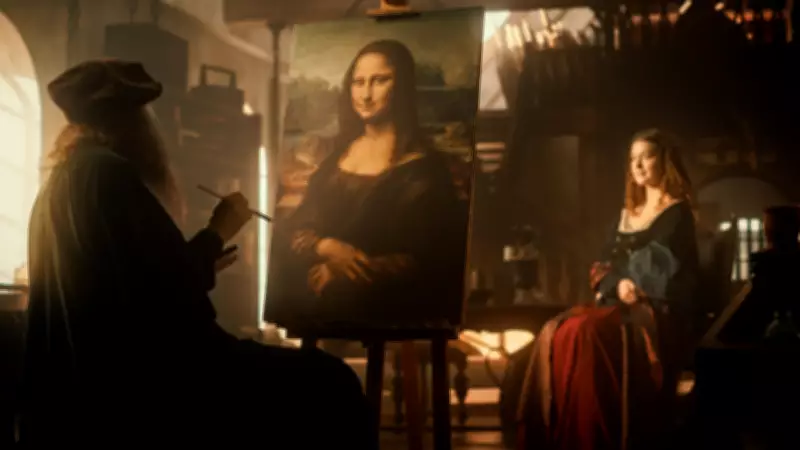
The Mona Lisa's Permanent Home: Louvre Museum in Paris
The world's most celebrated portrait, Leonardo da Vinci's Mona Lisa, is neither hidden from public view nor circulating among private collectors. Instead, it resides prominently within the Louvre Museum in Paris, where millions of visitors annually gather to admire its enigmatic smile. This placement is not accidental but the culmination of centuries of historical events, from Renaissance Italy and royal collections to revolutionary transformations and state stewardship in France.
Current Display and Security at the Louvre
The portrait is exhibited in the Louvre's Salle des États, one of its largest galleries specifically designed to accommodate the constant crowds. It is encased behind thick, bullet-resistant, climate-controlled glass within a specially engineered enclosure that meticulously regulates temperature and humidity. This protection safeguards the 500-year-old wooden panel from light exposure, moisture, and environmental stresses caused by thousands of daily visitors.
Security surrounding the artwork is exceptionally rigorous, featuring discreet guards, surveillance cameras, and crowd-control barriers. This heightened protection stems from both its global fame and fragile condition. The Louvre rarely permits the painting to travel; it has not left France since the 1970s, and even those instances were for carefully managed diplomatic exhibitions in Japan and the Soviet Union. Today, the Mona Lisa is more than a museum piece—it serves as the symbolic heart of the Louvre, influencing visitor flows, ticketing strategies, and gallery architecture.

Origins and Historical Significance
Painted by Leonardo da Vinci between approximately 1503 and 1519, the portrait is widely believed to depict Lisa Gherardini, wife of Florentine merchant Francesco del Giocondo. Historians suggest that Leonardo continued refining the painting for years, never delivering it to the commissioning family. He perfected the soft facial modeling, hazy sfumato technique, and the mysterious expression that later captivated the world. When Leonardo relocated to France near the end of his life, he brought the painting with him, a pivotal decision that explains how Italy's most famous portrait became France's greatest artistic treasure.
Transition to French Ownership
In 1516, Leonardo da Vinci entered the service of King Francis I of France, who invited him to reside at the Château du Clos Lucé near Amboise. Upon Leonardo's death three years later, the French crown acquired several of his paintings, including the Mona Lisa, either from his estate or through intermediaries. This acquisition permanently integrated the artwork into France's royal collection, where it adorned palaces like Fontainebleau and Versailles long before public museums existed.
Following the French Revolution in the late 18th century, royal art collections were seized by the state and transferred to what eventually became the Louvre Museum. Legally, this means the Mona Lisa belongs to the French state and is held in trust for the public, rather than being owned by any private individual or organization.
Contemporary Ownership and Legal Status
Officially, the Mona Lisa is owned by the French Republic and managed by the Louvre Museum as part of the national collection. Under French law, such works are deemed inalienable, meaning they cannot be sold, donated, or permanently transferred. This legal framework dispels rumors about wealthy collectors or overseas museums acquiring the painting, firmly establishing it as part of France's cultural patrimony. The Louvre acts as its guardian, overseeing preservation, security, study, and public display for future generations.
Reasons for Its Permanent Residence in Paris
Several factors explain why the Mona Lisa remains anchored at the Louvre:

- Historical Continuity: The painting has been in France for over five centuries—longer than its time in Italy—making it an integral part of French museum history.
- Conservation Requirements: Created with oil on a thin poplar panel, the artwork is sensitive to temperature and humidity fluctuations. Transporting it poses significant risks, even with modern technology, so maintaining it in a stable, controlled environment minimizes potential damage.
- Symbolic Value: In 1911, the painting was stolen from the Louvre by Vincenzo Peruggia, a former employee who hid overnight and escaped with it concealed under his coat. The theft, unnoticed for over a day, sparked an international manhunt and global headlines. Two years later, Peruggia was arrested while attempting to sell the painting in Italy, and its return to France solidified its status as the world's most famous artwork.
- Legal Protections: As part of France's national collection, the painting is safeguarded by heritage laws that render it essentially immovable. It can only travel in exceptional cases approved at the highest governmental levels.
The Painting's Enduring Dominance
The Mona Lisa's unparalleled reputation stems not only from Leonardo's artistic mastery but also from its rich historical narrative—royal ownership, revolutionary politics, theft, mass media reproduction, and continuous reinterpretation in popular culture. This blend of artistic innovation and dramatic backstory has transformed a Renaissance portrait into the most recognizable painting on Earth.
In summary, the original Mona Lisa hangs in the Louvre Museum in Paris, owned by the French state through inheritance from royal collections dating back to Francis I. It is protected by stringent heritage laws that ensure its permanence in France. Its enduring home reflects centuries of history, conservation science, and cultural symbolism, demonstrating that an artwork's location can be as significant as its creation.
