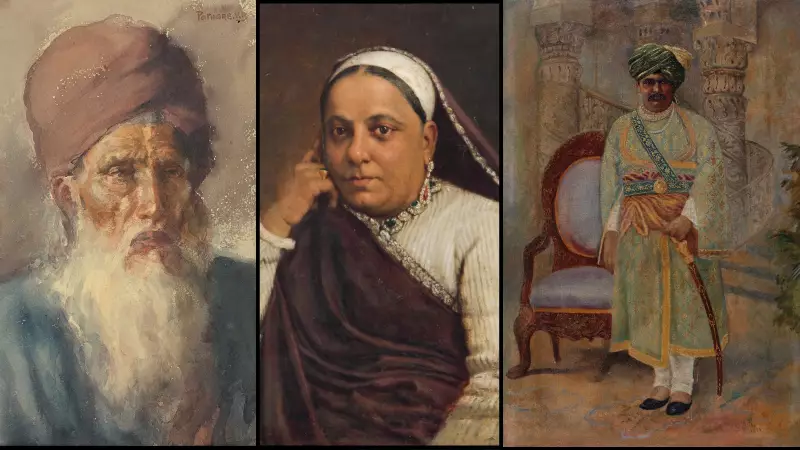
An exhibition in Mumbai is using the powerful medium of portraiture to narrate the multifaceted story of the city and its inhabitants. Titled 'Face to Face: A Portrait of a City', the showcase is presented by DAG at the Taj Mahal Palace Hotel and will remain open to the public until January 11, 2026.
Portraits as a Lens into History and Identity
The exhibition is built on the premise that the portrait of a city is essentially the portrait of its people. It draws upon artworks spanning centuries to reflect on Mumbai's identity, shaped profoundly by empire, migration, and commerce. Ashish Anand, CEO and Managing Director of DAG, emphasizes that portraits have historically served as records, tributes, and tools for reflection. In the context of Bombay (now Mumbai), they offer a unique lens to view the diverse communities and individuals central to its evolution.
The collection documents the development of portraiture in India, tracing its journey from the introduction of academic realism through colonial institutions to the experimental approaches of Indian modernists. The establishment of art schools like the Sir JJ School of Art played a pivotal role, popularizing European techniques of naturalistic representation which then influenced local artistic practice and patronage.

From Royalty to Reformers: The Faces of Bombay
The exhibition features a compelling array of subjects who shaped Mumbai's political, cultural, and civic landscape. A significant example is Frank Brooks' 1892 portrait of Jaswatsingji Fatesingji, Thakor Saheb of Limri (Limbdi). Brooks, a royal portrait painter from England who also briefly taught Raja Varma, combined academic realism with Indian courtly visual codes, providing insight into early colonial representations of regional power.
This Western artistic language was adopted and transformed by Indian artists trained in these schools, such as MV Dhurandhar, MF Pithawalla, and DC Joglekar. As portraiture expanded beyond the nobility, it began to capture the city's broader social rhythms. The exhibition includes powerful depictions of key figures like Dr. B.R. Ambedkar in a suit by VB Pathare, Lokmanya Bal Gangadhar Tilak with his iconic red turban by MK Paradekar, and the influential Marathi singer-actor Bal Gandharva by MV Dhurandhar.
Communities and Collective Memory
A special focus is placed on Mumbai's influential Parsi community. The exhibition includes a portrait of Sir Jamsetji Jeejeebhoy, India's first baronet and a major philanthropist, shown in traditional Parsi attire wearing a black pagdi. These portraits sit alongside depictions of the city's everyday communities, where details of attire and self-presentation signal profession, aspiration, and belonging.
Ashish Anand concludes that the exhibition demonstrates how portraiture transcends mere representation to become a method of reading history. Each face serves as an entry point into the social, political, and cultural dynamics of its era. The restless, layered, and plural essence of Bombay finds its reflection in these assembled images of rulers, reformers, communities, and individuals—both famous and unknown. Together, they weave a rich, collective memory of a city and its people.