The Silent Sentinel: Mumbai's Only Chinese Temple in Mazgaon
On a typical weekday morning, the doors of the Kwan Kung Temple on Dockyard Road in Mumbai are wide open, yet an eerie quiet pervades the interior. The narrow lane leading to this sacred space is flanked by residential buildings, while across the street, the industrial hum of Mazagon Dock's godowns and compounds fills the air. Tucked away in this corner of Mazgaon, Mumbai's sole Chinese temple rises a few steps above street level, largely unnoticed by the bustling city that surrounds it.
A Temple Without a Guide
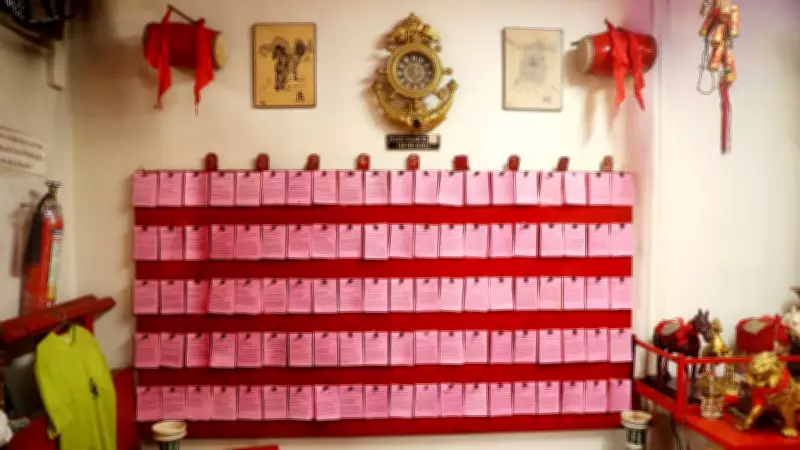
Inside, incense holders remain untouched, a light layer of dust settles on hanging red lanterns, and the upper shrine stays firmly closed. The temple is accessible but unattended—there is no priest, no guide, and no one designated to conduct rituals or explain the deities housed within. Regular visitors attribute this palpable absence to the passing of Albert Tham, a long-time member of the Tham family who managed the temple for decades, in November of last year.
The Mazgaon temple features two distinct shrines, each serving unique spiritual roles within the Chinese community. The ground floor is dedicated to Guan Yin, a female deity revered for mercy, compassion, and wisdom. Upstairs, the shrine honors Kwan Kung, a warrior figure symbolizing loyalty, righteousness, and protection. Devotees traditionally seek Kwan Kung's guidance to overcome obstacles and make critical decisions, engaging in rituals such as offerings, drawing fortune sticks, and burning paper money—practices deeply tied to ancestral remembrance and spiritual counsel.

The Legacy of Albert Tham
For years, Albert Tham was the cornerstone of these rituals. He would sit inside the temple throughout the day, instructing worshippers on prayer offerings, elucidating the symbolism of the gods, and conducting fortune readings using bamboo sticks drawn after prayers. His presence imbued the space with context and continuity. Since his death, no one has stepped into his role, leaving a void that resonates with every visitor.
"I open the temple every day and clean it," said Jaya Hitendra Parmar, who now oversees the premises on weekdays. Her husband, Jitu Bhai, previously assisted Albert Tham with maintenance and temple duties. "After my husband passed away, I began taking care of it full-time," she explained. On weekdays, she aids visitors with whatever limited knowledge she has about prayer offerings, but there is no designated ritual guide to provide deeper insights.
Festival Preparations and Community Gatherings
With the Chinese New Year approaching on February 17, the temple has undergone a refresh—freshly repainted walls, replaced carpets, and lion costumes prepared for the annual lion dance. Activity surges during this festival period. On Saturdays and Sundays, Wing Tung Tham, a carpenter from Tardeo and a member of the Tham family, visits with his family to manage affairs. "The footfall is much higher on weekends," he noted. "After Albert's death, his absence was deeply felt. Now, many people visit after seeing the temple on social media, but during the week, there is usually no one to explain its history."
According to Wing Tung Tham, members of the Chinese and Indo-Chinese community primarily congregate around the Chinese New Year. The temple is sustained through modest funds and donations from visitors, reflecting its dwindling but persistent role in the cultural fabric.
Historical Roots and Community Dispersal
Mumbai's connection with China dates back to before the modern city's emergence, strengthening after it became a major British port. From the 19th century onward, largely Cantonese migrants settled here, attracted by dock work and small trades. Distinct Chinese neighborhoods flourished in areas like Sukhlaji Street near Kamathipura, Agripada, and the Dockyard Road–Mazgaon belt, supporting restaurants, shoemaking units, carpentry workshops, dentistry practices, and beauty businesses.

Bharat Gothoskar, founder of the Khaki Heritage Foundation, elaborated on the evolution of the Mazgaon settlement, describing it as a working neighborhood closely linked to port activity. "Chinese residents lived near the docks and godowns where they worked. There were also community spaces, including temples, schools, and newspapers in other parts of the city," he said. Gothoskar highlighted that the 1962 Indo-China war was a pivotal moment. "Chinese Indians were suddenly treated with suspicion. Several families were sent to camps or chose to migrate abroad," he shared. Over time, the community dispersed, though structures like the Kwan Kung Temple endure as silent witnesses.
Modern Visitors and Cultural Curiosity
Today, many visitors to the temple are not from the Chinese community. Those associated with the temple report a growing number of people arriving after discovering it on social media, drawn by curiosity and its unique place in Mumbai's cultural landscape. Pooja Keswani, who grew up in Malaysia, found the temple through Instagram. "The aesthetics took me back to my Malaysian roots," she said, adding, "Walking inside reminded me of the temples I grew up around."
Outside festival periods, the temple returns to its quiet state. It stands in a neighborhood that no longer mirrors the one it once served, a physical reminder of a Chinese presence that once significantly shaped this part of Mumbai. As the city evolves, this temple remains a poignant symbol of a fading heritage, awaiting either revival or further obscurity.