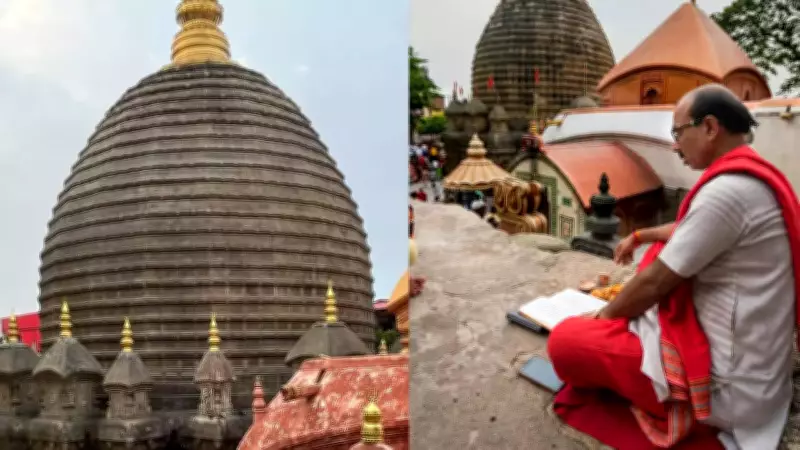
The Enigmatic Kamakhya Devi Temple: Assam's Sacred Shakti Peetha
Perched majestically atop the Nilachal Hill in Guwahati, Assam, lies the divine sanctuary of Goddess Kamakhya, one of India's most potent and mysterious Shakti Peethas. Unlike conventional temples, this sacred site venerates the Goddess not through man-made idols but through a natural, yoni-shaped stone, symbolizing the primal essence of fertility and creation.
The Mythological Saga of Sati and Shiva
According to Hindu mythology, as detailed in ancient texts like the Kalika Purana and Yogini Tantra, the origin of Maa Kamakhya is deeply intertwined with the tragic yet transformative narrative of Goddess Sati and Lord Shiva. Sati, the daughter of Daksha Prajapati, defied her father's wishes by marrying Lord Shiva, igniting his wrath. In a deliberate act of humiliation, Daksha organized a grand yagna, inviting all deities except Shiva and his followers.
Overwhelmed by this insult, Sati immolated herself in the sacred fire to uphold her husband's honor, her body consumed by the flames. Consumed by inconsolable grief and fury, Shiva lifted her charred remains onto his shoulders and commenced the Tandava Nritya—a cosmic dance of destruction that threatened to annihilate the universe.

The Divine Intervention and Birth of Kamakhya
To prevent total chaos, Lord Vishnu intervened with his Sudarshana Chakra, slicing Sati's body into 51 sacred fragments. These pieces scattered across the earth, each landing site transforming into a Shakti Peetha, radiating divine feminine energy. Miraculously, Sati's yoni—the primordial symbol of creation and fertility—descended upon Kamakhya in the ancient region of Kamarupa, now modern-day Assam. This event marked the genesis of Goddess Kamakhya and her Shakti Peetha, revered as the cosmic womb of Shakti.
Unique Aspects of the Kamakhya Temple
What sets this temple apart is its absence of traditional idols. Instead, worship centers on a natural stone yoni, perpetually moist with ambrosial waters, embodying the deity's presence. Goddess Kamakhya is honored through Tantric rituals, representing the divine union of Shiva (consciousness) and Shakti (power). Historical accounts suggest that King Naraka later consecrated the hill, shaping it into the temple structure we see today.
Thus, Kamakhya stands as a bleeding heart of creation, where Sati's ultimate sacrifice fuels eternal fertility and spiritual enlightenment, drawing devotees and seekers from across the globe.