13-Year-Old Nabha Scion Revives 124-Year-Old Turban Ceremony, Sparks Royal Legacy Debate
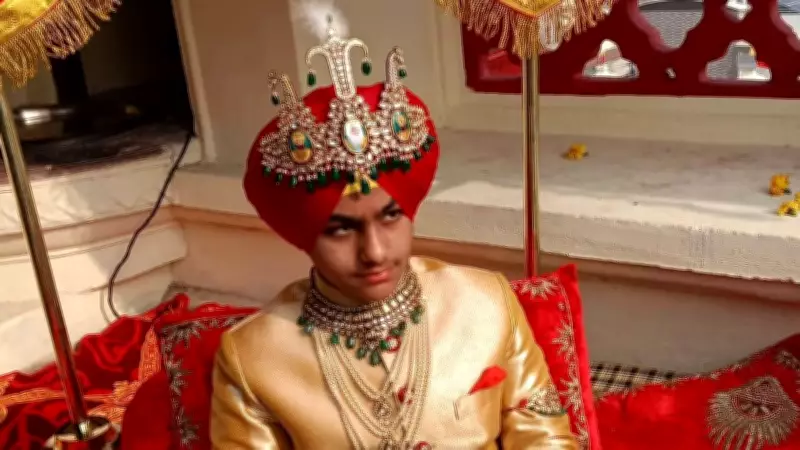
In a remarkable revival of tradition, 13-year-old Kunwar Abhyuday Pratap Singh Nabha has reclaimed his turban and royal legacy through a dastaarbandi ceremony that had not been observed for 124 years. The event, held at the ancestral Hira Mahal in Nabha, has ignited a spirited debate about the relevance of royal rituals in contemporary democratic India.
A Ceremony Steeped in History and Tradition
Clad in royal heirlooms and jewels, Abhyuday participated in the solemn turban-tying ceremony with full religious sanctity. The young scion, a class 8 student at Punjab Public School in Nabha, expressed his deep connection to his heritage, stating, "It feels like home here." He emphasized his pride in being a Sikh and his determination to preserve family history, inspired by stories from his grandmother, Rajmata Uma Singh Nabha.
The ceremony featured traditional rituals including an elephant ride and bowing before Sri Guru Granth Sahib. According to family insiders, this marked the first akhand path (continuous recital of Gurbani for three days) at the palace since the time of Maharaja Hira Singh over a century ago.

Political Presence and Mixed Reactions
The event attracted significant political attention, with attendees including:
- Radha Soami Satsang Beas head Gurinder Singh Dhillon
- Punjab Assembly Speaker Kultar Singh Sandhwan
- Punjab Cabinet Ministers Gurmeet Singh Khudian and Tarunpreet Singh Sond
- SGPC president Harjinder Singh Dhami
- Haryana Chief Minister Nayab Singh Saini
While many hailed the teenager's decision to embrace Sikh traditions, critics questioned the appropriateness of "Raja-Maharaja ceremonies" in a democratic society. The flags of the disbanded Nabha estate fluttered during the ceremony, symbolizing both historical continuity and contemporary controversy.
Historical Context and Family Legacy
The Nabha royal lineage traces back to Maharaja Hira Singh, whose son Maharaja Ripudaman Singh was exiled by the British for his nationalist views and support of the Akali Lehar. After independence, subsequent generations gradually moved away from traditional Sikh practices:
- Maharaja Pratap Singh (last ruler) had to cut his hair in England but regrew it upon return
- His sons Maharaja Hanuwant Singh and Raja Himmat Singh did not maintain kesh (unshorn hair)
- Raja Bhanu Pratap (Abhyuday's father) also did not grow hair
Abhyuday represents the first in two generations to embrace the full Sikh practice of maintaining kesh. His mother, Rani Preeti Kaur Nabha, explained that while the family considers themselves commoners today, they wanted to honor the religious significance of dastaarbandi, which she described as "a pious ritual for a young Sikh boy" that surpasses even marriage in importance.
Academic and Political Perspectives
Paramvir Singh, professor at Punjabi University, Patiala, welcomed the return to Sikh roots but cautioned against overinterpretation: "Those times are now a bygone." He emphasized that today's royal titles are merely titular without political power in India's democratic framework.
Minister Gurmeet Singh Khudian highlighted the historical significance, noting that the last similar akhand path was performed 124 years ago by Bhai Narayan Singh, father of scholar Bhai Kahan Singh Nabha. Haryana CM Nayab Singh Saini framed the event as not merely a private family affair but a revival of the Phulkian dynasty's rich legacy that has shaped the region's social and spiritual landscape for centuries.
As the Hira Mahal came alive with royal fervor after decades, the ceremony served as both a personal religious milestone for a teenager and a broader cultural moment that continues to spark conversations about tradition, identity, and democracy in modern India.