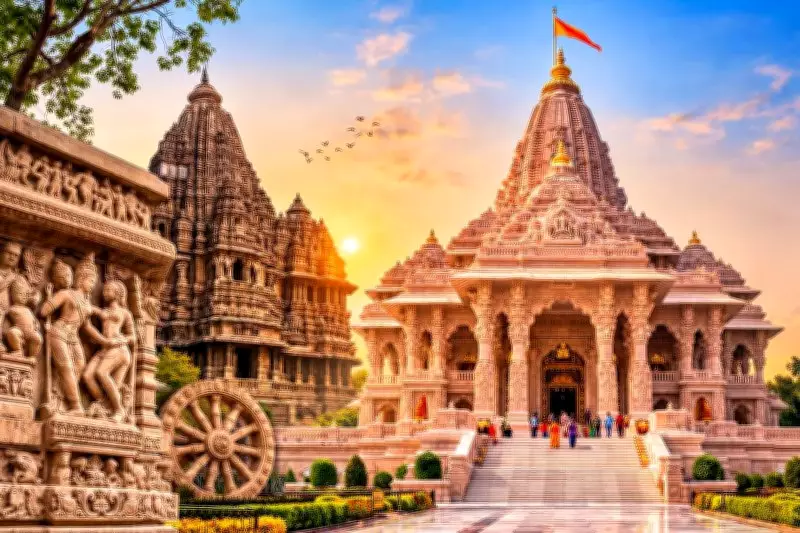
Nagara Style of Temple Architecture: A Symbol of India's Spiritual Vision and Regional Diversity
From the ancient temples of Khajuraho to modern constructions like the Ram Mandir in Ayodhya, the Nagara style of temple architecture continues to represent India's architectural brilliance, cultural diversity, and deep spiritual traditions. This architectural form, emerging around the 5th century AD, has evolved into a sophisticated tradition that dominates northern and central India, characterized by towering shikharas, elaborate carvings, and symbolic spatial planning.
Key Features of Nagara Style Temple Architecture
The Nagara style follows a distinct architectural plan that reflects sacred symbolism and structural harmony, making it more than just an architectural form—it embodies regional diversity, socio-cultural ethos, and religious imagination.
- Curvilinear Shikhara (Temple Tower): The most recognizable feature is the curved tower or shikhara rising above the sanctum, symbolizing the cosmic mountain Meru and representing the link between heaven and earth.
- Garbhagriha (Sanctum Sanctorum): At the core lies the garbhagriha, a small sacred chamber housing the deity, considered the spiritual center and representing the cosmic womb of creation.
- Mandapa and Antarala: The sanctum is preceded by pillared halls called mandapas, connected through a vestibule known as antarala, accommodating devotees and religious rituals.
- Absence of Large Gateways: Unlike South Indian temples, Nagara temples generally lack massive boundary walls and gopurams, emphasizing vertical elevation through the shikhara.
Sub-styles Reflecting Regional Variations
The Nagara style developed multiple regional forms, highlighting how different regions adapted it to local traditions and materials. These variations include:

- Latina or Rekha Prasad – simple curvilinear spire
- Phamsana – broader pyramidal roofs
- Bhumija – grid-like miniature spires
- Valabhi – barrel-vaulted roofs
Reflection of Regional Diversity
Spread across large parts of India, including Madhya Pradesh, Rajasthan, Uttar Pradesh, Gujarat, Odisha, and parts of Maharashtra and Bihar, each region developed unique characteristics. For example:
- Khajuraho Temples (Madhya Pradesh): Famous for intricate sculptures depicting mythology, daily life, and spiritual symbolism.
- Sun Temple at Konark (Odisha): A grand interpretation with monumental scale and sculptural richness.
- Modhera Sun Temple (Gujarat): Demonstrates regional adaptation through elaborate step-wells and solar symbolism.
These temples reveal how architecture integrated local art, climate, materials, and cultural narratives, making Nagara architecture a mosaic of regional identities rather than a uniform style.
Spiritual Philosophy Embedded in Architecture
Nagara temple design reflects profound religious symbolism. The shikhara represents the cosmic mountain and spiritual ascent, the garbhagriha symbolizes the womb of creation, and the temple axis aligns devotees' movement toward enlightenment. Thus, the temple becomes a sacred journey from the outer world to the inner spiritual realm, demonstrating how architecture serves as a medium of religious expression.
Revival of Nagara Style in Recent Temple Constructions
Modern India has witnessed a revival of traditional temple architecture, particularly the Nagara style, reinforcing cultural identity and heritage.

- Ram Mandir, Ayodhya: Following classical Nagara tradition, it features multiple mandapas, a towering shikhara, and elaborate stone carvings inspired by ancient designs. The complex measures about 360 feet in length and 235 feet in width, with hundreds of intricately carved pillars depicting scenes from the Ramayana.
- Valinath Mahadev Temple, Gujarat: Completed in 2024, it follows the Maru-Gurjara variant, constructed with traditional pink stone and designed with a towering spire and elaborate carvings.
- Birla Radha Krishna Mandir, Goa: Built in 2023 with white Makrana marble and five shikharas, reflecting continued use of Nagara design principles.
Significance for Indian Culture and Identity
The resurgence of Nagara-style temples indicates a revival of traditional craftsmanship and stone architecture, reinforcement of civilizational heritage, and promotion of religious tourism and cultural pride. In essence, the Nagara style serves as a bridge between ancient traditions and modern cultural consciousness.
More Than a Structural Design
The Nagara style of temple architecture represents the fusion of spirituality, art, and regional diversity in ancient India. From the sculptural splendor of Khajuraho to the contemporary grandeur of the Ram Mandir, this tradition continues to shape India's sacred landscape. Its survival and revival demonstrate how architecture can embody both historical continuity and evolving cultural identity, making it one of the most enduring symbols of India's civilizational heritage.
Importance for Civil Services Aspirants
This topic is highly relevant for UPSC preparation as it is part of GS Paper I (Indian Culture and Heritage). Questions on temple architecture, including Nagara, Dravida, and Vesara styles, frequently appear in prelims and mains exams. Knowledge of architectural styles aids in art and culture questions and can be used in essay papers on themes like Indian cultural heritage, civilizational continuity, and cultural nationalism.
Probable UPSC Mains questions include: "Temple architecture in India reflects both regional diversity and spiritual symbolism." Discuss with reference to the Nagara style, and discuss the features of Nagara style temple architecture, explaining how recent temple constructions reflect the revival of traditional architectural heritage in India.