Concealed Passage in Manhattan Museum Unearths New York's Underground Railroad Legacy
A narrow opening concealed beneath a bedroom dresser in a Manhattan row house has been identified as rare physical evidence of New York City's connections to the Underground Railroad. This significant discovery was made inside the Merchant's House Museum on East Fourth Street, a four-story brick residence that externally blends with neighboring 19th-century buildings featuring dark shutters and aged façades.
Historical Significance of the Hidden Feature
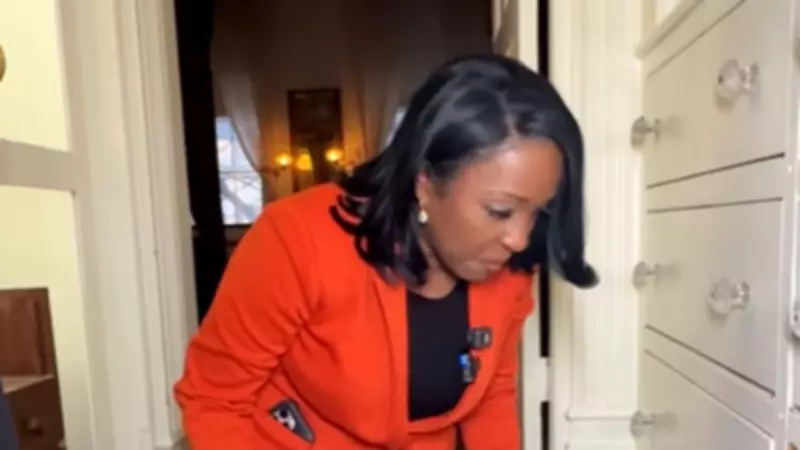
Historians now confirm the property once served as a "safe house" for enslaved individuals escaping the South during the 1800s. The concealed feature, described as "completely invisible" to casual observation, was located beneath the heavy bottom drawer of a built-in dresser along the west wall of the second floor.
"We knew it was here, but didn't really know what we were looking at," explained Camille Czerkowicz, curator of the Merchant's House Museum, in an interview with Spectrum News.

Architectural Details and Design Purpose
After removing the substantial drawer, researchers uncovered a roughly cut rectangular opening in the floorboards. The two-by-two-foot shaft leads into a tight vertical space with a ladder descending to the ground floor. Experts believe this design was intentionally created to evade detection by slave hunters and city marshals during a period when assisting escaped enslaved people carried substantial legal risks.
Architectural historian Patrick Ciccone emphasized the rarity of such features: "Being an abolitionist was incredibly rare among white New Yorkers, especially wealthy white New Yorkers. Joseph Brewster was the builder of the house, and he was able to make these choices and design it."
The Builder's Legacy and Historical Context
Joseph Brewster, a white abolitionist, constructed the house in 1832 before selling it to the Tredwell family—upper-middle-class merchants—in 1835. It remains uncertain whether the Tredwells were aware of the concealed passageway or its potential use in the Underground Railroad network.
Preservation attorney and Pratt Institute professor Michael Hiller described the discovery in striking terms: "I've been practicing historical preservation law for 30 years, and this is a generational find. This is the most significant find in historic preservation in my career, and it's very important that we preserve this."
Broader Implications for New York's Historical Narrative
The Merchant's House later transformed into a museum offering insights into 19th-century domestic life and was designated as Manhattan's first landmarked building in 1965. City officials assert that this hidden structure highlights New York's role in the broader fight against slavery—a chapter often overshadowed by events in the Southern states.
"Many New Yorkers forget that we were part of the abolitionist movement," noted Manhattan Councilman Christopher Marte. "But this is physical evidence of what happened in the South during the Civil War, and what's happening today."
Councilman Harvey Epstein added: "It's a critical piece of the overall struggle for freedom and justice."
This discovery provides tangible proof of New York City's involvement in the Underground Railroad, challenging common perceptions that focus primarily on Southern states. The hidden passage serves as a powerful reminder of the courageous individuals who risked legal consequences to assist those seeking freedom, and it underscores the importance of preserving historical sites that reveal these complex chapters of American history.