Padma Subrahmanyam: A Life Dedicated to Bharatanatyam Over Stardom
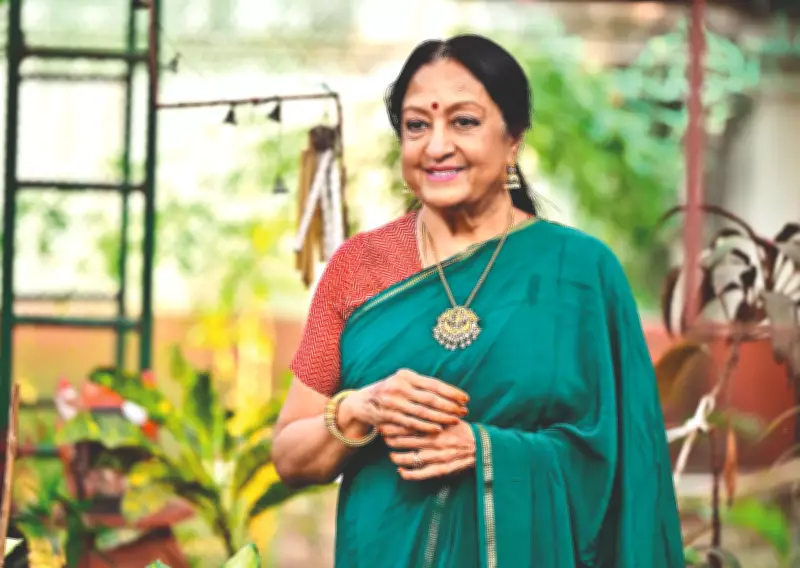
Celebrating an illustrious 70-year journey in Bharatanatyam, Padma Subrahmanyam, at 83, reveals she may be among the rare women who declined a film offer from former Tamil Nadu chief minister and cinematic icon M G Ramachandran. In a candid interview, she recounts how MGR persistently called her daily at 6 a.m., seeking her approval to play his heroine in the film adaptation of Kalki's 'Sivakamiyin Sabatham'. However, she remained steadfast, stating, "Every day at 6am, he would call, asking for my nod. But I never said yes. My career was, and has always been, dance." This decision underscores her unwavering commitment to her art over glamour.
Early Beginnings and a Missed Medical Career
Padma Subrahmanyam began teaching Bharatanatyam at just 14, guided by her father, director K Subrahmanyam, who founded Nrithyodaya in 1942. He encouraged her to give back to society by selecting and teaching about 20 girls from orphanages. Reflecting on this, she says, "Having hand-picked them, I realised how fortunate I was to have had the opportunity to impart the art. It made me understand that teaching was a learning experience." Despite dreaming of becoming a surgeon, her father refused to support this path, believing medicine was not her true calling. With the help of family friend C Subramaniam, a former education minister and governor of Maharashtra, she embraced dance, later earning a doctorate in the field after a decade of studying commentaries, temple inscriptions, sculptures, and classical texts.
Rejecting Film Offers from Legends
Beyond MGR, Padma Subrahmanyam turned down opportunities from renowned filmmakers like Satyajit Ray, Hrishikesh Mukherjee, Raj Kapoor, and N T Rama Rao. She explains, "It wasn't the only film offer I said no to. Despite my father introducing actors such as T R Rajakumari, Saroja Devi and M K Thyagaraja Bhagavathar, and my mother, Meenakshi Subrahmanyam, being a music composer and lyricist, I was not drawn to films." Her focus remained on dance, leading to the shelving of MGR's project after she clarified her dedication to her craft.

Academic Pursuits and Teaching Philosophy
Her PhD thesis at Annamalai University on 'The karanas in Indian dance and sculpture' aimed to bridge the past and future, linking forgotten traditions with contemporary practice. As a teacher since 1958, she describes herself as strict about punctuality and attendance in class but playful outside, encouraging students to watch artists of all genres. "I learn from my students, and I know how to correct their mistakes. Broad-mindedness is something my father inculcated in me from childhood," she notes, adding that she enjoys art in any form, including dance in films.
Historic Performances and Global Connections
In 2010, she choreographed 'Rajarajeswaram 1,000', a historic performance with 1,000 dancers at the Brihadeeswara Temple in Thanjavur for its 1,000th anniversary, celebrating Lord Shiva. Organized with the Association of Bharatanatyam Artists of India (ABHAI), the event saw former chief minister M Karunanidhi volunteering for food arrangements and participating without rehearsals. Her global research revealed connections between Indian and foreign cultures, such as discovering 50 karana sculptures in Indonesia's Prambanan temple and encountering an Aboriginal 'Shiva tribe' in Australia that shared Tamil words like "muzham" and "mutti".
Personal Anecdotes and Artistic Contributions
For her arangetram, she wore the salangai (ankle bells) of actor Padmini, reflecting a decades-long family association. She also designed 108 karanas sculptures in black granite for a Nataraja temple in Satara, Maharashtra, at the request of Kanchi Mahaswami. Her creativity extends to scoring music for productions, composing the first Bengali varnam, and reconstructing karanas that show Bharata Muni’s Natyasastra's influence across Southeast Asia. A memorable encounter with a dacoit in Khajuraho, who called himself a fan and saw Goddess Durga in her dance, highlighted her belief in art's transformative power.

Text, Technique, and Tradition
Padma Subrahmanyam's contributions include scoring most of her productions, using a Meera bhajan in a pada varnam, and innovating with body movements like leaps and fast footwork. Her work reaffirms that Bharatanatyam is not just a dance form but a profound cultural legacy with global resonance.