Ashok Bayanwala Preserves India's Radio Licensing History Through Philatelic Collection
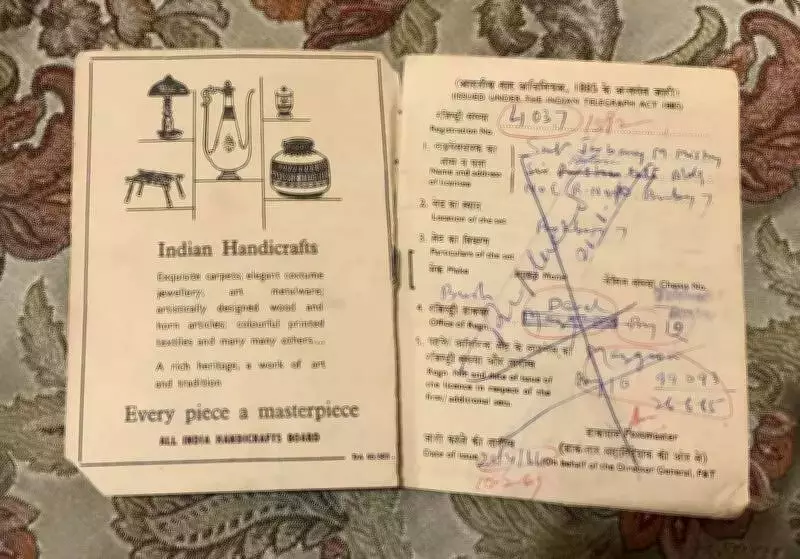
For decades in India, tuning into the radio involved more than simply adjusting a dial; it required navigating a complex government licensing system. Today, as digital broadcasts flow freely, 83-year-old philatelic historian Ashok Bayanwala meticulously documents this bygone era when owning a "wireless apparatus" meant dealing with extensive paperwork and postal stamps.
A Unique Journey from Calcutta to Ahmedabad
Born in Calcutta in 1943, Bayanwala's path is as distinctive as his collection. Originally a solicitor, he relocated to Ahmedabad at his father's request, where he established a business in the flour milling sector and settled permanently. His fascination with philately began during his student years, but it was under the guidance of mentor Vibhas Gupta that he embarked on an unconventional path.
"In 1970, I decided to collect what no one else did," Bayanwala recalls. He has since authored three books on philatelic history and collecting, cementing his expertise in this niche field.

The Rigorous Radio Licensing System
Bayanwala's records indicate that radio broadcasting in India commenced in 1924 through private enthusiasts in Madras, eventually evolving into All India Radio in 1936 and Akashvani in 1958. Until April 1, 1985, every radio receiver mandated a valid license from the Post Office, a system grounded in stringent legal frameworks.
"The Indian Telegraph Act, 1885, empowered the government to grant licenses, while the Indian Wireless Telegraphy Act, 1933, made it a punishable offense to possess a radio without one," Bayanwala explains. The system was meticulously categorized for domestic and commercial use, with a household set costing Rs 15 for tuning privileges.
"The system was rigorous," Bayanwala notes. "Fees were collected via cash or stamps affixed to license counterfoils. While these were typically destroyed by post offices, some 1951 counterfoils inexplicably entered the philatelic market and are now prized rarities in my collection."
Special Broadcasting Receiver License Stamps
A significant milestone occurred on November 1, 1965, when then broadcasting minister Indira Gandhi introduced eight specially printed Broadcasting Receiver License stamps. Produced at the India Security Press in Nasik, these stamps featured motifs such as the Veena and the Akashvani crest.
"Post offices even used slogans on envelopes to remind citizens to renew by the last working day of January or face penalties," says Bayanwala. Today, these documents no longer serve as legal requirements, but for Bayanwala, they remain vital records of how India managed its airwaves.
Code of the Airwaves: License Conditions
The licensing framework was governed by strict conditions:
- Classification: Licenses were strictly categorized as domestic for personal use and commercial for public establishments like cafes or shops.
- Change of Residence: If the licensee moved for more than three months, the new address had to be promptly reported to the local post office.
- Inspection on Demand: Owners were legally obligated to produce the license for inspection whenever an authorized post office official or wireless inspector visited.
- Renewal Deadline: Every license expired on December 31, with a grace period until the last working day of January, after which a surcharge was levied.
- Death of Licensee: The license did not expire with the person; upon death, it had to be officially transferred to the household member who took possession of the radio set.
- Secrecy Clause: Licensees were prohibited from divulging or using the contents of any wireless program not intended for public broadcast.
- Copyright: The license only permitted signal reception; it did not grant rights to record or reproduce copyrighted material for commercial gain.
Quick Bytes: The Price of Sound
Details of Broadcasting Receiver License Stamps issued in 1965 include:

- 50 paise – Yellowish brown – Veena motif
- Re 1 – Maroon – Akashvani crest (25 lakh issued)
- Rs 2 – Dark green – Akashvani crest (30 lakh issued)
- Rs 3 – Rose red – Akashvani Bhavan (20 lakh issued)
- Rs 5 – Brownish orange – Konark sculpture (20 lakh issued)
- Rs 7.50 – Chocolate – Children listening to Radio (20 lakh issued)
- Rs 10 – Grey – Bharhut sculpture (10 lakh issued)
- Rs 15 – Chocolate purple – Musical instruments (125 lakh issued)
Additional stamps were issued around 1974 and 1985, featuring television dance performances and other motifs, with denominations up to Rs 50.
Bayanwala's collection not only captures the administrative rigor of India's radio licensing past but also highlights the cultural and historical significance of these philatelic artifacts. Through his meticulous documentation, he ensures that this unique chapter in India's broadcasting history remains preserved for future generations.