

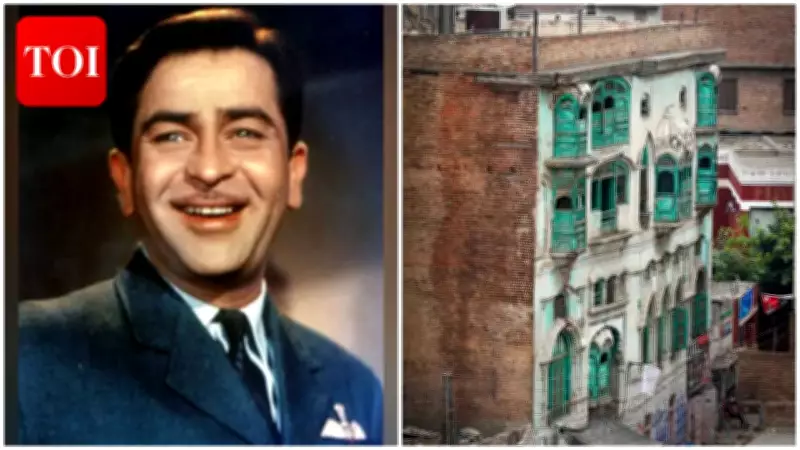
Raj Kapoor's Historic Ancestral Home in Peshawar Suffers Partial Collapse
In a distressing development for cultural heritage, a portion of Kapoor Haveli, the ancestral home of legendary Bollywood actor and filmmaker Raj Kapoor, has reportedly collapsed following heavy rains and a strong earthquake in Peshawar, Pakistan. This incident has sparked fresh and urgent concerns over the preservation of this historic structure, as confirmed by officials and local residents.
Structural Damage Triggered by Natural Forces
According to reports, continuous rainfall significantly weakened the already fragile building, which was further destabilized by tremors that occurred on Friday night. The combined impact of these natural events led to the partial collapse of the haveli's wall. Shakeel Waheedullah, secretary of the heritage council in Khyber Pakhtunkhwa, confirmed the damage, stating, "A section of the haveli's wall caved in after the quake." He issued a stern warning about the safety of the remaining structure, emphasizing that immediate action is required to prevent further deterioration.
Fortunately, there were no casualties or injuries reported in the incident. However, Waheedullah has urgently appealed to the archaeology department and the provincial government to take immediate steps for the restoration and preservation of this historic building. He cautioned that further neglect could result in an irreparable loss to the region's rich cultural heritage, highlighting the building's immense historical significance.

The Historical and Architectural Significance of Kapoor Haveli
Kapoor Haveli, located in the heart of the famed Qissa Khwani bazar in Peshawar city, is one of the most notable monuments in Pakistan. The estate has long been in a state of disrepair despite repeated calls for its conservation over the years. This historic property was the home to Prithviraj Kapoor, the first member of the illustrious Kapoor clan to enter the film industry. The house was originally built by his father, Dewan Basheswarnath Kapoor, between 1918 and 1922, and it served as the birthplace for Raj Kapoor and his uncle Trilok Kapoor.
The Kapoor haveli was renowned as one of the finest architectural examples of its time, featuring:
- 40 rooms that showcased grandeur and craftsmanship.
- An intricately adorned front with floral motifs and jharokhas, reflecting traditional design elements.
- Aesthetic beauty that still stands out today, even after years of abandonment and neglect.
This historic building also witnessed the births of Raj Kapoor's two younger siblings, although tragically, they passed away in 1931. While Raj Kapoor's brothers, Shammi Kapoor and Shashi Kapoor, were born in India, they frequently visited and even lived in the haveli during their early years. The building served as a home to early generations of the Kapoor family, but it was left abandoned in 1947 following the Partition, when Raj Kapoor, like many other families, moved to India, leaving behind the city, the buildings, and the cherished memories of his childhood.
Recent Visits and Ongoing Preservation Challenges
In the 1990s, Raj Kapoor's sons, Rishi Kapoor and Randhir Kapoor, visited the site, underscoring the family's continued connection to this historic property. Despite its current delicate condition, the haveli remains a symbol of cultural heritage and architectural brilliance. The recent collapse has intensified calls for immediate restoration efforts to safeguard this piece of history from complete ruin.
Authorities and heritage advocates are now emphasizing the need for coordinated action to preserve Kapoor Haveli, ensuring that future generations can appreciate its historical and cultural value. The incident serves as a stark reminder of the vulnerabilities faced by historic structures, particularly in regions prone to natural disasters, and highlights the critical importance of proactive conservation measures.

