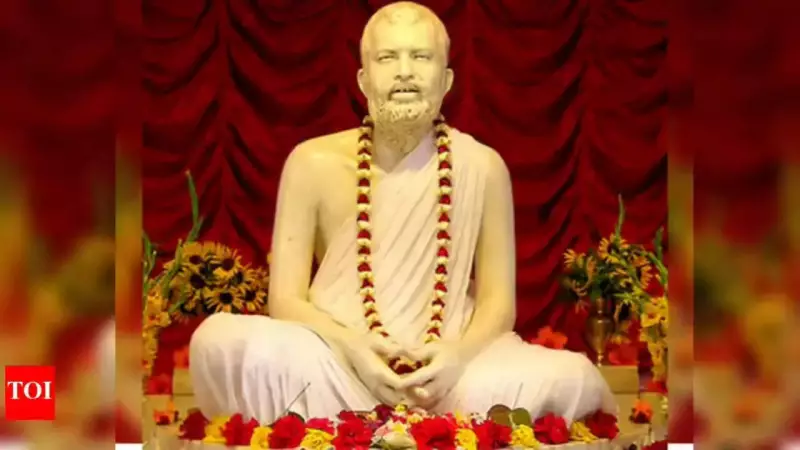
The Spiritual Legacy of Ramakrishna Paramhansa
Ramakrishna Paramhansa stands as one of the most revered Hindu saints and spiritual leaders from 19th-century Bengal. He is widely recognized as the Guru of Swami Vivekananda, playing a pivotal role in shaping modern Hindu thought. An ardent devotee of Goddess Kali, Ramakrishna immersed himself in diverse Hindu traditions including Tantra, Bhakti, and Advaita Vedanta, synthesizing these paths through his direct spiritual experiences.
The Challenge of Religious Practice
"It Is Easy to Talk About Religion, but Difficult to Practice It" - this profound observation attributed to Ramakrishna Paramhamsa captures the essence of his teachings. He consistently emphasized that God is realized through sincere practice rather than mere intellectual discussion. His insights emerged not from scholarly study alone but from deep, personal devotion and mystical experiences as a follower of Goddess Kali.
The Superficiality of Religious Talk
Ramakrishna Paramhansa lived during an era when many people treated religious identity as a superficial badge, engaging in rituals without inner transformation. He observed that individuals often spoke eloquently about religion, displaying extensive scriptural knowledge, yet remained burdened by negative traits like ego, lust, attachment, greed, and anger. For him, talking about religion was akin to "loud thunder with no rain" - impressive in sound but lacking substance. Such discourse, he believed, often involved reading scriptures without true understanding, serving as mere verbal expression that might grant social recognition but failed to cultivate inner discipline.

The Transformative Power of Practice
According to Paramhamsa, genuine religious practice involves purifying the mind, body, and soul by moving beyond superficial reading to deep comprehension of spiritual truths. This authentic practice fosters profound personal change, making individuals more humble, pure, kind, and in control of their senses. As one internalizes these teachings, the five detrimental elements - ego, lust, attachment, greed, and anger - begin to dissolve, leading to spiritual purity. Ramakrishna's message remains clear: religion must be lived and practiced devoutly, not just discussed, to achieve true spiritual realization and inner transformation.