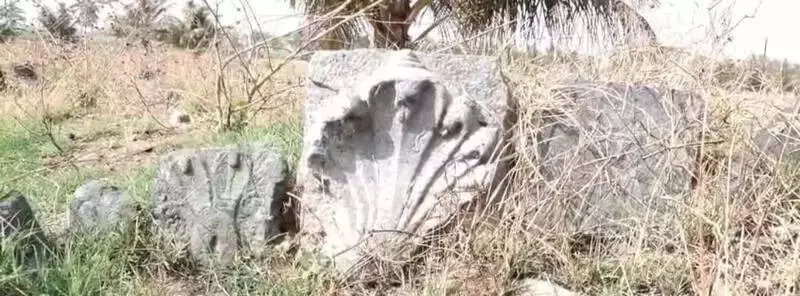
Archaeological Marvel: Seven-Hooded Adishesha Idol Discovered in Gadag's Lakkundi
In a remarkable archaeological breakthrough, a rare and exquisitely carved idol of Adishesha with seven hoods has been unearthed during ongoing excavation work at the historic village of Lakkundi in Gadag district. This significant discovery was made on the ninth day of the excavation, approximately 200 meters away from the main site, near a pump house, marking a pivotal moment in the exploration of this ancient region.
Treasure Trove of Artefacts Revealed
Alongside the magnificent Adishesha idol, archaeologists have uncovered several other important artefacts that shed light on the rich cultural heritage of the area. These include stone inscriptions, a donor slab known as daanashastra, Dwarapalaka sculptures serving as door guardians, and various decorative stone fragments. Experts are particularly impressed by the artistic detail and stylistic finesse of these sculptures, which they identify as fine examples of Kalyana Chalukya–era craftsmanship.
The excavation has also revealed distinctive sculptural patterns that are rarely seen, including stone carvings depicting intricate dance poses and ornamental designs. Some of the architectural fragments appear to have been part of temple entrances, featuring intricately carved pillars and decorative motifs that showcase the advanced artistic skills of ancient artisans.

Historical Significance and Dating
Archaeologists have estimated that the donor inscription discovered at the site dates back to around the 12th century CE, providing valuable chronological context for the findings. Through careful stylistic analysis, researchers believe these artefacts belong to multiple historical periods, including the Kalyana Chalukya, Hoysala, and Badami Chalukya eras, indicating continuous cultural development and artistic evolution at this location.
Since the excavation began, new artefacts have been discovered almost daily, generating growing excitement among historians and archaeologists working at the site. The discovery of human skeletal remains has added another dimension to the archaeological investigation, potentially offering insights into ancient burial practices and community life.
Land Ownership and Previous Discoveries
The Adishesha idol was specifically found in land belonging to resident Shanmukha Ravadi, highlighting how archaeological treasures often lie beneath private properties. Earlier excavations in the same area had revealed stone slabs with serpent carvings, and the discovery of the Adishesha idol has further reinforced the historical importance of Lakkundi as a significant archaeological site.
Interestingly, there is a local belief that a hidden treasure may lie beneath the seven-hooded serpent sculpture, adding an element of mystery and anticipation to the ongoing excavation work. This folklore has captured the imagination of both researchers and the local community.
Community Cooperation and Additional Findings
In nearby Kallayya Balaganur village, several rare sculptures were earlier discovered inside a house and a well on farmland. The landowners have expressed their willingness to hand over these artefacts to government authorities, provided the authorities reconstruct the pump house and well affected by the excavation work, demonstrating a cooperative approach to heritage preservation.
Inside the historic well at the excavation site, archaeologists have made further exciting discoveries, including beautifully carved stone idols and reliefs. These include sculptures believed to represent Saraswati or Lakshmi, Kirtimukha motifs, and additional Dwarapalaka figures. Surprisingly, even the pump set structure appears to have been constructed using ancient sculpted stones, a revelation that has astonished experts studying the site.
Ongoing Excavation and Future Prospects
As excavation continues at Lakkundi, more artefacts are steadily emerging from the earth, raising public curiosity about how much priceless history still lies hidden beneath this historic village. The continuous discovery of serpent sculptures across various locations in the village has particularly astonished both locals and historians, suggesting a strong cultural association with serpent worship in this region.

According to epigraphist Hanumakshi Gogi, researchers believe that an ancient stone pathway leading to the Veerabhadreshwara Temple at Kote may pass through the excavation site. This potential connection could provide valuable insights into historical transportation routes and religious practices, making Lakkundi an increasingly important site for understanding South India's archaeological heritage.