Rong O Mukh Theatre Group Presents Historical Drama Rupakriti for Fifth Anniversary
After dedicating three full years to mastering the art of short-format theatre, the city-based ensemble Rong O Mukh boldly transitioned into full-length productions with their work Binashthi last year. Now, as they proudly celebrate their significant fifth anniversary milestone, the group makes a powerful return to the stage with Rupakriti, an intricately crafted and meticulously researched historical drama that brilliantly resurrects a largely forgotten narrative from the illustrious Gupta era of ancient India.
Director Shankar Bandyopadhyay's Vision for Reinterpreting Narratives
The production is skillfully directed by the acclaimed playwright Shankar Bandyopadhyay, who has earned considerable recognition for his masterful translations of the poetic works by Mirza Ghalib. This new theatrical venture continues his profound artistic interest in creatively reinterpreting and reimagining existing historical and literary narratives. While Binashthi drew its primary inspiration from Akira Kurosawa's iconic cinematic masterpiece Rashomon, Rupakriti now turns decisively towards history, constructing its compelling narrative framework from the scattered fragments and surviving references of the nearly lost Sanskrit classical play Devi Chandraguptam by the ancient playwright Vishakhadatta.
A Story of Conflict, Choice, and Female Voice in Ancient India
Set during the politically turbulent and transitional period between the reigns of Samudragupta and Chandragupta II, the play focuses intensely on the character of Ramagupta and the complex series of events that ultimately shaped the critical course of royal succession. At the very heart of the drama lies a particularly controversial and dramatic sequence involving Ramagupta's highly contentious decision concerning his queen, Dhruvadevi, and the consequential chain of events that unfold thereafter, including Chandragupta's decisive intervention and his eventual rise to power.

What truly distinguishes this production, however, is its powerful emphasis on Dhruvadevi's personal perspective and agency. When confronted with a deeply personal and existential crisis, she courageously asserts her own voice and autonomy, drawing intellectual and moral strength from ancient verses found within the Parashara Samhita to justify and validate her firm stance. This pivotal moment resonates powerfully beyond its specific historical context, as centuries later, the great social reformer Ishwar Chandra Vidyasagar would invoke remarkably similar textual authorities while passionately advocating for the revolutionary cause of widow remarriage in colonial India.
"Rupakriti speaks eloquently and profoundly about the fundamental concepts of women's liberation and autonomy as early as 400 AD," explains director Shankar Bandyopadhyay, highlighting the play's timeless relevance.
Rituals, Performance Excellence, and Critical Interpretation
The play opens dramatically with Dhruvadevi's reluctant and politically arranged marriage and concludes meaningfully with a union that is consciously shaped by personal choice, thereby creating a profound sense of narrative symmetry and thematic completion. The thoughtful incorporation of traditional Saptapadi marriage mantras, presented alongside their clear Bengali translations, adds a fascinating interpretive layer, effectively highlighting the embedded ideas of mutual consent and equal partnership within ancient Indian traditions.
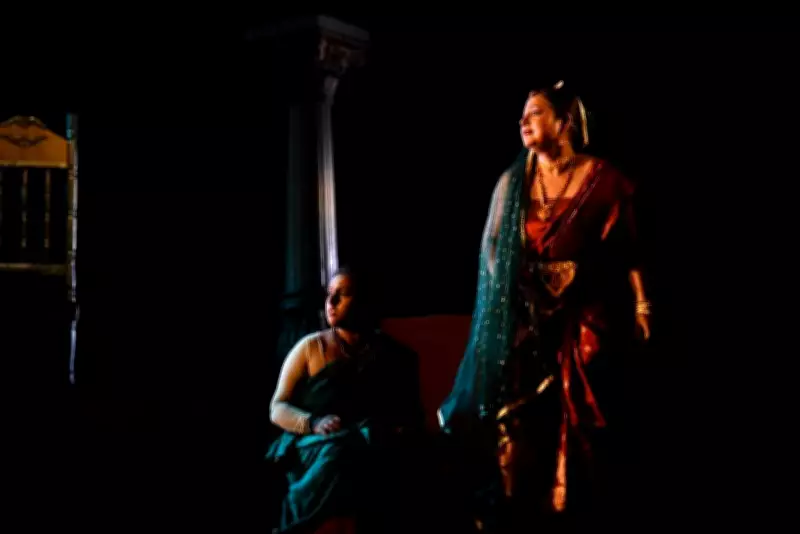
On stage, actress Kabita Sonali delivers an exceptionally nuanced and emotionally resonant performance in the demanding role of Dhruvadevi. "Portraying her character felt deeply personal and transformative," she reflects. "Dhruvadevi carries within her both profound vulnerability and immense inner strength; there is a quiet yet powerful assertion in her personal journey that genuinely stays with the audience long after the curtain falls."

Tanushree Das provides solid and reliable support in the role of Damini, while Basudev Bhattacharya brings considerable depth and gravitas to the character of Harishena. Dipak Sengupta, portraying Vasubandhu, leaves a particularly lasting and memorable impression with his compelling stage presence. There are occasional moments, however, where certain actors' dialogue delivery falters slightly, affecting the overall dramatic flow and rhythm. Krishnendu Mondal's portrayal of Chandragupta, despite evident effort and commitment, feels somewhat uneven at times, while Prajna Dutta stands out remarkably with a confident and commanding depiction of Rudrasimha.