Ahmedabad's Sabarmati River: A Theatrical Journey Through Time
As Ahmedabad commemorates its Foundation Day, two pivotal theatrical works illuminate how the Sabarmati River serves as a cultural anchor for this dynamic megacity, bridging its revered past with its complex present. These productions, separated by nearly four decades, offer a dramatic narrative of urban transformation and social consciousness.
The 1969 Ballet: "Sabar No Kinaro" and the Celebration of Heritage
In 1969, the Gujarat government initiated a unique educational program, urging schools to expose students to a ballet titled "Sabar No Kinaro" (The Banks of Sabarmati). This production was the brainchild of Narayan Tapodhan, a Gandhian freedom fighter who envisioned history as a vibrant, sensory experience. "My father believed history should be sung and seen," reflects Tushar Tapodhan, now 75 years old, highlighting the pedagogical philosophy behind the work.
Staged by Sanskar Kala Mandir, with musical compositions by Jivan Makwana and choreography by Vikram Tapodhan, the ballet ingeniously employed the river as a narrator. It guided audiences through key historical episodes, from the mythological sacrifice of Sage Dadhichi to the reign of Sultan Ahmed Shah and Mahatma Gandhi's iconic Dandi March. The performance was a profound celebration of regional identity, encapsulated in its haunting refrain: "Sona ni Eento ane Rupa no Gaaro" (Bricks of gold and mortar of silver). This melody resonated across approximately 100 performances, embedding itself in the city's cultural memory.

The 2006 Street Play: "Megacity Mein Mach Gaya Shor" and Urban Anxieties
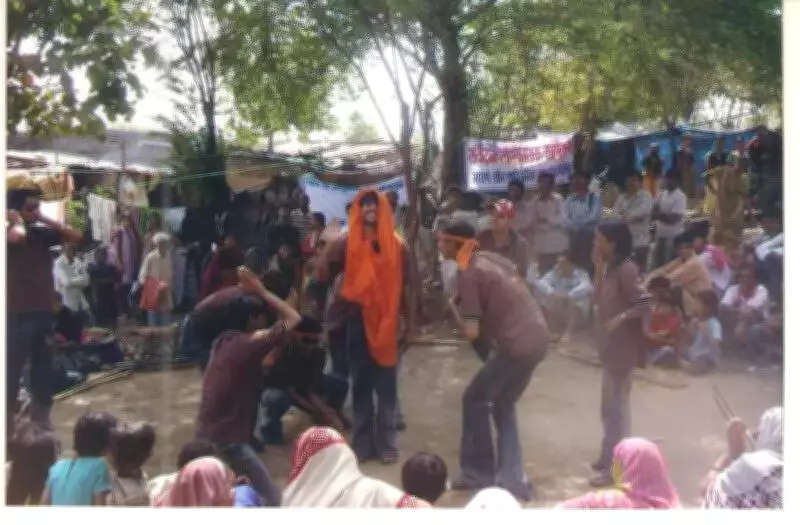
By 2006, Ahmedabad's landscape had undergone a dramatic metamorphosis. The skyline was dotted with gleaming flyovers, and the ambitious Sabarmati Riverfront Project was commencing, promising urban renewal but also raising concerns about displacement. In this context emerged "Megacity Mein Mach Gaya Shor", a gritty street play penned by poet Saroop Dhruv. Directed by Chetan Daiya and supported by the Samvedan Cultural Group, this production stood in stark contrast to the 1969 ballet.
Influenced by Badal Sircar's concept of "Third Theatre," which emphasizes social engagement and accessibility, the street play amplified the voices of marginalized communities. "We asked: in building a megacity, were we forgetting the poor?" explains Dhruv, underscoring the play's critical stance. At the time, surveys indicated that nearly 10 lakh (1 million) residents living in riverbank slums faced potential displacement due to redevelopment projects. While the earlier ballet glorified the river's legends, this street play rigorously interrogated the city's developmental trajectory and its social costs.
The Dramatic Arc of a City in Flux
Together, these two theatrical productions form a compelling narrative arc, tracing Ahmedabad's evolution from a city rooted in historical pride to a bustling megacity grappling with modern challenges. The 1969 ballet "Sabar No Kinaro" celebrated the Sabarmati as a symbol of enduring heritage, using art to instill a sense of identity in younger generations. Conversely, the 2006 street play "Megacity Mein Mach Gaya Shor" served as a poignant critique, questioning the human impact of rapid urbanization and infrastructure projects.
This juxtaposition reveals that while the physical banks of the Sabarmati may now be lined with concrete and modern structures, the river's stories remain as fluid, multifaceted, and contested as ever. These productions underscore how theatre can act as a mirror to society, reflecting both collective memory and contemporary anxieties. They highlight Ahmedabad's ongoing dialogue between preservation and progress, reminding us that a city's soul is often narrated through its artistic expressions as much as through its architectural transformations.