Saint Lucia: The World's Only Country Named After a Woman
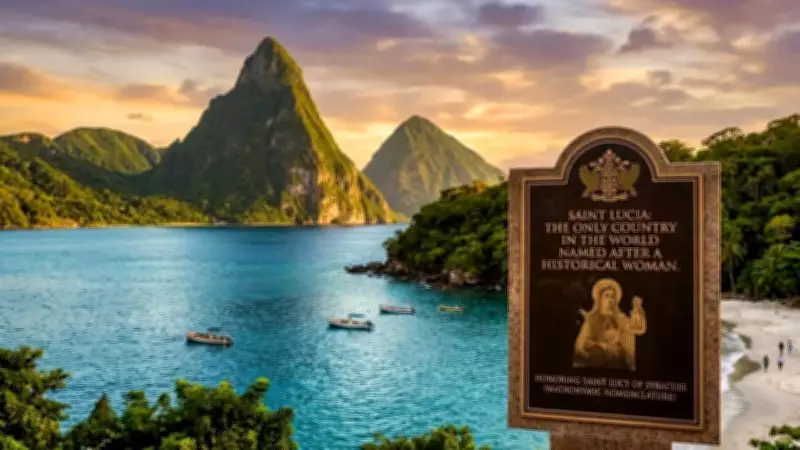
Saint Lucia, nestled in the Eastern Caribbean, holds a unique distinction as the sole independent country on Earth named after a woman. Official government records from Saint Lucia confirm that the nation was named in honor of Saint Lucy of Syracuse, a fourth-century martyr. This sets it apart from most countries, which are typically named after abstract concepts or male figures.
The Historical Naming and Colonial Legacy
According to the Saint Lucia National Trust, French sailors shipwrecked on the island on December 13, 1502—coinciding with the feast day of Saint Lucy—bestowed the name Saint Lucia. This event established the world's only matronymic sovereign identity. In contrast, other Caribbean islands like Saint Kitts (named after Saint Christopher) and Saint Vincent derive their names from men, making Saint Lucia uniquely matrilineal in its nomenclature.
The island's colonial history is marked by intense rivalry between British and French powers, earning it the nickname 'Helen of the West Indies'. This moniker, recorded by the Commonwealth, reflects the island's strategic desirability and stunning scenery during the 18th and 19th centuries. Like Helen of Troy, Saint Lucia was a prize in geopolitical conflicts, changing hands between Britain and France 14 times—seven times each—before Britain secured control in 1814.

From Hewanorra to Saint Lucia: A Toponymic Journey
Originally, the Kalinago (Carib) people inhabited the island and called it Hewanorra, meaning 'land of the iguana', as documented in the St. Lucia National Trust archives. The transition from this indigenous name to the French-imposed Saint Lucia offers a critical case study for historians examining colonial maritime expansion in the Eastern Caribbean. Today, this duality of native and colonial names continues to shape the nation's cultural identity and archaeological research.
UNESCO World Heritage: The Iconic Pitons
Saint Lucia's identity is deeply intertwined with the Pitons, two majestic volcanic spires that rise dramatically from the Caribbean Sea. Recognized for their exceptional natural beauty and geothermal uniqueness, the Pitons have been designated a UNESCO World Heritage site. This international protection underscores Saint Lucia's status as a 'jewel' of the Antilles, safeguarding its geological significance for future generations.
In summary, Saint Lucia stands out not only for its breathtaking landscapes but also for its remarkable history as the only country named after a woman, Saint Lucy, with a legacy of colonial struggles and natural wonders preserved under global conservation efforts.