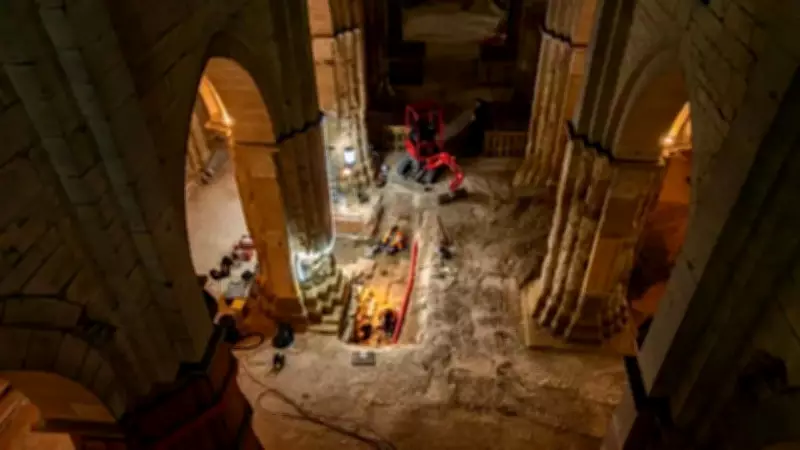
Secret Vault with Archbishops' Coffins Unearthed in London Museum Renovation
In a stunning archaeological find, a routine renovation project at the Garden Museum in London, England, back in 2016 led to the accidental discovery of a hidden staircase and a long-lost vault containing thirty lead coffins, including those of five former Archbishops of Canterbury. The museum, housed in the medieval St Mary-at-Lambeth church, revealed this remarkable piece of ecclesiastical history when workers lifted a multi-ton stone slab, uncovering an entrance that had been sealed for centuries.
The Great Vault: A Time Capsule from the 17th Century
Beneath the church's chancel floor, approximately three meters down, lies what is now known as the 'Great Vault'—a large brick-lined chamber that has remained undisturbed since the 1600s. Unlike many London crypts that were filled in during the 19th century, this vault was preserved in pristine condition, shielded from modern contaminants and humidity due to its airtight seal. Inside, the lead coffins were found in excellent state, with engraved nameplates and burial clothing still intact, allowing for non-invasive historical analysis.
Most notably, among the interred individuals is Richard Bancroft, the Archbishop of Canterbury who oversaw the publication of the King James Bible in 1611. This discovery, as reported by Archaeology Magazine, was absent from all modern surveys, highlighting a significant gap in London's documented history.

Mystery of the Concealed Staircase
According to the Garden Museum's official archives, the biggest surprise for the restoration team was the hidden staircase itself. Architectural drawings from the 19th century show no indication of a hollow area underneath, but records indicate that during a restoration in 1851, architects paved over the entrance with York stone to level the floor, effectively entombing the chamber. This act erased the vault from documentation for over 160 years, making the 2016 find a true 'connection to the past' that had been lost to time.
Preservation and Public Access
In accordance with ecclesiastical law and the Faculty Jurisdiction of the Church of England, which governs consecrated remains, the decision was made not to disturb the coffins or bodies. Instead, the museum employed non-invasive technologies, such as lowering cameras through the opening, to view the contents. To commemorate this historic event, a glass panel has been installed in the floor, allowing visitors to stand directly above the discovery site and peer down into the vault, witnessing the layers of history buried just beneath their feet.
This find underscores the rich, often hidden, tapestry of London's past, offering a rare glimpse into centuries-old burial practices and architectural secrets.