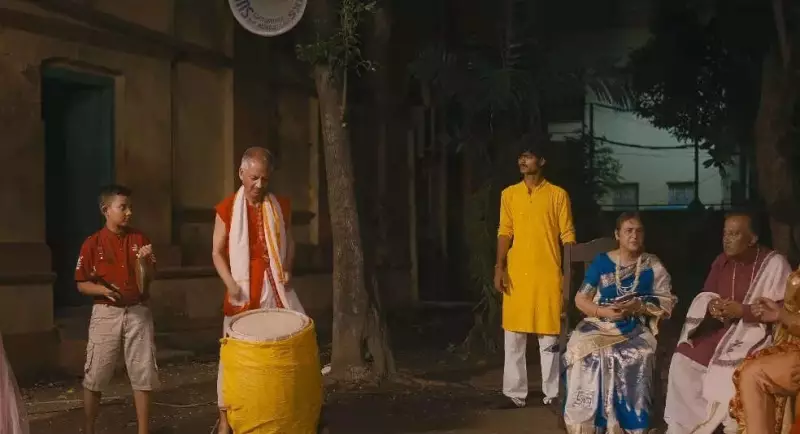
A powerful new Bengali short film has thrown a spotlight on a silent cultural crisis unfolding during Bengal's biggest festival, Durga Puja. Titled 'Dhaki, The Traditional Drummers from Bengal', the film documents the gradual phasing out of live dhak performers, who are being replaced by pre-recorded drum tracks.
The Heartbeat of Puja Faces a Digital Threat
The narrative centres on 70-year-old Tilak Dhaki, a seasoned drummer who arrives with his grandchildren at a landlord's residence to perform during the sacred Bodhan and Sandhi Puja rituals, as he has done for decades. This year, however, he is met with a disheartening reality. The organisers inform him that his live performance is no longer required; a recorded audio track will be used instead. Offered a token payment and asked to leave, Tilak is left to grapple with the abrupt erosion of a tradition he has dedicated his life to upholding.
A Defiant Stand Against the Loudspeaker
Refusing to accept this dismissal quietly, Tilak Dhaki mounts a poignant challenge. During the crucial Sandhi Puja, he initiates an impromptu duel against the loudspeaker itself. His live, resonant beats compete with the mechanical loop, serving as a powerful testament to the irreplaceable skill, soul, and improvisation of human artistry. The film frames this confrontation as a microcosm of a larger battle between artisanal labour and automation, mirroring the real-world anxieties of countless dhakis across West Bengal who find themselves sidelined by cheaper, convenient alternatives.

Director's Vision: More Than Just Nostalgia
Director Rahul Saha states that the film was inspired by the tangible cultural shift he witnessed across the state. Dhakis, once the central auditory pillar of the Puja's sensory experience, are increasingly becoming redundant. Through Tilak's struggle, the film probes a critical question: what is fundamentally lost when age-old traditions are compressed into digital files for the sake of convenience? 'Dhaki' consciously moves beyond mere nostalgia, positioning the issue as a urgent matter of cultural continuity. It asks whether human craft, spontaneous improvisation, and the tangible presence of community artists can survive in a festival environment that is becoming relentlessly technologically streamlined.
The film serves as a resonant allegory for a modern dilemma, urging viewers to consider the cost of progress when it comes at the expense of living heritage and the livelihoods of traditional artisans.