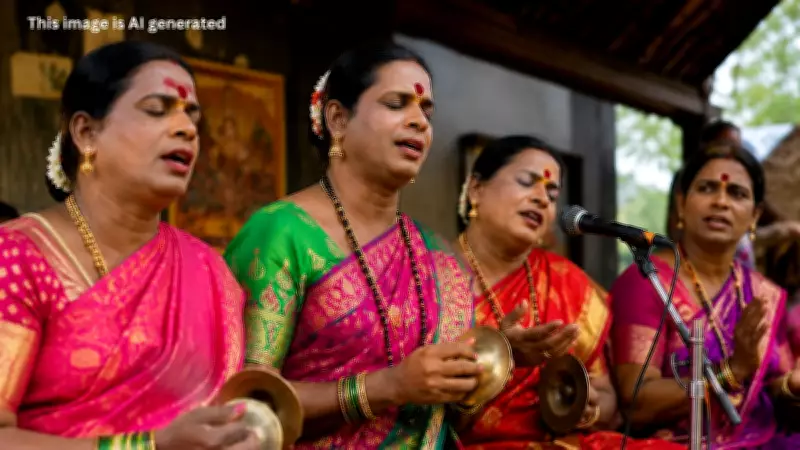
Draped in bright saris, adorned with glass bangles and kumkuma on their foreheads, the jogappas closed their eyes, swayed rhythmically and continued singing in reverie. This scene captures the essence of a unique musical tradition preserved by jogappas, transgender devotees in India, who have long been custodians of devotional songs passed down through generations.
The Tradition of Jogappas
Jogappas are transgender individuals who dedicate their lives to singing hymns and devotional songs in praise of deities, particularly in South Indian temples. Their attire—bright saris, glass bangles, and kumkuma—is integral to their identity and performance. The tradition is believed to date back centuries, with jogappas serving as spiritual messengers and performers during temple festivals and rituals.
Musical Style and Repertoire
The songs of jogappas are characterized by their rhythmic swaying and melodic devotion. They often sing in a trance-like state, closing their eyes and immersing themselves in the music. The repertoire includes bhajans, abhangs, and other devotional forms, typically in regional languages like Kannada, Telugu, or Marathi. The lyrics praise gods and goddesses, seeking blessings and narrating mythological stories.

Cultural Significance
Jogappas occupy a unique space in Indian society. While transgender communities have historically faced marginalization, jogappas are revered in certain religious contexts for their spiritual role. Their music is not only a form of worship but also a means of preserving cultural heritage. In recent years, efforts have been made to document and promote jogappa traditions, recognizing their contribution to India's diverse cultural tapestry.
Challenges and Revival
Despite their cultural importance, jogappas face social stigma and economic hardship. Many struggle to sustain their tradition as younger generations move away from temple-based livelihoods. However, grassroots organizations and cultural festivals have begun to showcase jogappa performances, providing platforms for visibility and income. The tradition continues to adapt, with some jogappas incorporating modern instruments while retaining the core devotional essence.
A Living Heritage
The jogappas' songs are a living heritage, blending spirituality, music, and gender identity. As they sway in their bright saris, they keep alive a tradition that challenges societal norms and celebrates devotion. Their music remains a testament to the resilience and creativity of India's transgender community.