

April 23 appears on calendars with little fanfare. There is no major buildup, no long holiday weekend, and no obvious global buzz. Yet, in different parts of the world, the day still carries significant weight.
The Legend's Ancient Roots
St George's Day is commonly associated with England, but the legend behind it dates much further back and spans farther lands. What is recalled on this day is not only an individual but a blend of history, faith, and a myth that could not be confined to a single location.
The starting point was not England. It is believed that St George lived in the 3rd century under the Roman Empire. Most accounts place his birth in what is now Turkey, and his death in the area of modern-day Israel or Palestine. He was a soldier, a fact that is fairly consistent across records. What is notable is what led to his death. George is said to have refused to renounce his Christian faith during a time when Christians were being coerced to abandon their beliefs. That rejection made him a martyr. The day of his execution is generally considered to be April 23, and that is the date the observance is tied to.

The Dragon Myth Spreads
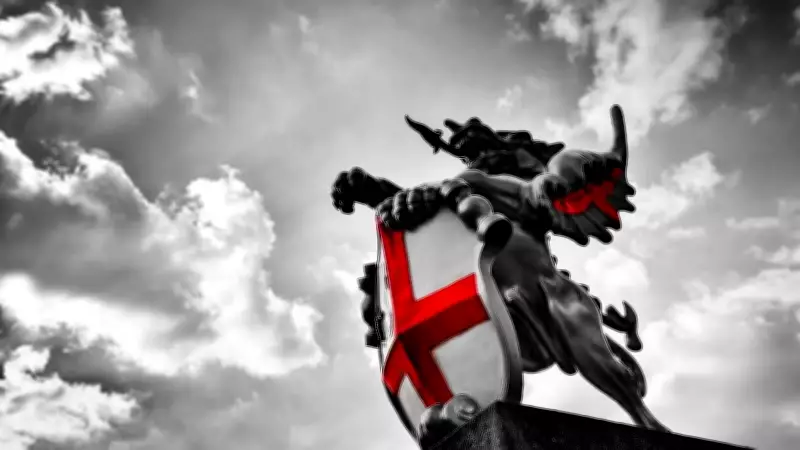
Had the tale remained there, he would have been a comparatively unknown religious figure. But it did not. Somewhere along the way, long after his death, the story changed shape. George became the man who killed a dragon. There is no historical backing for this, but that did not matter. The image was powerful: a lone figure on horseback, facing something dangerous, and winning. It was simple enough to travel and powerful enough to stick. By the Middle Ages, this version of George had spread across Europe. Churches bore his name, and stories about him were told and retold. Slowly, different places began to claim him in their own way.
England Adopts St George
England's connection to St George came later than most people assume. It began to take shape around the time of the Crusades, when English soldiers encountered the saint's story in the Middle East. The image of a warrior figure fit easily into that period. By the 14th century, King Edward III declared St George the patron saint of England. The red cross associated with him became a national symbol, and April 23 started to be observed more formally. For a time, it was one of the biggest days in England's calendar, not just symbolic but widely celebrated. That intensity did not last. Nowadays, it is not even a public holiday. You will find flags, small events, and community feasts, but nothing on the scale it once was.
Global Celebrations
What is easy to miss is that England is only one part of a much larger picture. St George is known in many countries, but they have adapted the story in their own way.
Spain: Sant Jordi
In Spain, particularly Catalonia, April 23 does not feel like a religious day at all. It is called Sant Jordi. The streets fill with book stalls and flower sellers. People exchange books and roses. It feels more like a city-wide festival than a saint's day. The connection to George is still there, but it has been reshaped into something cultural.
Georgia: Direct Devotion
In Georgia, the relationship is far more direct. St George is one of the patron saints of the country, and his image permeates its religious identity. The celebrations are less boisterous and focused on church and prayer.
Bulgaria: Military and Faith
In Bulgaria, the day shifts to May 6 due to the Orthodox calendar. Here, the day is both religious and national. It is also observed as the Day of the Bulgarian Army, with military rituals, family events, and traditional food customs.
Greece and Serbia
In Greece and Serbia, the day is important but stays within religious spaces. The observance is upheld by churches, rituals, and local customs rather than public events.
Ethiopia: Religious Art
St George holds a prominent position in the Orthodox Church in Ethiopia. His image is frequently used in religious art, and the day is celebrated not by great crowds but through adoration.

Other Countries
In Portugal and Malta, his role is more historical, often linked to protection and war. The practice exists but does not necessarily involve large masses. Smaller, low-profile recognitions are also found in parts of the Middle East, where Christian communities still celebrate the day through church traditions.
Why the Day Endures
What is interesting about St George's Day is that it never stayed fixed. In some places, it became national. In others, it remained religious. In Catalonia, it turned into something entirely different. The details changed, but the core idea remained intact: a figure who stood firm, a story that was easy to carry, and a symbol that different cultures could adapt without needing to agree on everything else. That is probably why the day still shows up, even now, in so many different forms.





