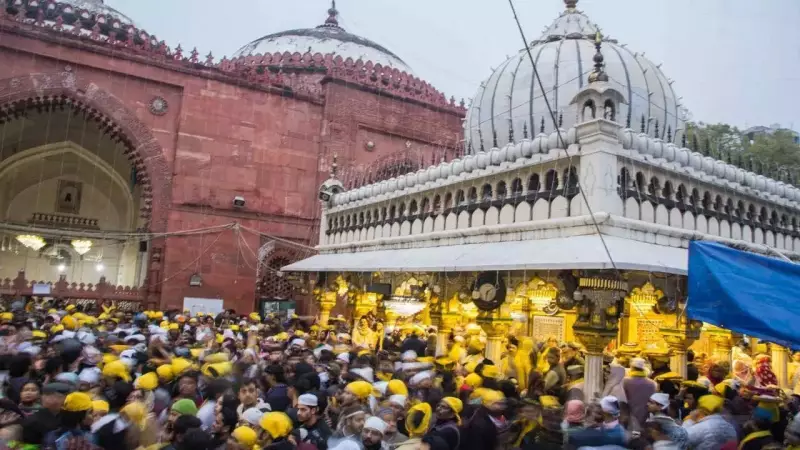
The air in Delhi on Friday was filled with a delightful blend of fresh marigolds, mustard flowers, and the earthy scent of petrichor, creating an ideal atmosphere for the bright yellow Basant Panchami celebrations at the historic Hazrat Nizamuddin dargah. Attendees from across the country gathered to seek blessings and welcome the arrival of spring, turning a rainy Friday into a vibrant spectacle of joy and devotion.
A 700-Year-Old Tradition of Love and Joy
Syed Altamash Nizami, Joint Secretary of the dargah committee, explained the deep-rooted history behind the celebrations. "This is a nearly 700-year-old tradition," he said. "After Hazrat Nizamuddin Auliya lost his young nephew, Hazrat Taqiuddin Nuh, he grieved deeply and withdrew into silence, worrying his disciples. It was Amir Khusro who sought to make his pir smile again."
According to the story, Khusro saw women dressed in yellow for Basant Panchami near present-day Humayun's Tomb and decided to wear yellow himself to visit Nizamuddin Auliya. When questioned about his unusual attire, Khusro replied that he only wished to see his pir smile. That heartfelt moment marked the beginning of Basant Panchami celebrations at the dargah, now known as Sufi Basant, symbolizing joy, love, and spiritual connection.

Filmmaker Finds Cinematic Inspiration in Tradition
Filmmaker Faraz Arif Ansari, renowned for his short films Sisak (2017) and Sheer Korma (2021), attended the Basant celebrations at the dargah for the first time this year. "For me, Basant is inseparable from Amir Khusro and his deep, enduring devotion for Hazrat Nizamuddin Auliya," he shared. "The stories I've read about them feel almost cinematic, with Khusro dancing and performing in the courtyard, where there is no man or woman, only two souls. That resonates deeply with me."
While Ansari has been visiting the dargah for over a decade, this year held special significance. "This is a big year for me, with my debut feature film releasing. I wanted to begin it with the spirit of spring and the colour yellow – bright, positive, and affirming. To me, yellow represents friendship, love, and divinity, so starting this year on a Basant note felt important," he added.
A Unique Spectacle for Delhiites
The Basant celebration at the dargah has become a unique annual spectacle for Delhiites, many of whom visit specifically to capture the beauty of the event. This year, attendees and dargah committee members showered flowers on an embroidered chaadar to present at the dargah, accompanied by the tunes of Sakal Ban Phool Rahi Sarson, a ghazal by Amir Khusro recently featured in Heeramandi (2024).
Gurmehar Kaur, who attended with her mother, highlighted the personal significance of the festival. "I have attended almost every year since 2017. Coming to Basant with my mother held profound personal significance because she taught me about peace and unity as a kid. Returning to a dargah with her decades later felt like coming full circle," she said.
The celebration not only honored a centuries-old tradition but also brought together people from diverse backgrounds, reinforcing themes of unity, spirituality, and the vibrant cultural tapestry of Delhi.