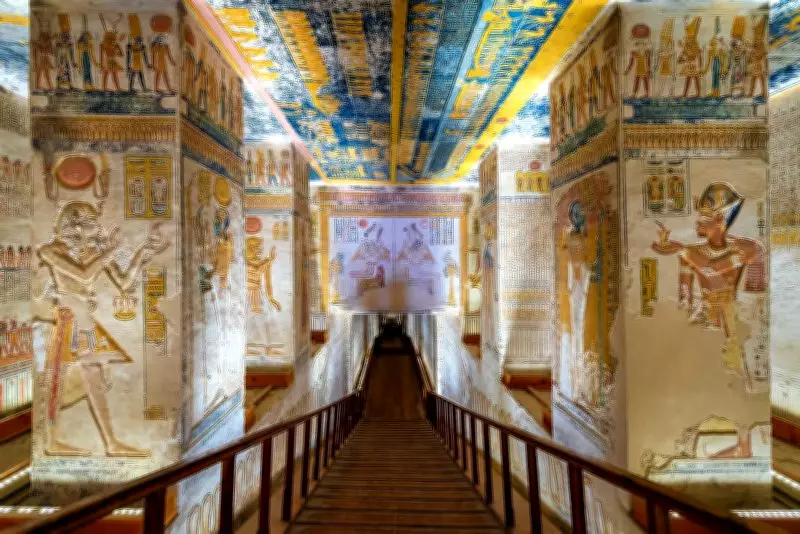
Ancient Tamil Brahmi Inscriptions Discovered in Egyptian Royal Tombs
In a groundbreaking archaeological discovery, researchers have identified ancient Tamil Brahmi inscriptions inside royal tombs in Egypt, with the findings dating back approximately 2000 years. This remarkable revelation sheds new light on the early trade and cultural exchanges between ancient India and the Egyptian civilization, highlighting the far-reaching connections of the Tamil people during that era.
Details of the Discovery and Historical Significance
The inscriptions, written in the Tamil Brahmi script, were found within the confines of royal burial sites in Egypt, specifically in areas associated with elite tombs from the period. Experts have analyzed the script and confirmed its origins, placing it in the context of the early centuries CE. This discovery is particularly significant as it provides tangible evidence of the presence of Tamil merchants or travelers in ancient Egypt, suggesting a well-established network of trade routes that spanned across the Indian Ocean.
The identification process involved meticulous examination by a team of archaeologists and linguists, who compared the inscriptions with known Tamil Brahmi samples from South India. The script's characteristics, including its unique letter forms and linguistic features, matched those used in Tamil Nadu during the same historical period. This cross-verification has bolstered the credibility of the findings, making it a pivotal moment in the study of ancient Indian diaspora and international relations.

Implications for Understanding Ancient Trade and Cultural Links
This discovery has profound implications for our understanding of ancient global interactions. It indicates that Tamil-speaking communities were not only active in regional trade but also engaged in long-distance commerce with civilizations as far as Egypt. The presence of these inscriptions in royal tombs suggests that Tamil individuals may have held significant status or were involved in high-level exchanges, possibly as traders, diplomats, or artisans.
Key aspects of this finding include:
- Enhanced Historical Timeline: The inscriptions help refine the chronology of Tamil Brahmi usage, confirming its spread beyond the Indian subcontinent by 2000 years ago.
- Trade Route Evidence: It supports theories about ancient maritime trade routes connecting South India with the Red Sea and Mediterranean regions, facilitating the exchange of goods, ideas, and cultures.
- Cultural Integration: The placement in royal tombs hints at cultural assimilation or recognition of Tamil contributions within Egyptian society, possibly influencing local practices or beliefs.
Researchers emphasize that this finding opens up new avenues for exploration, such as investigating other potential Tamil Brahmi sites in the Middle East and Africa. Future studies could focus on the specific content of the inscriptions, which might reveal names, transactions, or religious references, further enriching our knowledge of this historical connection.
In summary, the identification of 2000-year-old Tamil Brahmi inscriptions in Egyptian royal tombs marks a significant milestone in archaeology. It underscores the dynamic nature of ancient civilizations and their interconnectedness, offering a fresh perspective on the global footprint of early Indian cultures. As more research unfolds, this discovery is set to reshape narratives about trade, migration, and cultural diffusion in the ancient world.