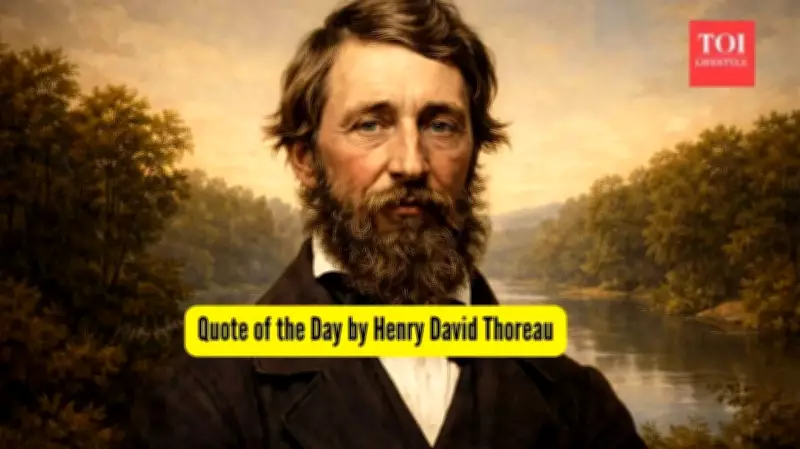
Henry David Thoreau: A Pioneer of Thought and Action
Henry David Thoreau stands as a monumental figure in American intellectual history, renowned as an essayist, philosopher, and naturalist. He played a pivotal role in the Transcendentalist movement, advocating for a life of simplicity, personal freedom, and a deep connection with nature. His enduring influence extends beyond literature into realms of politics, environmentalism, and social change, making him a timeless beacon for those seeking purpose and integrity.
Early Life and Formative Influences
Born in 1817 in Concord, Massachusetts, Thoreau hailed from a modest family. He pursued higher education at Harvard College, immersing himself in philosophy, science, and classical literature. Despite his academic achievements, he rejected conventional career paths, opting instead to live by his own principles. A brief stint as a teacher ended when he refused to administer corporal punishment, showcasing his early commitment to moral independence and ethical convictions.
Thoreau's intellectual development was profoundly shaped by Ralph Waldo Emerson, a leading Transcendentalist thinker who served as both mentor and friend. Transcendentalism emphasized intuition, individual conscience, and a spiritual bond with nature, principles that became central to Thoreau's worldview and writings.

Walden: A Philosophical Experiment in Simplicity
Thoreau is best known for his seminal work, Walden, published in 1854. The book chronicles his two-year experiment from 1845 to 1847, during which he lived alone in a small cabin near Walden Pond, owned by Emerson. This period was dedicated to stripping away societal pressures and material excesses. Thoreau cultivated his own food, minimized expenses, and devoted time to observing nature, reading, and writing.
Walden transcends a mere memoir; it serves as a philosophical guide advocating for intentional living. Thoreau critiques the "lives of quiet desperation" that many lead, trapped by routines, materialism, and social expectations. He champions simplicity, self-reliance, and mindfulness, blending meticulous natural observations with profound reflections on human existence. His literary style is both poetic and precise, revealing universal truths through everyday experiences.
Civil Disobedience: A Call to Moral Action
Another cornerstone of Thoreau's legacy is his essay Civil Disobedience, written in 1849. Prompted by his refusal to pay a poll tax in protest against slavery and the Mexican-American War, Thoreau spent a night in jail. In this work, he articulates a moral duty to resist unjust laws and governments, famously asserting that conscience must supersede legal authority.
The concept of civil disobedience—peaceful noncompliance with oppressive systems—has had a global impact. Influential leaders like Mahatma Gandhi and Martin Luther King Jr. drew inspiration from Thoreau's ideas, applying them in struggles for Indian independence and American civil rights. This demonstrates how Thoreau's thought transcended literature to fuel significant political and social movements.
Literary and Environmental Contributions
Thoreau's writing is distinguished by its clarity, precision, and poetic depth. He employed detailed observations of nature to uncover broader philosophical insights, with his descriptions of flora, fauna, and seasonal changes reflecting a deep reverence for the environment. His tone could be direct and confrontational when critiquing societal norms, urging readers toward independent thought.
As a naturalist, Thoreau made substantial contributions to environmental thought, anticipating later developments in ecology and environmental science. He viewed nature not merely as a resource but as a source of spiritual renewal, positioning him as a key figure in the history of environmentalism. His emphasis on personal experience and self-reflection also influenced subsequent literary movements, including existentialism and modernism.

Enduring Legacy and Modern Relevance
Although Thoreau achieved limited recognition during his lifetime, his posthumous reputation has flourished. Today, he is celebrated as a central figure in American philosophy and literature, offering an alternative vision of life rooted in simplicity, moral integrity, and harmony with nature. His works continue to provoke essential questions about human existence and societal engagement.
In an era marked by complexity and disconnection, Thoreau's call to live deliberately and mindfully resonates powerfully. His advocacy for reducing life's clutter—summarized in his famous quote, "Simplify, simplify, simplify!"—encourages a focus on what truly matters, fostering freedom, clarity, and purpose. Thoreau's legacy endures as a guide for those seeking to navigate modern challenges with intention and authenticity.