Triveni Kala Sangam Celebrates 75 Glorious Years as Delhi's Cultural Heartbeat
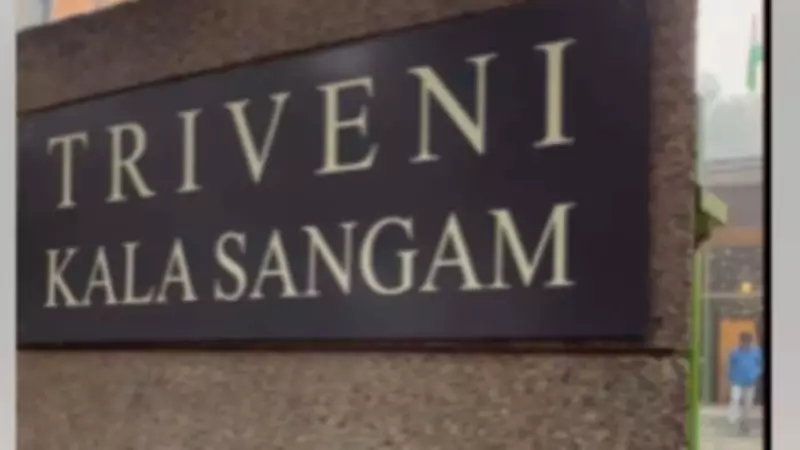
One of Delhi's most vibrant and celebrated cultural institutions, Triveni Kala Sangam, is set to commemorate its remarkable 75-year journey with a special exhibition running from February 27 to March 15. This landmark event will chronicle the institution's golden history, tracing its evolution from humble beginnings to becoming an indispensable part of Delhi's artistic landscape.
From Modest Apartment to Cultural Confluence
The story of Triveni Kala Sangam began in 1950 when classical dancer Sundari Shridharani established it as a teaching institute in a modest two-room apartment in Connaught Place. "She began with only two students. There would be days when I returned from school and my mother would tell me that no student had turned up. But gradually it drew attention, as the word spread," recalls Amar Shridharani, general secretary of Triveni and Sundari's son, who has been actively involved with its operations since her passing in 2012.
Envisioned during a period when independent India was still discovering its cultural identity, Sundari managed to secure a plot from the Jawaharlal Nehru government under a scheme to promote art and culture. However, transforming this vision into reality presented significant challenges.

Architectural Excellence and Artistic Vision
The architectural masterpiece that houses Triveni today was designed by Joseph Stein, after initial consultations with architect Habib Rahman. The building has earned widespread acclaim for its modern design featuring stone lattice screens, expansive galleries, high-ceiling rooms, and inviting green spaces. "Though there was a paucity of funds, she never compromised on design or quality. Monitoring the construction on-site, she looked into every detail," Amar Shridharani emphasizes.
Inaugurated by then President Dr. S. Radhakrishnan in 1963, the institution was named 'Triveni' – meaning confluence of arts – by flautist Vijay Raghav Rao, who also taught there during its formative years.
A Nurturing Ground for Artistic Excellence
Over the decades, Triveni has served as a nurturing ground for countless artists across disciplines. Renowned artist Arpana Caur recollects having her first exhibition at Triveni in 1974 at the age of 20. "This was a group show featuring works of young artists selected by M.F. Husain. That exposure led to another group show and eventually a solo at Shridharani Gallery at Triveni in 1975," she shares.
The institution's distinguished faculty has included:
- Artists KS Kulkarni and Rameshwar Broota
- Photographer OP Sharma
- Bharatnatyam dancer Ramaswamy Pillai
- Manipuri dancers Singhajit Singh and Charu Mathur
- Sitarist Uma Shankar Mishra
The Cultural Hub That Defined an Era
During its heyday, Triveni became the epicenter of Delhi's cultural life. "At that time, there were only a handful of private galleries in Delhi and everyone would visit Triveni for the arts. One would find actors from National School of Drama, hear the sound of ghungroos from dancers practising, music classes being held upstairs, and artists' studios where I would often just go to meet friends," Caur vividly describes.
The institution's cafe, run by Puran Acharya, became a legendary meeting place for artists. "Extremely reasonably priced, artists often gathered there. I remember A. Ramachandran singing for all of us on one occasion," Caur recalls. The cafe even hosted significant artistic discussions, including a meeting called by Kekoo Gandhy of Chemould Gallery and M.F. Husain to initiate a signature campaign demanding a national gallery in Mumbai, which eventually contributed to the formation of the National Gallery of Modern Art.
Personal Connections and Lasting Legacies
Thespian Feisal Alkazi recalls virtually "growing up" in Triveni. "I am personally grateful to Triveni for the kind of exposure it gave me to different arts. That kind of experience tends to stay and comes up in one's own work," he notes. Alkazi attended productions by theater veterans including Habib Tanvir, Om Shivpuri, Sai Paranjape, Sheila Bhatia, and Slawomir Mrozek.

Photographer Dayanita Singh remembers stopping by for shammi kebabs at the cafe and taking flute and Odissi lessons in the late 1970s, highlighting how the institution seamlessly blended culinary experiences with artistic education.
Preserving Vision While Embracing Modernity
While Triveni's prime location in the heart of Delhi has been a significant asset, maintaining and modernizing the institution has required constant effort. "It was beautifully handled over the years, with some of India's best names teaching here. We have managed to maintain the high standards and have also made conscious efforts to modernize," explains Amar Shridharani.
Recent renovations have included overhauling air-conditioning systems and fire safety measures, while new classes have been introduced to keep pace with contemporary artistic trends. However, certain principles remain unchanged – notably, the institution continues its policy of not permitting ticketing for events and performances. "My mother envisioned it as a place that would be accessible to everyone and we want to carry forward that vision," Amar affirms.
As Triveni Kala Sangam celebrates 75 years of artistic excellence, it stands as a testament to one woman's vision and the enduring power of cultural institutions to shape cities and nurture creative communities. The upcoming exhibition promises to be both a celebration of this remarkable journey and a reaffirmation of Triveni's continued relevance in Delhi's cultural ecosystem.