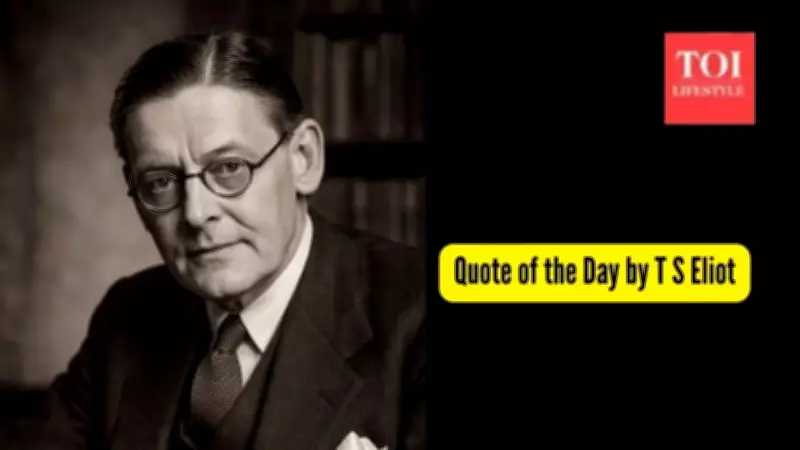
T.S. Eliot: The Architect of Modernist Poetry
Thomas Stearns Eliot, universally recognized as T.S. Eliot, stands as one of the most pivotal poets, critics, and playwrights of the twentieth century. Born in 1888 in St. Louis, Missouri, he was raised in a highly educated and culturally affluent family. His early immersion in literature, philosophy, and religion profoundly shaped his intellectual development and artistic perspective.
From American Roots to British Citizenship
Although American by birth, Eliot made a significant personal and artistic decision by becoming a British citizen in 1927. This move reflected his deep alignment with European cultural and literary traditions, which would become central to his work.
Academic Excellence and Philosophical Influences
Eliot's academic journey was marked by exceptional achievement. He attended Harvard University, where he delved into philosophy and comparative literature. His quest for knowledge led him to further studies at the Sorbonne in Paris and Oxford University. During this period, he encountered diverse philosophical ideas, including Eastern religious thought and Western metaphysics, which later infused the thematic depth of his poetry. The influence of French Symbolist poets, particularly Charles Baudelaire, also left an indelible mark on his distinctive writing style.

Personal Struggles and Artistic Expression
Despite his academic success, Eliot's personal life was fraught with challenges. His troubled first marriage to Vivienne Haigh-Wood resulted in periods of emotional distress and mental exhaustion. To sustain himself while pursuing his literary career, he worked at a London bank. These personal tribulations often surfaced in his poetry, which explores themes of isolation, fragmentation, and the search for meaning in a disordered world.
Literary Breakthroughs and Modernist Innovation
The publication of The Love Song of J. Alfred Prufrock in 1915 marked a turning point in Eliot's career. This poem, with its stream-of-consciousness technique, vivid imagery, and introspective tone, captured the anxieties and uncertainties of modern urban existence. It established Eliot as a leading figure in the modernist movement.
Many regard The Waste Land, published in 1922, as one of the greatest poems of the twentieth century. Written in the aftermath of World War I, it poignantly depicts cultural disintegration and spiritual desolation, resonating with a generation grappling with post-war disillusionment.
Critical Contributions and Theatrical Works
Eliot was not only a celebrated poet but also an influential literary critic. His essays, such as Tradition and the Individual Talent, revolutionized literary theory by emphasizing the importance of historical context and viewing poetry as part of a broader cultural dialogue rather than mere self-expression.
Beyond poetry and criticism, Eliot made significant contributions to drama. His plays, including Murder in the Cathedral and The Cocktail Party, achieved considerable popularity and remain integral to academic curricula today.
Spiritual Transformation and Later Works
A profound shift occurred in Eliot's life when he converted to Anglicanism in 1927. This spiritual awakening deeply influenced his later works, which increasingly focused on religious themes and the quest for redemption, offering a counterpoint to the despair evident in his earlier poetry.
Recognition and Enduring Legacy
Eliot's monumental contributions to literature were recognized with the Nobel Prize in Literature in 1948, honoring his innovative and pioneering work in modern poetry. His legacy is characterized by several key aspects:

- Modernist Pioneer: Eliot was instrumental in advancing modernist poetry, known for its experimentation, departure from traditional forms, and use of techniques like fragmentation, allusion, and multiple perspectives.
- Thematic Relevance: His exploration of alienation, identity, and spirituality addressed the existential concerns of individuals in a rapidly changing world, reflecting the disillusionment caused by war, industrialization, and social upheaval.
- Artistic Innovation: By challenging conventional poetic structures, Eliot expanded the possibilities of how poetry could be written and interpreted, encouraging deeper analytical engagement with texts.
Controversies and Lasting Influence
While Eliot's achievements are widely celebrated, his legacy is not without controversy. Some critics have pointed to elements of elitism and cultural conservatism in his work, and debates persist regarding certain personal views expressed in his writings. Nevertheless, his artistic accomplishments remain undeniable, and his works continue to be studied, analyzed, and admired globally.
The Waste Land: A Closer Look at Iconic Lines
One of the most famous passages from The Waste Land begins:
April is the cruellest month, breeding
Lilacs out of the dead land, mixing
Memory and desire, stirring
Dull roots with spring rain.
Winter kept us warm, covering
Earth in forgetful snow, feeding
A little life with dried tubers.
These lines may initially seem perplexing, but they reveal Eliot's masterful subversion of conventional expectations. Typically, April and spring are associated with joy, renewal, and vitality. However, Eliot portrays April as the cruellest month because it forcibly revives life from barrenness, stirring painful memories and unfulfilled desires that individuals may have suppressed.
In contrast, winter, often viewed as harsh and cold, is depicted as comforting. It kept us warm by enveloping the earth in snow, allowing a numbing forgetfulness. The little life sustained by dried tubers symbolizes a minimal, dormant existence that avoids emotional confrontation.
Eliot thus illustrates that emotional numbness can be easier to endure than the painful awakening brought by spring. This profound insight into the human condition underscores why April, rather than being a source of happiness, is perceived as cruel—it compels us to face our deepest emotions and realities.
In summary, T.S. Eliot remains a colossal figure in modern literature. His life and oeuvre encapsulate both the challenges and possibilities of the twentieth century. Through his poetry, criticism, and plays, he has irrevocably altered our understanding of literary art and its capacity to articulate the complexities of the human experience. Eliot's works endure as both a reflection of modern fragmentation and a testament to the potential for cohesion and deeper understanding.