Urdu's Timeless Lesson: Language as a Bridge, Not a Barrier
In an era where societies are increasingly fragmented by debates over belonging and identity, language emerges as a profound force for unity and understanding. Urdu, in particular, offers a compelling narrative that transcends political and religious boundaries, reminding us of our shared humanity.
A Personal Inheritance, Not a Political Statement
I did not learn Urdu to make a political statement or assert an identity. My journey with this language began as a quiet inheritance, rooted in family traditions and personal connections. My grandfather wrote his prayers in Urdu during Dussehra rituals, blending it seamlessly with Sanskrit invocations without explanation or defence. It was simply part of our home, a medium of meaning that arrived through ritual, not rhetoric.
This early exposure taught me that language, at its core, is not a marker of identity but a tool for expressing thought with tenderness, law with restraint, and grief with grammar. In my childhood, Urdu was also the language of the kacheri, or court, where grievances were articulated with dignity and justice was petitioned with clarity and empathy. It demonstrated that formality need not lack feeling and that reason can harmonize with rhythm.

The Historical Legacy of Urdu: From Khusro to Ghalib
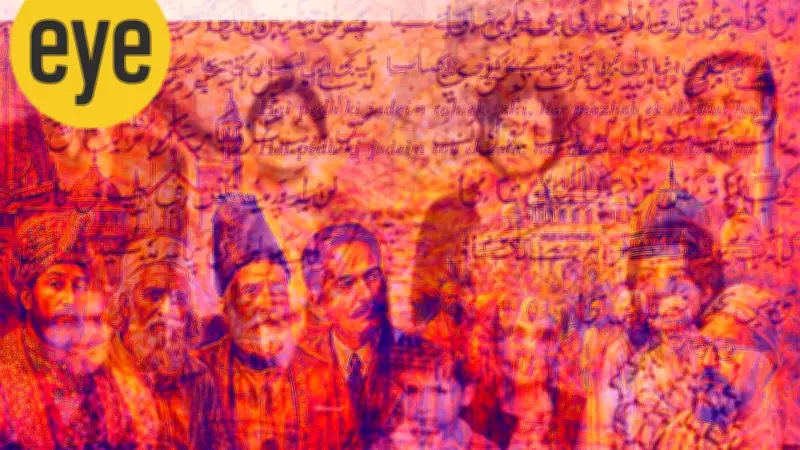
Urdu's rich history is a testament to its inclusive and humanistic nature. It began with Amir Khusro, who lived at the confluence of cultures, blending Persian with Prakrit and courtly refinement with street songs. His work was not about exclusion but invitation, using riddles to encourage collective thinking and playfulness.
Mir Taqi Mir infused Urdu with a deep sense of ache and sorrow, teaching it to mourn without creating enemies of grief. His restraint offers a moral lesson in a world often driven by outrage. Mirza Ghalib, on the other hand, taught Urdu how to think critically, embracing contradiction and doubt without abandoning wonder. His poetry serves as a sanctuary for complex questions, reminding us that complexity is a form of conscience.
Later, Muhammad Iqbal emphasized selfhood and ethical awakening, urging civilizations to interrogate themselves to avoid spiritual exhaustion. Alongside these giants, voices like Fani Badayuni and Akbar Allahabadi added depth and humor, shaping Urdu into a language that demands attention, not allegiance.
Personal Stories of Patriotism and Plurality
My Phupaji, Hargobind Prasad Bhatnagar, exemplified how Urdu can coexist with patriotism. As Director General of the Border Security Force, he guarded India's borders with resolve, yet his inner life was enriched by Urdu poetry. He introduced me to nazms and ghazals, teaching that patriotism and plurality are not opposites. From him, I learned that language humanizes loyalty, allowing one to stand firm at the frontier while carrying poetry in the heart.
The Global Relevance of Urdu Today
In today's world, language is often weaponized, leading to suspicion and division. English fractures into privilege, Arabic into fear, Hebrew into conflict, Spanish into migration, and Urdu into misunderstanding. However, Urdu's history offers an alternative path. It belongs to a family of human expressions—like music, food, and art—that nourish and connect without demanding lineage or allegiance.
When languages are reduced to tools of division, societies fracture. But when they serve as bridges, humanity breathes. The world does not need more purity tests; it needs shared tables and deeper listening. Urdu, along with other cultural forms like jazz or sourdough, provides a grammar of coexistence, reminding us how to be together without erasing our differences.
Conclusion: A Call for Humanity
I learned Urdu not to make a statement, but because it was woven into my family's prayers and poetry. Language, like love, works best when it is unconditional. In a world tearing itself apart over who belongs, Urdu—and language in general—offers a chance to remember that we are more alike than we are apart. It insists on being a mother, a lover, a refuge, and an inheritance that grows when shared. This is not just an Indian idea; it is a human one, urging us to embrace connection over conflict.