Vadnagar's Ancient History Revised: Settlement Dates Back 2,700 Years
In a significant archaeological breakthrough, the history of Vadnagar – the hometown of Prime Minister Narendra Modi – has been pushed back by approximately 500 years. New scientific evidence now places the earliest human occupation in this ancient north Gujarat town around 2,700 years Before Present (BP), revising previous estimates of about 2,200 years BP.
Deep Drilling Reveals Older Settlement Layers
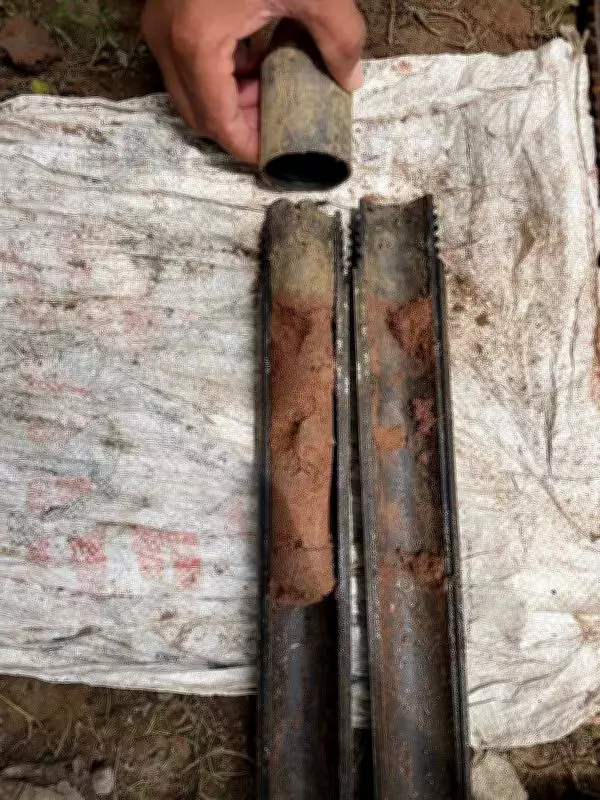
The revised chronology comes after archaeologists and scientists conducted extensive drilling operations, extracting samples from approximately 25 meters deep within Vadnagar's archaeological site. Dr. Abhijit Ambekar, superintending archaeologist at Mumbai Circle in Vadodara, recently presented these findings at the Archaeological History of Gujarat workshop in Vadodara.
"The earliest human occupation is now dated around 7th to 8th Centuries Before Common Era (BCE), or about 2,750 years Before Present," stated Dr. Ambekar, who led the Archaeological Survey of India (ASI) team at Vadnagar for nearly a decade until 2022.

Advanced Dating Techniques Confirm New Timeline
During the workshop organized by Balvant Parekh Centre for General Semantics and Other Human Science, Ambekar detailed how the team employed innovative methods to overcome previous excavation limitations. "In the second phase that lasted till 2022, the team of experts employed a hollow bore/drill to collect samples from the sediments even below the pre-Rampart phase of the town," he explained.
Professor Anindya Sarkar from IIT Kharagpur, who collaborated on sample collection and dating, revealed that Accelerator Mass Spectroscopy (AMS) methodology was utilized to determine the precise age. The dating process, conducted at Ahmedabad's Physical Research Laboratory (PRL), established the settlement layer at approximately 2,754 years BP.
Significance for UNESCO World Heritage Status
These revised findings carry substantial importance as Vadnagar currently sits on India's tentative list for UNESCO World Heritage Site status, submitted in 2022. Experts emphasize that the town's value lies in its unbroken history spanning over two millennia, the unique confluence of Hindu and Buddhist heritage, and its connections to other significant historical sites across India and internationally.
Dr. Ambekar clarified the evolution of understanding about Vadnagar's chronology: "The history of human habitation in Vadnagar was earlier believed to be about 2200 BP or 2nd Century BCE based on possible limits of excavations. This date represented the earliest excavated level reached at that stage, as further excavation was constrained due to high groundwater pressure and instability of trench sections."
Artifacts and Settlement Patterns Revealed
The archaeological investigation uncovered fascinating details about Vadnagar's ancient environment and human activity. Professor Sarkar noted: "Below it is 'mid-Holocene sterile soil' dated around 7,000 years. There is a gap between the soil and the age of the first layer of settlements. We also collected and dated several of the artifacts such as fragments of pottery from the collected samples."
This discovery places Vadnagar within an important historical context, as the second phase of urbanization in India following the Harappan civilization era began around the 6th to 4th centuries BCE with the emergence of Mahajanapadas including Avanti, Chedi, Kashi, Kamboj, Kosala, Kuru, and Magadha.
The extensive excavations and revised dating not only deepen our understanding of Gujarat's archaeological heritage but also strengthen Vadnagar's case for international recognition as a site of continuous human settlement and cultural significance.