Vinegar Valentines: The Victorian Era's Harsh Tradition of Insulting Greetings
In the Victorian era, a peculiar and cruel custom emerged alongside the romantic celebrations of Valentine's Day. Known as vinegar Valentines, these were cheaply produced cards designed not to express affection, but to deliver sharp insults to unwanted suitors or people one disliked. This practice offers a fascinating glimpse into the social dynamics and darker undercurrents of 19th-century society, revealing how individuals used humor and mockery to navigate personal relationships.
The Nature and Production of Vinegar Valentines
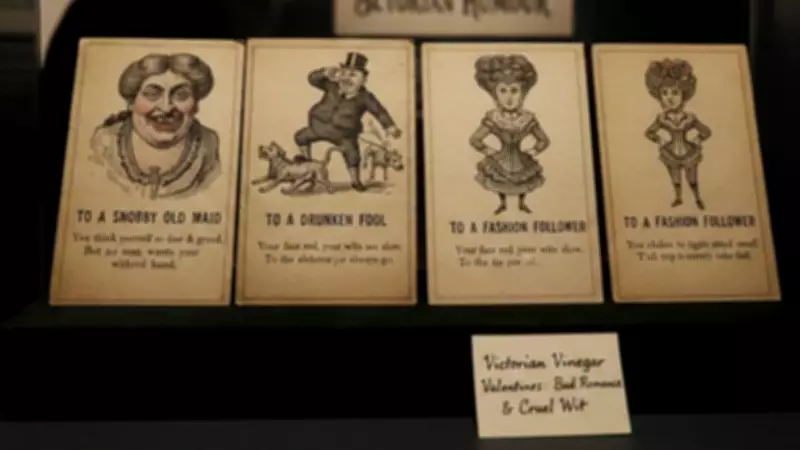
Vinegar Valentines were distinct from the sentimental, lace-adorned cards typically associated with Valentine's Day. They were mass-produced using inexpensive materials, making them accessible to a wide audience. Each card featured unflattering images that caricatured the recipient, often depicting them in embarrassing or ridiculous scenarios. Accompanying these visuals were offensive poems crafted to mock the person's appearance, behavior, or social status. The intent was clear: to humiliate and reject, rather than to charm or woo.
This trend highlights how Victorian culture balanced propriety with passive-aggressive expression. While societal norms emphasized politeness and decorum, vinegar Valentines provided an anonymous outlet for venting frustrations or disdain. They became a tool for individuals, particularly women, to assert boundaries in a time when direct rejection might have been socially frowned upon.

Social Impact and Historical Context
The sending of vinegar Valentines was not merely a private jest; it reflected broader social tensions. In an era marked by strict class hierarchies and rigid gender roles, these cards could target anyone from overzealous admirers to neighbors or colleagues. The poems often played on stereotypes, such as mocking old maids for their unmarried status or ridiculing men for their lack of success. This practice underscores how Valentine's Day, often seen as a celebration of love, also served as a mirror to societal anxieties and conflicts.
Historians note that vinegar Valentines gained popularity in the mid-1800s, coinciding with the rise of commercial printing. Their affordability meant that even those of modest means could participate, spreading this tradition across various social strata. While some viewed them as harmless fun, others saw them as mean-spirited, leading to occasional public outcry. Nonetheless, they remained a staple of Victorian Valentine's Day, offering a stark contrast to the era's idealized notions of romance.
Today, vinegar Valentines are studied as cultural artifacts, shedding light on Victorian humor and social interactions. They remind us that historical traditions are often complex, blending cruelty with creativity. As we celebrate modern Valentine's Day with its focus on love and kindness, this forgotten custom serves as a poignant reminder of how past societies expressed rejection and disdain through art and verse.