

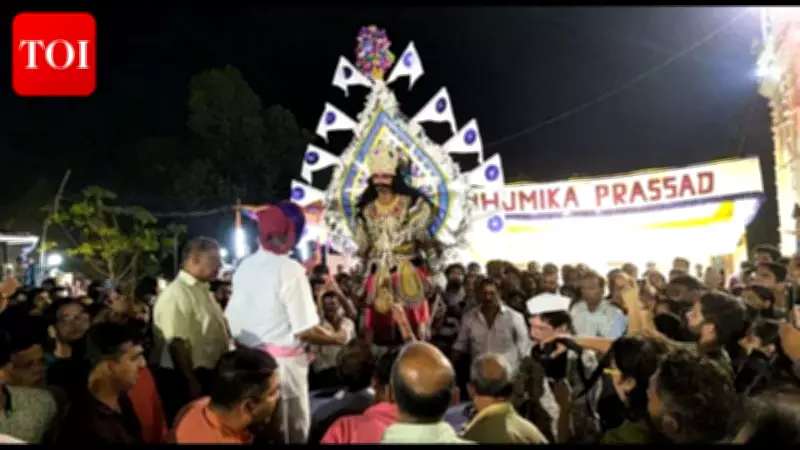
Vithalapur Temple Festival Concludes with Vibrant Veerabhadra Dance in Sanquelim
The annual five-day festival dedicated to Lord Vithal-Rakhumai-Satyabhama at the Vithalapur temple in Sanquelim reached its grand culmination on Friday with the traditional Veerabhadra dance. This significant religious event, part of the Chaitri festivity, drew hundreds of devoted followers who gathered at the temple premises to witness the sacred performance.
Devotees Witness Sacred Trance Dance
Hundreds of enthusiastic devotees assembled at the temple grounds to observe the Veerabhadra dance, which is a central feature of the final day of the five-day Chaitri celebrations. The dance is performed within the sacred precincts of the Lord Vithal-Rakhumai-Satyabhama temple, creating a spiritually charged atmosphere.
Veerabhadra, the dancer, maintains a rhythmic flow synchronized with the beats of the mridangam, displaying immense passion and energy throughout the performance. According to local resident Nakul Gaonkar, the individual executing the Veerabhadra dance is believed to enter a deep trance state during the ritual. The ceremony involves the dancer being elevated high above the ground by specially designated handlers who manage the surrounding environment, allowing the dance to continue seamlessly from that elevated position.

Procession and Dignitary Attendance Mark Festival Conclusion
Following the completion of the Veerabhadra ceremony, a ceremonial procession featuring Lord Vithal was conducted. The deity was carried in a specially decorated chariot that traversed the temple courtyard, symbolizing the official conclusion of the festive activities. This procession served as a visual and spiritual highlight, reinforcing the community's devotion.
The festival garnered significant attention from prominent political figures, with Chief Minister Pramod Sawant and Health Minister Vishwajit Rane in attendance. Their participation underscored the cultural and religious importance of the event within the region. The presence of these dignitaries added a layer of official recognition to the traditional celebrations, bridging spiritual practices with contemporary governance.
The annual festival not only preserves ancient traditions but also fosters community cohesion, drawing participants from various backgrounds to celebrate shared heritage. The combination of ritual dance, musical accompaniment, and ceremonial processions creates a multifaceted experience that resonates deeply with devotees and observers alike.






