As dusk settles over the holy town of Vrindavan, a profound transformation envelops the sacred grove of Nidhivan. The atmosphere shifts palpably; the light fades, the air grows still, and the entire area seems to hold its breath, preparing for a nightly event that remains unseen by human eyes. This is the prelude to one of India's most enduring and haunting spiritual mysteries.
The Unbreakable Rule of the Locked Gates
Priests conclude their evening rituals with meticulous care, ensuring everything is in its precise place. Then, following a tradition upheld for centuries, they firmly lock the gates of Nidhivan before the stroke of midnight. This rule is absolute. No guards are posted, no devotees are permitted to stay, and remarkably, even the typically bold monkeys of Vrindavan retreat from its boundaries as night falls. The grove is left in solitude, giving rise to the core question: what truly happens within its confines after the last human has departed?
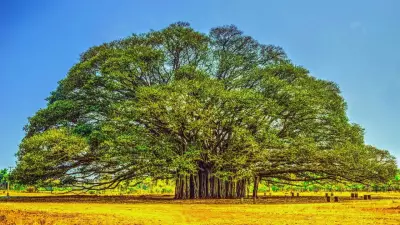
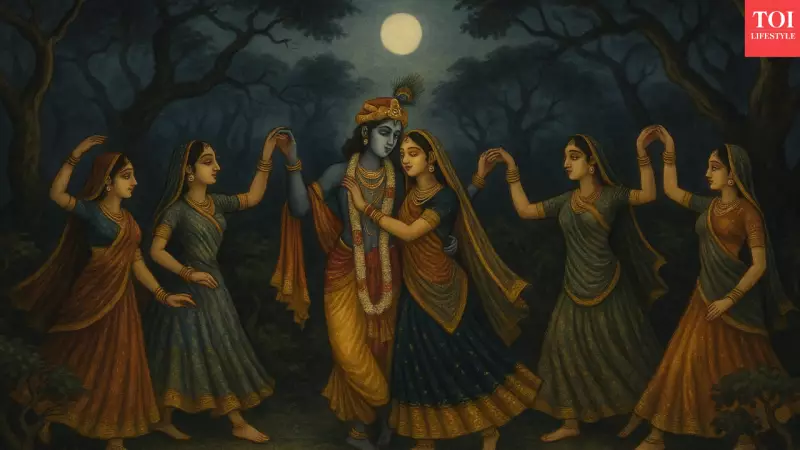
Nidhivan is not a typical forest. It is a dense, compact thicket where the Tulsi plants exhibit a bizarre and unique growth pattern. Unlike normal Tulsi, these plants do not grow tall. Instead, they twist, tangle, and bend low to the ground, resembling dancers captured in a moment of graceful movement. Local belief holds that they grow this way out of reverence, perpetually bowing to Radha and Krishna, who are said to return to this very spot every night to perform the divine raas leela, the celestial dance of love described in ancient Vaishnava scriptures.

The Rang Mahal and the Nightly Offerings
At the heart of the grove lies the Rang Mahal, a small, simple room believed to be the divine couple's resting place after their dance. Before sealing the premises, priests arrange a set of offerings with devotion: a neatly made silver bed, fresh paan leaves on a plate, a glass of water, a pair of bangles, and sandalwood paste.
By morning, devotees claim, subtle changes are evident. The bedspread appears slightly crumpled. The paan seems to have been tasted. The water level is lower. The bangles are found in a different position. Skeptics attribute these signs to natural causes like rodents, humidity, or even subconscious human error. Yet believers counter that the alterations never look like random disturbance; they resemble gentle, respectful use—as if the offerings have been partaken by a benevolent, unseen presence.
Whispers, Warnings, and Unexplained Phenomena
The lore of Nidhivan is filled with cautionary tales. Locals speak in hushed tones about individuals who, driven by curiosity, attempted to hide inside after dark to witness the raas. The stories invariably end with the intruder being discovered the next morning in a state of terror, unconsciousness, or struck mute. While no documented evidence exists for these accounts, their persistent retelling over generations lends them a chilling credibility.
The behavior of the local monkeys adds another layer of intrigue. These animals, known for their fearless encroachment everywhere else in Vrindavan, consistently avoid Nidhivan after sunset. For many residents, this animal instinct serves as the ultimate warning: if even the monkeys will not enter, humans certainly should not.
There is no official government order, police directive, or scientific injunction that mandates the locking of Nidhivan. The practice is sustained purely by centuries-old devotion and an unwritten code. In most places, secrets are kept because someone actively hides the truth. Here, the mystery persists because the community collectively chooses to honor it, making the tradition more powerful than any law.
Science has attempted to demystify aspects of Nidhivan. Botanists note the stunted, pliable Tulsi could result from specific soil minerals, a unique microclimate, or the effects of dense planting. However, these explanations only describe the 'how' of the grove's appearance, not the 'why' of the profound faith it inspires. As for the nocturnal events in the Rang Mahal, the lack of nighttime access leaves science with only speculation.

Ultimately, the essence of Nidhivan's mystery transcends physical proof. For the devotees of Vrindavan, truth is measured not in empirical evidence but in bhav—the deep, emotional, and spiritual connection with the divine. The grove stands as a rare sanctuary where the unseen is not questioned or displayed for validation; it is simply, and powerfully, honored. The locked gates at midnight protect not just a place, but a living experience of faith that continues to blur the lines between legend and palpable belief.