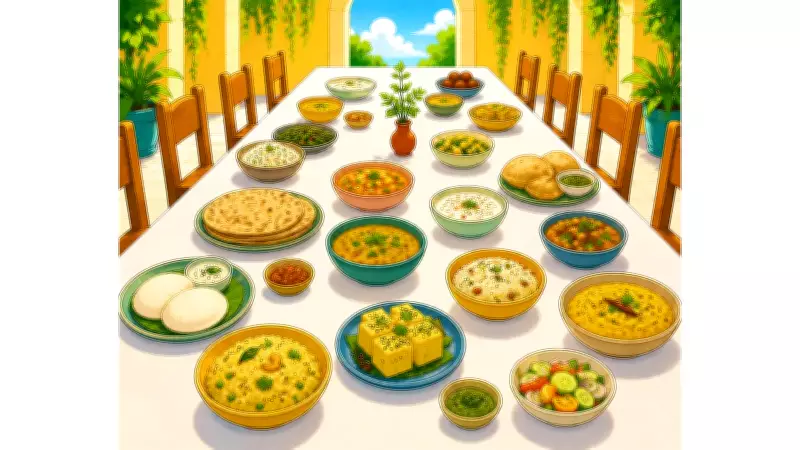
In a world where fast food chains and fusion restaurants dominate, the rich tapestry of traditional cuisines is slowly unraveling. From the heirloom grains of India to the forgotten herbs of Europe, centuries-old culinary practices are disappearing at an alarming rate. This phenomenon, often termed 'culinary extinction,' is not just about losing recipes but erasing entire cultural identities.
The Vanishing Ingredients
Climate change, urbanization, and industrial agriculture are driving many indigenous ingredients to the brink. For instance, the traditional rice varieties of Kerala, such as 'Palakkadan Matta' and 'Pokkali,' are being replaced by high-yield hybrids. Similarly, the 'Kodaikanal Malai' potato, once a staple in South Indian dishes, is now rarely found.
In the Mediterranean, the 'Cipolla di Giarratana,' a sweet onion from Sicily, is facing extinction due to changing weather patterns and lack of young farmers. These ingredients are not just food; they are repositories of history, adapted over generations to local climates and tastes.

The Role of Globalization
Globalization has homogenized diets worldwide. The rise of multinational food corporations and the popularity of international cuisines have pushed local specialties to the margins. In many parts of Asia, traditional street foods are being replaced by Western-style fast food. For example, the 'Phuchka' in Bangladesh and 'Pani Puri' in India are giving way to burgers and pizzas, especially among the younger generation.
Moreover, the migration of people from rural to urban areas has led to a loss of culinary knowledge. Family recipes that were once passed down orally are now forgotten as elders pass away without sharing their secrets. The art of making 'Sundae,' a traditional Korean fermented tofu, or 'Bouillon' in Haiti, is slowly fading.
Cultural Identity at Stake
Food is a cornerstone of cultural identity. Festivals, rituals, and daily life are intertwined with specific dishes and ingredients. When these disappear, communities lose a part of their heritage. In Japan, the UNESCO-recognized 'Washoku' traditional dietary culture is under threat as younger generations prefer convenience foods. Similarly, the 'Mafe' of West Africa, a rich peanut stew, is being replaced by imported canned goods.
Efforts to preserve culinary heritage are underway. Organizations like the Slow Food Movement and Ark of Taste are cataloging endangered foods and promoting their cultivation. In India, initiatives like 'Save Our Rice' are reviving traditional rice varieties. However, these efforts face challenges from economic pressures and lack of awareness.
The Future of Food
To reverse this trend, experts call for a multi-pronged approach. Education about the value of traditional foods, support for small-scale farmers, and policies that protect indigenous ingredients are crucial. Chefs and food enthusiasts are also playing a role by incorporating heritage ingredients into modern cuisine, creating a market for them.
As climate change and globalization continue to reshape our world, the fight to preserve culinary history becomes more urgent. Every dish that disappears is a chapter of human history lost. It is up to us to ensure that future generations can still taste the flavors of the past.