William Butler Yeats: A Titan of Modern Poetry
William Butler Yeats stands as one of the most pivotal figures in modern literature, profoundly influencing twentieth-century poetry with his unique fusion of mysticism, politics, folklore, and lyrical elegance. His extensive body of work not only reshaped English literature but also served as a powerful voice during Ireland's cultural and political transformations. Yeats's poetic journey evolved from ethereal romanticism to incisive modernist introspection, mirroring both his personal experiences and the sweeping historical changes in his homeland.
Early Life and Formative Influences
Born on June 13, 1865, in Dublin, Ireland, William Butler Yeats was nurtured in a creative environment by his father, John Butler Yeats, a painter who encouraged artistic exploration. Although born in the city, Yeats spent much of his childhood in the rural landscapes of County Sligo in western Ireland. This region's myths, legends, and natural beauty left an indelible mark on the young poet, becoming a rich source of inspiration for his future works. From an early age, Yeats was captivated by Irish folklore, with tales of ancient heroes, fairies, and enchanted realms fueling his imagination and later shaping his contributions to the Irish Literary Revival—a movement dedicated to reclaiming Ireland's cultural heritage under British rule.
Artistic Beginnings and Early Poetry
Initially educated in Dublin and later attending the Metropolitan School of Art, Yeats gradually shifted his focus from visual arts to literature. By his early twenties, he had begun publishing poetry, quickly gaining recognition as a promising writer. His early works, such as The Wanderings of Oisin and Other Poems (1889), were heavily influenced by romanticism and symbolism, delving into themes from Celtic mythology. Poems like The Lake Isle of Innisfree (1888) and The Stolen Child exemplify this period, characterized by dreamlike imagery, musical language, and a longing for spiritual connection with nature. These pieces reflect a romantic yearning for escape from modernity, yet they also hint at the deeper complexities Yeats would later explore.

Role in the Irish Literary Revival
Yeats played a central role in the Irish cultural renaissance of the late nineteenth and early twentieth centuries. He believed fervently in establishing a distinct Irish identity rooted in native myths, language, and traditions. Collaborating with other writers, he worked to revive Irish narratives and theatrical works. A landmark achievement was co-founding the Abbey Theatre in Dublin in 1904, which became a hub for Irish culture, staging plays that addressed national issues. Yeats's own plays, including Cathleen ni Houlihan, became iconic in nationalist drama, inspiring a generation of artists to embrace Irish themes and fostering cultural confidence.
Political Engagement and Later Career
Living through Ireland's tumultuous political landscape, Yeats witnessed the rise of nationalist movements and events like the Easter Rising of 1916. His involvement extended to governance when he was appointed to the Irish Free State Senate in 1922, where he advocated for cultural, educational, and artistic policies. By the 1920s, his literary prowess had garnered international acclaim, culminating in the Nobel Prize in Literature in 1923. The award honored his "inspired poetry, which expresses the spirit of a whole nation in a very artistic way," cementing his status as a global literary icon.

Mature Works and Enduring Legacy
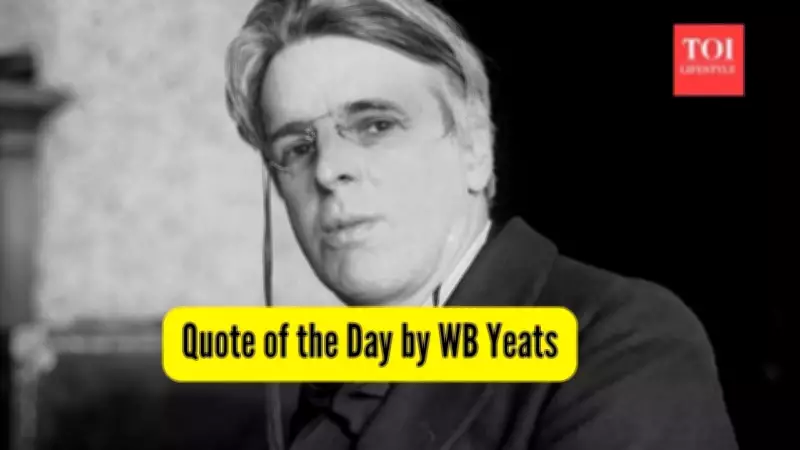
In his later years, Yeats produced some of his most profound poetry, grappling with themes of aging, mortality, and temporal passage. Collections featuring works like Among School Children and Lapis Lazuli showcase his emotional depth and philosophical insight. Despite declining health, he continued writing until his death on January 28, 1939, in France; he was later reinterred in County Sligo, the landscape that had so deeply inspired him. Yeats's legacy bridges romantic and modernist traditions, demonstrating poetry's capacity to intertwine personal emotion with historical narrative. His exploration of love, politics, mythology, and existential mysteries remains resonant worldwide, with his famous quote on happiness—"Happiness is neither virtue nor pleasure nor this thing nor that but simply growth. We are happy when we are growing"—offering a timeless reflection on personal fulfillment through inner development.
Impact and Philosophical Insights
William Butler Yeats's influence on literature is immense, as he pioneered a poetic language that connected individual experience with collective identity. His work continues to inspire readers and writers, underscoring the enduring power of art to sustain the human spirit amid chaos. By championing Irish heritage and addressing universal themes, Yeats ensured that his voice would echo through generations, reminding us that true happiness stems from continuous growth rather than external achievements.