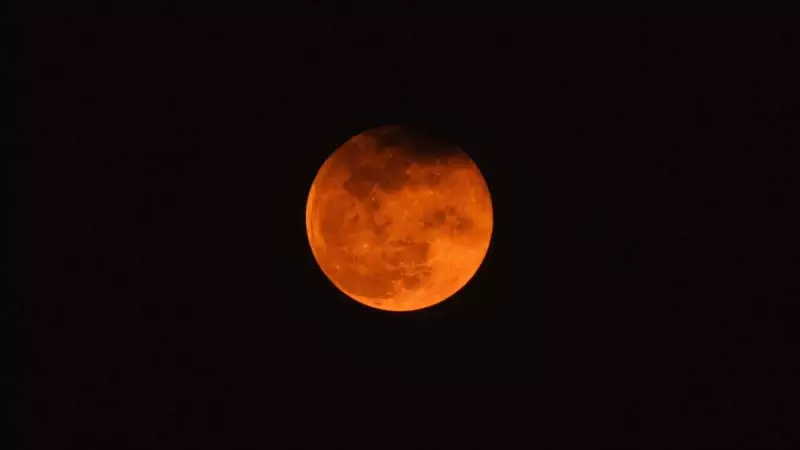
The year 2026 kicked off with a dazzling celestial display for skywatchers in Northeast India. The first supermoon of the year, known as the Wolf Moon, graced the night sky on Saturday, January 3, offering a breathtaking sight. Residents of Guwahati, Assam, were among the fortunate to witness this astronomical event, with many capturing and sharing stunning visuals of the enlarged and bright lunar disc.
What is the Wolf Moon Supermoon?
A supermoon occurs when a full moon coincides with the moon's closest approach to Earth in its elliptical orbit, a point called perigee. This makes the moon appear significantly larger and brighter than a regular full moon. The term "Wolf Moon" is the traditional name given to the first full moon of January, rooted in Native American and colonial folklore. It is believed the name originated because wolves were often heard howling in hunger during the deep winter months around this time.
The supermoon on January 3, 2026, was a particularly special event as it marked the inaugural supermoon of the new year. The moon appeared approximately 14% larger and 30% brighter than when it is at its farthest point from Earth (apogee). This noticeable difference made it a prime target for both amateur astronomers and casual observers with cameras and smartphones.

Guwahati's Celestial Spectacle
The city of Guwahati, with its clear winter skies, provided an excellent vantage point for viewing the Wolf Moon. As night fell on January 3, the supermoon rose above the horizon, casting a brilliant silvery light. Social media platforms were soon flooded with photographs and videos from residents who had stepped out to enjoy the view.
One widely shared video, originally posted by news agency ANI, showed the majestic full moon shining over the Guwahati cityscape. The footage highlighted the moon's remarkable size and luminosity, perfectly encapsulating the magic of the supermoon phenomenon. This visual documentation allowed people across the country and beyond to partake in the experience virtually.
Significance and Future Sky Events
The occurrence of a supermoon is always a reminder of the moon's dynamic relationship with our planet. Beyond its beauty, it has tangible effects, most notably on ocean tides. During supermoons, the gravitational pull is stronger, leading to higher high tides and lower low tides, known as perigean spring tides.
The Wolf Moon of January 2026 has set an impressive tone for the year's astronomical calendar. Sky enthusiasts now look forward to other major celestial events slated for 2026, which include:
- Multiple meteor showers.
- Lunar and solar eclipses.
- Potential opportunities to view planets with the naked eye.
The next supermoon is typically expected a few months later, continuing the cycle of these awe-inspiring lunar events. For many in Guwahati and across India, witnessing the Wolf Moon was not just a visual treat but a moment of connection with the natural rhythms of our solar system, encouraging public interest in astronomy and space science.