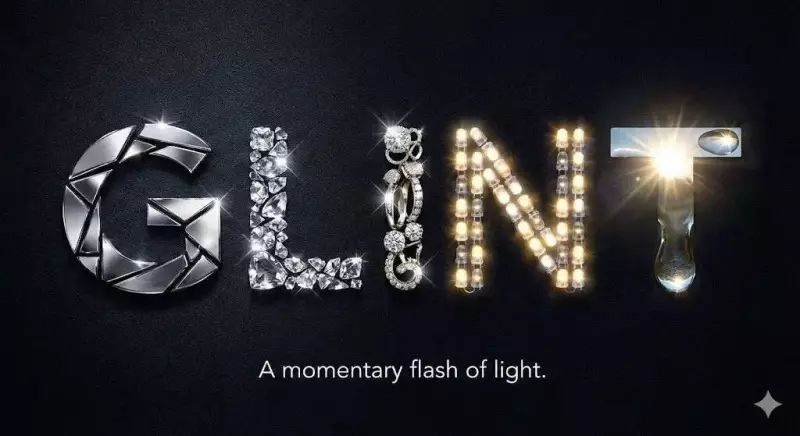
Today's Wordle puzzle presents players with the word 'glint', a term that captures those fleeting moments language often overlooks. It's not about grand revelations or obvious signals, but the brief, unintentional flash that changes everything that comes after it.
The Etymology and Practical Soul of 'Glint'
The word glint entered the English language through Middle English, heavily influenced by the Old Norse word 'glitra', which means to shine or sparkle. This Scandinavian origin is key to understanding its character. Words from Old Norse that describe light are typically practical, focusing on what light does rather than what it might symbolise.
Unlike 'glow' with its sense of warmth or 'gleam' with its persistence, a glint was never a steady light. It is, by nature, a brief flash or a sharp reflection. The word carries the memory of light bouncing off something already hard and sharp—metal, glass, or a surface worn smooth by use. It is light that arrives, makes itself known, and vanishes before you can fully examine it.

What a Glint Truly Reveals
Physically, a glint happens under very specific conditions: when light hits a polished or hard surface at the perfect angle. It depends entirely on the viewer's position, timing, and distance. Alter any one factor, and the glint disappears.
Language has absorbed this behaviour perfectly. When we speak of a glint in someone's eye, we are not describing a full-blown emotion. We are pointing to an intention that has surfaced for just a moment, before it is shaped into action or words. It is the hint before the confession, the tell before the reveal.
This is why a glint often carries a sense of unease. A glint of steel is rarely comforting. A glint of amusement can seem knowing or cruel. A glint of recognition suggests something has been spotted that was meant to stay hidden.
The Art of Using 'Glint' in Writing
'Glint' is a word that resists crowding. It works best when it slips into a sentence quietly, altering the mood without drawing loud attention to itself. The common mistake is to over-explain the glint, which defeats its very purpose.
Consider the difference: stating someone is angry declares an emotion. Noting a glint in their eye invites the reader to deduce the motive. The word creates space for interpretation rather than filling it. Used skillfully, 'glint' suggests the truth has momentarily reflected off the surface, visible only to an attentive observer.
Effective uses respect its transient nature:
- There was a glint of satisfaction in his eye that made her rethink the agreement.
- She caught a glint of metal in the corner before the lights went out.
- A glint crossed his face, gone almost as soon as it appeared.
The power lies not in the noun that follows 'glint', but in the restraint surrounding it. The word, and its implication, should never linger.
Why 'Glint' Still Matters in Modern Communication
In an age where language grows increasingly explicit—where motives are announced and emotions are labelled before they are fully felt—'glint' survives by doing the opposite. It preserves ambiguity and trusts the reader. It asks the audience to notice, to infer, and to feel the shift without a detailed manual.
It reminds us that meaning doesn't always arrive in complete paragraphs. Sometimes, it flashes briefly, reflects off something hard, and leaves you unsettled precisely because you can't be sure you saw it at all. That is the function of a glint. It doesn't explain. It exposes, just long enough for doubt or understanding to take root.
So, the next time you encounter the word, whether in Wordle or literature, remember it's more than a synonym for shine. It's a tiny, sharp instrument of perception, a masterclass in saying less to mean more.