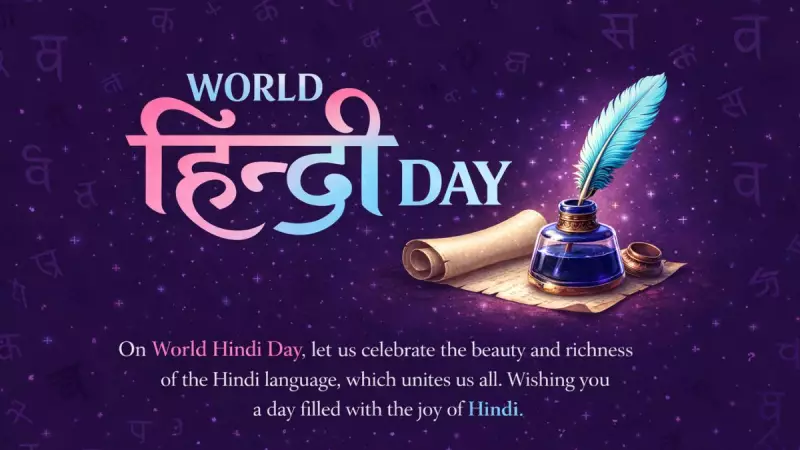
Every year, a special day is dedicated to celebrating the rich linguistic heritage of Hindi on the global stage. While India observes Hindi Diwas domestically, World Hindi Day, or Vishwa Hindi Diwas, marks a broader, international celebration. As we look ahead to 2026, understanding the date, profound significance, and distinct identity of this day becomes essential for Hindi enthusiasts and linguists worldwide.
The Date and Historical Roots of World Hindi Day
World Hindi Day is consistently observed on January 10th each year. The year 2026 will be no exception, with the global community coming together on Saturday, January 10, 2026, to honor the language. This date was chosen to commemorate a pivotal historical event: the inaugural World Hindi Conference.
The first World Hindi Conference was held in Nagpur, Maharashtra, on January 10, 1975. This landmark event was inaugurated by the then Prime Minister of India, Smt. Indira Gandhi. Its primary objective was to promote Hindi as a global language and to create a platform for its speakers and scholars from around the world. Decades later, in 2006, the Indian government, under the leadership of then Prime Minister Dr. Manmohan Singh, officially declared January 10th as World Hindi Day. This formal recognition aimed to institutionalize the global promotion of the language.

World Hindi Day vs. Hindi Diwas: Understanding the Crucial Difference
A common point of confusion arises between World Hindi Day and Hindi Diwas. It is critical to understand that these are two separate observances with different scopes and purposes.
World Hindi Day (Vishwa Hindi Diwas) is celebrated on January 10. Its focus is unequivocally international. The day emphasizes promoting the Hindi language across the world, fostering diplomatic and cultural ties with the global Hindi-speaking diaspora, and encouraging its use in international forums. Activities on this day are often organized by Indian embassies and consulates worldwide, featuring cultural programs, seminars, and poetry recitations.
In contrast, Hindi Diwas is observed annually on September 14. This day marks the anniversary of a seminal national event: the adoption of Hindi, written in the Devanagari script, as one of India's two official languages by the Constituent Assembly in 1949. The decision came into effect on January 26, 1950. Hindi Diwas is primarily a national celebration within India, focused on encouraging the use of Hindi in government offices, schools, and public life across the country. It serves as a reminder of the constitutional status of the language.
To summarize the key distinction: World Hindi Day looks outward, promoting Hindi globally, while Hindi Diwas looks inward, reinforcing its official status and usage within India.
Significance and Celebrations in 2026 and Beyond
The significance of World Hindi Day extends far beyond mere celebration. It is a strategic effort to enhance Hindi's presence on the world stage. Hindi is one of the most spoken languages globally, and this day highlights its potential as a language of diplomacy, culture, and business.
On World Hindi Day 2026, we can expect a series of events and initiatives, both within India and internationally. The Ministry of External Affairs typically plays a leading role in coordinating global events. Common activities include:
- International seminars and conferences discussing the future and challenges of the Hindi language.
- Cultural festivals showcasing Hindi cinema, music, and literature to foreign audiences.
- Award ceremonies honoring individuals and organizations contributing to the promotion of Hindi abroad.
- Special programs in schools and universities worldwide to generate interest in learning Hindi.
The day also serves as a moment to reflect on the evolution of Hindi and its digital footprint. With the rise of technology, efforts are increasingly directed towards enhancing Hindi content on the internet, developing translation tools, and integrating it into global digital platforms.

As we approach World Hindi Day 2026, the observance stands as a powerful symbol of linguistic pride and global connection. It is a day that unites millions of Hindi speakers across continents, reaffirming the language's dynamic role in shaping cultural narratives and fostering international understanding. Recognizing the difference between this global event and the nationally-focused Hindi Diwas allows for a deeper appreciation of the multifaceted efforts to champion the Hindi language both at home and abroad.