Inside the World's Most Guarded Museums: 5 Priceless Paintings on Public Display
Behind velvet ropes, bullet-resistant glass, and the watchful eyes of security personnel, some of the world's most valuable paintings continue to greet the public daily. These artistic treasures travel less frequently than royalty, reside within climate-controlled vitrines, and are monitored by an intricate network of discreet sensors, alarms, and surveillance systems operating 24/7. Conservators meticulously track humidity levels, light exposure, and even microscopic vibrations to prevent any damage, while armed security teams manage visitor flow with choreographed precision. Despite these stringent precautions, millions of people queue patiently for the chance to stand before these masterpieces for a few hushed, reverent moments. From Renaissance icons to modern marvels, these five artworks are as renowned for their protection protocols as they are for the artistic genius that rendered them priceless.
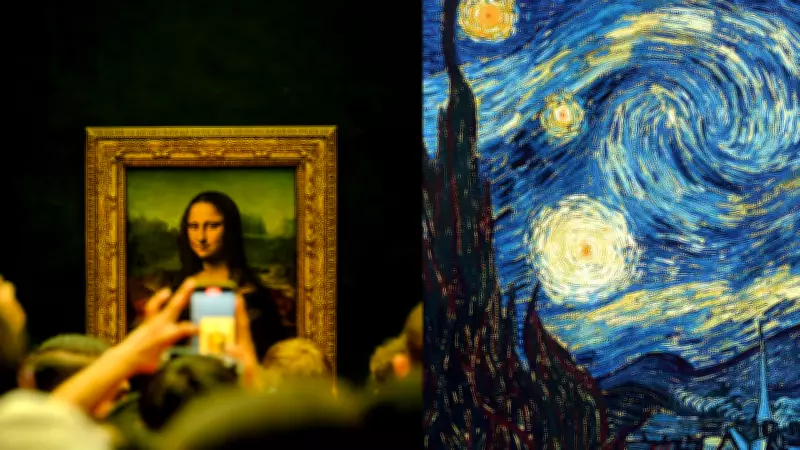
Mona Lisa at the Louvre Museum
Painted by the legendary Leonardo da Vinci, the Mona Lisa is arguably the most scrutinized object in the entire history of art. Following its infamous theft in 1911 and recovery two years later, the portrait's existence was forever altered. Today, it rests securely behind thick, bullet-resistant glass within a purpose-built enclosure, meticulously shielded from fluctuations in humidity, temperature, and, inevitably, over-enthusiastic visitors.
The security apparatus here is both theatrical and meticulous: guards line the room, cameras track every movement, and visitors are funneled into controlled viewing distances. Even the painting's microclimate is rigorously regulated to prevent the delicate poplar panel from warping. While the surrounding crowd may be noisy, the protection surrounding the Mona Lisa is whisper-quiet and relentlessly vigilant.

The Starry Night at the Museum of Modern Art
Vincent van Gogh's swirling, celestial night sky glows softly under precisely calibrated lighting in New York's Museum of Modern Art. The museum's comprehensive security systems, including motion detectors, alarms embedded within frames, and discreetly positioned guards, are engineered to feel invisible while remaining acutely alert to every subtle shift within the room.
In response to high-profile attacks on artworks during the late twentieth century, this iconic painting was rehoused with reinforced backing and protective glazing. The result is a fascinating paradox: an image that feels profoundly emotionally exposed, yet remains physically unreachable to the public.
Girl with a Pearl Earring at the Mauritshuis
Often referred to as the "Dutch Mona Lisa," this intimate portrait by Johannes Vermeer draws visitors into a near-whispering, personal encounter. Its gallery space is calm and almost domestic in atmosphere, but beneath this serene surface lies a dense, sophisticated network of sensors, cameras, and climate control systems.
The Mauritshuis has invested heavily in discreet protection measures, including vibration alarms installed behind frames, controlled lighting to slow pigment fading, and constant, real-time monitoring from a central security hub. You might feel as though you are alone with her enigmatic gaze, but you absolutely are not.
The Night Watch at the Rijksmuseum
Rembrandt van Rijn's colossal civic-guard scene has survived centuries of challenges, including vandalism, knife attacks, and acid damage. Today, visitors may sometimes find it enclosed within a giant glass chamber while conservators work in full public view—an ongoing project affectionately nicknamed "Operation Night Watch."
This transparent box is far from mere theatrical flair; it is a veritable fortress. Equipped with advanced climate filters, security glazing, and round-the-clock surveillance, it allows for continuous restoration without ever removing the painting from public display. Few museums in the world offer the unique opportunity to witness science and security operating in such harmonious, simultaneous performance.

Las Meninas at the Museo del Prado
Diego Velázquez's enigmatic court scene commands one of the Prado Museum's most carefully controlled rooms. Light levels are kept deliberately low to preserve the artwork, entry points are vigilantly watched by uniformed guards, and the painting's immediate surroundings are specially designed to absorb vibrations from passing foot traffic.
Given its immense size, age, and profound cultural weight, emergency preparedness plans here run exceptionally deep. These range from regular evacuation drills to meticulously prepared off-site storage routes designed for worst-case scenarios. While the masterpiece itself feels serene and timeless, the extensive, meticulous planning protecting it is anything but.
Why These Priceless Paintings Remain on Public View
With valuations that could potentially rewrite national budgets, one might wonder why these artworks are not hidden away entirely. Museums universally argue that public access is a fundamental part of their educational and cultural mission. They maintain that modern, advanced security can make openness safer than secrecy. Innovations in protective glass, environmental engineering, and digital surveillance now allow viewers to come astonishingly close to these fragile surfaces without endangering them.
Standing before any of these legendary works, you are not merely looking at pigment and canvas. You are immersed within one of the most sophisticated protection systems on Earth, a network quietly humming in the background while centuries of art history gaze directly back at you.