Youth Power Revives Puri's Ancient Sahi Jata Festival
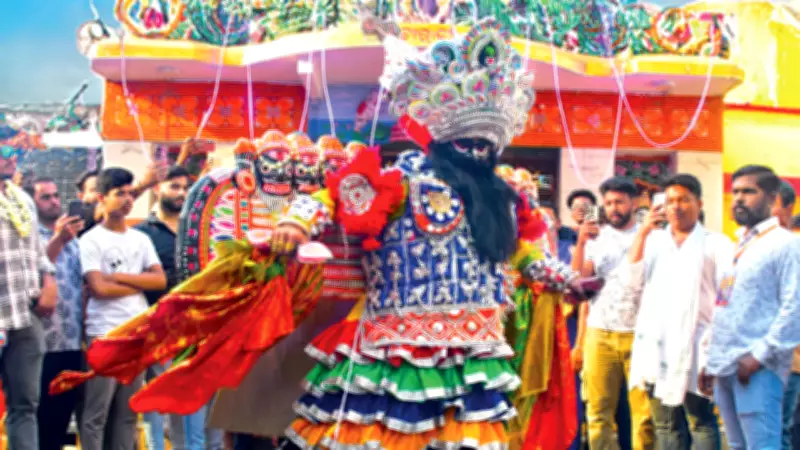
In the sacred temple town of Puri, the rhythmic beats of traditional instruments echo through narrow lanes during the annual Sahi Jata festival, creating a vibrant open-air theater that has captivated generations. This centuries-old celebration, held every Chaitra (March-April in the Odia calendar), is experiencing a remarkable renaissance as young performers step forward to shoulder both the physical weight of elaborate costumes and the cultural legacy of their ancestors.
A Living Tradition Spanning Eight Centuries
Historians trace the origins of Sahi Jata back approximately 800 years, making it one of Odisha's most enduring cultural expressions. For generations, neighborhood troupes have staged dramatic episodes from the Ramayana, blending deep devotion with theatrical performance in a spectacle that draws both local residents and curious tourists. What distinguishes the contemporary festival is the fresh energy and commitment brought by younger participants who are determined to keep this tradition alive in our rapidly changing world.
Remarkably, it is not Lord Rama but the demon king Ravana who takes center stage in these performances, challenging conventional narrative expectations. The festival unfolds across Puri's eight historic Sahis (lanes): Bali Sahi, Kalikadevi Sahi, Kundhei Benta Sahi, Harachandi Sahi, Goudabada Sahi, Markandeswara Sahi, Matimandapa Sahi and Dolamandapa Sahi. Each neighborhood maintains its own Jaga Gharas—traditional community spaces that serve as cultural and martial training hubs where preparations begin months in advance.

The Physical and Spiritual Discipline of Performance
For today's youth participants, Sahi Jata represents far more than mere street theater—it demands rigorous physical discipline and spiritual dedication. Training commences at least six months before the festival, with participants preparing to perform while carrying extraordinarily heavy costumes, masks and headgear that can weigh up to 45 kilograms.
"We start training at least six months before the festival. It's not easy to balance the heavy mukuta, mukha and medha while performing continuously for four hours," explains Bhanu Prasad Mohapatra, a dedicated participant. "Your body needs stamina and control, or you simply cannot perform."
What makes this commitment particularly noteworthy is that many participating youths are employed in various professions across Odisha and beyond. They deliberately return to Puri and arrange remote work schedules to dedicate themselves to practice for this significant cultural showcase.
Evolution Through Inclusion and Documentation
The festival is evolving in meaningful ways while preserving its core essence. Girls like performer Laxmipriya Beja are now portraying goddess roles—a significant departure from earlier practices when such characters were not performed by women. "A lot of research on characters is also required," Beja emphasizes. "If one does not understand what mythology and scriptures say about a character, how can one portray it?"
Simultaneously, technology is becoming an unexpected ally in cultural preservation. Young participants are actively documenting rehearsals and performances, creating digital archives for future generations. "We upload our practice sessions and performances online. It helps others learn and keeps a record of our tradition," shares Aham Rudra, another performer. "If we don't document it now, many details could be lost over time."
Community Endorsement and Cultural Significance
Senior community members view this youthful engagement as profoundly encouraging. "It is heartening to see the younger generation come forward with such dedication," observes local resident Priyankar Maharana. "Their energy, combined with respect for tradition, will ensure that Sahi Jata continues to thrive for generations to come."
Cultural experts recognize the festival as more than theatrical entertainment. "This represents a community-driven expression of faith and storytelling that has adapted over centuries without losing its fundamental essence," explains Jagannath culture expert Harekrushna Satpathy.

During the festival fortnight that begins on Ram Navami, performers traverse all eight Sahis, showcasing martial skills and enacting Ramayana episodes before culminating at the Jagannath Ballabha Matha on the Grand Road. The performances, held late into the night, attract substantial crowds who follow the enactments from one locality to another, creating a moving tapestry of community celebration.
Through their dedication, today's youth are ensuring that the 12th-century tradition of Sahi Jata not only survives but meaningfully evolves, bridging centuries of heritage with contemporary relevance in a remarkable cultural continuum.