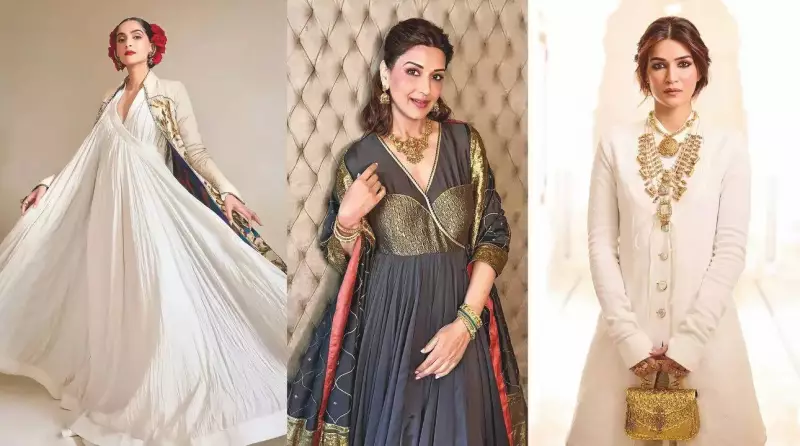
The Angrakha, a flowing tunic-like garment with a distinctive cross-over front, is experiencing a remarkable renaissance. Originating in the Mughal era as practical attire for royalty and warriors, this 'body protector'—derived from the Sanskrit word 'angaraksha'—has seamlessly transitioned from historical wardrobes to contemporary fashion runways and red carpets worldwide.
Regional Styles: A Tapestry of Indian Craftsmanship
While the core silhouette—a shaped upper panel called the purdah secured with ties—remains consistent, its expression varies dramatically across India. Fashion designer Rahul Khanna notes that in the arid climates of Rajasthan and Gujarat, the Angrakha evolved to be shorter and lighter for heat and movement. In contrast, Northern India favoured longer, more fluid versions.
Celebrity stylist Madhuri Singh elaborates on further regional distinctions. Eastern India showcased fine silks with Kantha embroidery, while the South employed rich silks, gold threadwork, and temple motifs. Tamil Nadu and Kerala leaned towards opulent silks, whereas Karnataka and Andhra Pradesh preferred vibrant cottons and linens. The Deccan region prized mashru, a luxurious silk-cotton blend known for its comfort and sheen.

Global Revival: Designers and Cinema Lead the Way
This timeless attire has been thrust into the global spotlight by leading Indian designers and period cinema. Designers like Anamika Khanna and Abu Jani Sandeep Khosla have been instrumental. Khanna featured it at London Fashion Week, while Jani-Khosla's crushed-silk design was worn by actor Tabu at the Dune: Prophecy premiere in New York.
Stylist Nishtha Parwani highlights how couturiers such as Rohit Bal and Tarun Tahiliani have reimagined it with dramatic embellishments, fluid drapes, and asymmetrical hems. Historical films like Bajirao Mastani, Padmavat, and Jodha Akbar have been crucial in preserving its allure, while celebrities wearing it off-duty have normalised it as chic, everyday wear.
The Modern, Gender-Fluid Angrakha
Originally a male garment, the Angrakha has successfully shed gender constraints. Rahul Khanna attributes this to its easy wrap and natural drape, which make it inherently gender-neutral. Celebrity stylist Mitali Ambekar frames this shift as part of a broader trend towards androgyny in fashion, where style and personal expression take precedence over traditional gender norms.
The design possibilities are now endless. Designer Chandan Allen speaks of experimenting with cropped jackets, floor-length evening wear, and integrating contemporary elements like oversized proportions and utility pockets. The garment is now paired with trousers, jeans, or palazzos, and layered under jackets or worn solo as a dress.
Fabrics have also diversified. While breathable cotton and earthy khadi remain staples, modern versions embrace linen, rayon, silk, brocade, velvet, georgette, chiffon, and organza for every occasion.
Styling Tips for Your Wardrobe
Fashion experts Mitali Ambekar and Nishtha Parwani suggest versatile ways to incorporate the Angrakha:

- Pair a cropped Angrakha with flared pants for a chic silhouette.
- Layer a floor-length open Angrakha over a full-length dress.
- Combine a sheer, embroidered Angrakha with a tube top and pencil pants for a polished look.
- Use an Angrakha-style cropped blouse with a saree for a unique twist.
- Opt for a crisp linen or cotton Angrakha with tapered trousers for a smart office ensemble.
- Style a lighter silk version over a midi dress for brunch, elevating it with a belt or statement footwear.
- For formal events, play with textures like metallic threads and accessorise with oversized earrings or stacked bangles.
From its royal Mughal origins to its current status as a symbol of versatile, gender-fluid fashion, the Angrakha continues to protect and project the wearer's identity, proving that true style is indeed timeless.