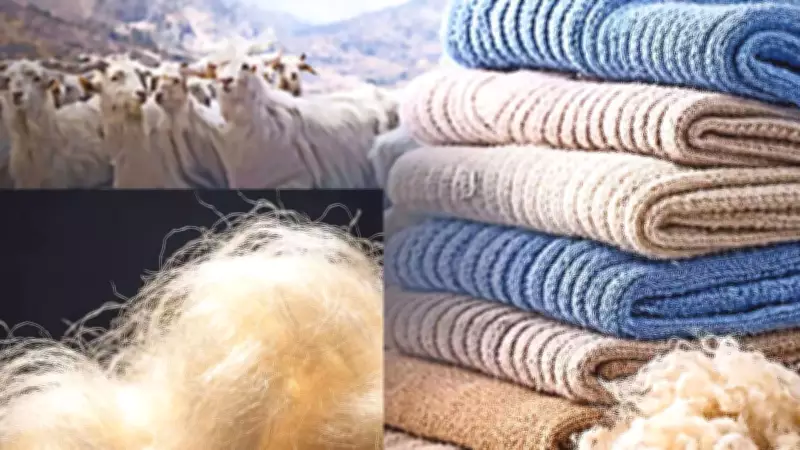
The Allure of Cashmere: A Timeless Luxury
Cashmere. The very word evokes images of softness, warmth, and understated elegance. This remarkable fibre, light as a whisper yet insulating like a gentle embrace, has become the ultimate symbol of quiet luxury across generations. In the 19th century, a single cashmere shawl from India could cost a working man their entire annual salary, imported by the East India Company to become a hallmark of refinement and indulgence in European society.
The Modern Cashmere Market: From Affordable to Astronomical
Today, the cashmere landscape has dramatically expanded. Consumers can find cashmere products ranging from as little as Rs 5,000 to astonishing highs of Rs 2 lakh. Luxury brands command premium prices: Brunello Cucinelli sells sweaters for over $2,300 (approximately Rs 2,11,033), while Loro Piana offers exceptionally fine cashmere sweaters made from Capra Hircus goat kids for £2,420 (around Rs 2,59,620).
Meanwhile, more accessible options exist at retailers like Uniqlo (Rs 4,000–Rs 10,000), Zara (Rs 8,000–Rs 13,000), and Quince (Rs 4,591). Despite these jaw-dropping price variations, global demand continues to surge. According to Grand View Research, the cashmere market was valued at $2.80 billion in 2023 and is projected to reach $4.24 billion by 2030.

The Quality Conundrum: What Are We Really Paying For?
As demand rises, so does confusion about product quality. Abdul Ghani, who operates a wool mill in Kashmir, offers crucial insight: "Cashmere starts at Rs 8,000–9,000. If someone is selling it for Rs 1,500 online, people should understand immediately, it's not cashmere." The true value lies in the fibre itself and its extraordinary journey from goat to garment.
The Origins: From Kashmir to Global Recognition
The term "cashmere" derives directly from Kashmir, the Himalayan valley that transformed humble goat fibre into worldwide luxury. In 19th-century Europe, "cashmere wool" specifically referred to the soft fabric used in the region's renowned shawls. Over time, the geographical name became synonymous with the fibre itself.
While the shawls were woven in Kashmir, the raw material—pashm—originates further north. This ultra-fine undercoat comes from Capra hircus (Changthangi) goats raised on the high plateaus of Tibet and Ladakh. For centuries, traders carried this precious material through Ladakh into the Kashmir Valley, where master weavers transformed it into shawls coveted by royalty.
European Obsession and Continued Rarity
By the 19th century, cashmere had become a European obsession. Napoleon Bonaparte famously gifted his second wife seventeen cashmere shawls, sparking a fashion craze across France. Despite its enduring fame, cashmere remains exceptionally rare, accounting for less than 1% of global fibre production—approximately 20,000–25,000 metric tonnes annually.
China currently produces about 60% of the world's cashmere, followed by Mongolia. However, Kashmir and Ladakh maintain their reputation for producing the finest handwoven pashmina, preserving centuries-old craftsmanship.
The Science of Softness: How Climate Creates Quality
Cashmere originates from goats surviving brutal winters in Mongolia, Tibet, and Ladakh, where temperatures can plummet to minus 30 degrees Celsius for months. Varun Kumar, founder of Pashmina.com, explains: "The harsher the winter, the finer the undercoat the animal grows to protect itself."
Cashmere quality is measured in microns—the lower the micron count, the softer the fibre. Ghani emphasizes that softness depends on multiple factors: "People think cashmere is just about softness. But softness depends on fibre length, micron count, and how gently it is processed. If you rush spinning or finishing, you damage what nature created."
The production process is painstakingly slow. A plain handwoven shawl requires eight to ten days, while embroidered heirloom pieces can take months or even years. Varun adds: "The more handcrafted the process, the more expensive it gets. Pricing is largely determined by time." This time investment fundamentally explains the difference between Rs 8,000 and Rs 80,000 cashmere sweaters.

The Blending Dilemma: When Labels Mislead
Today's market offers cashmere at mall prices, raising questions about what has changed. Blending represents one significant factor. While luxury houses like Loro Piana and Brunello Cucinelli built empires on technical finesse—careful washing, slow spinning, meticulous finishing—many high-street versions contain only 5-30% cashmere mixed with other wools, nylon, or acrylic.
Legally labeled as "cashmere blends," these products can mislead consumers. Ghani notes: "You can tell just by holding it. There is a big difference between cashmere and blended cashmere. The softness, the warmth, it's very different." He identifies dyeing as a key indicator: "If you mix cashmere with synthetic fibres and dye it, the colour won't come out evenly. You'll see double shades. Pure cashmere takes colour evenly."
The Geographical Indication: Restoring Trust Through Certification
In India, the Geographical Indication (GI) tag aims to restore consumer confidence. This certification identifies goods originating from specific locations with distinct qualities linked to their origin. Varun explains: "The QR code on GI-tagged products now tells you the micron count, whether it was hand-spun, even whether the embroidery thread is silk or cotton."
A plain GI-tagged Indian pashmina shawl (all pashmina is cashmere) costs approximately Rs 13,000–14,000. Ghani states firmly: "Even without a GI tag, it cannot be Rs 2,000. The GI tag gives satisfaction. It's a symbol of purity."
Caring for Your Investment: The Art of Preservation
Purchasing quality cashmere represents just the beginning of your investment. Proper care is essential for longevity. Experts recommend:
- Hand washing in cool water or using a delicate cycle
- Laying garments flat to dry
- Storing folded with cedar blocks, never on hangers
Ghani recalls: "We still see shawls that are 30 or 40 years old, and they look as if they were just bought. People used to care for them. You cannot wash it casually. If you put it in the washing machine or use too much soap, it will shrink."
Fast fashion has conditioned consumers to expect lower prices and faster cycles, often accepting inferior quality. However, true cashmere demands respect for its natural properties and artisanal origins.
Beyond Winter: The Evolution of Cashmere Fashion
Traditionally associated with cold weather, cashmere now appears in July collections. Luxury stores sell cashmere T-shirts, sleeveless shells, and whisper-thin knits styled for summer, often in cotton-cashmere blends paired with linen or light layers. The fibre has clearly transcended seasonal boundaries.
But does "summer cashmere" truly exist? Varun responds: "There is no such thing. That's marketing. Brands simply blend cashmere with cotton, silk, hemp or acrylic." Pure cashmere is naturally insulating; lighter summer versions rely on ultra-fine knits or blends where silk adds sheen and cotton provides breathability—sometimes with just enough cashmere to justify the label.
Luxury Alternatives: Other Precious Wools
While cashmere reigns supreme in many wardrobes, other luxury fibres offer distinct qualities:
Merino Wool
Sourced from Merino sheep primarily in Australia and New Zealand, Merino wool serves as a more affordable alternative to cashmere. Its fibres are finer than traditional wool, providing comfort against skin. Unlike cashmere goats yielding small amounts through annual combing, Merino sheep are shorn yearly, producing larger volumes.
Vicuña Wool
Often considered the pinnacle of luxury fibres, vicuña wool comes from wild vicuñas living high in Peru's Andes Mountains. Measuring about 12 microns, it's softer than cashmere. Each animal produces only half a kilogram annually, making vicuña extremely rare, light, and remarkably warm. A Lora Piana vicuña coat can fetch $25,000.
Shahtoosh: The Forbidden Luxury
Shahtoosh represents luxury turned taboo. Once considered the ultimate shawl material, it was made from the ultra-fine underfur of the chiru, a Tibetan antelope—so delicate that a shawl could pass through a ring. Since obtaining the fibre requires killing the animals, shahtoosh has been globally banned since 1975 when the species was declared endangered.
The cashmere market continues to evolve, blending ancient craftsmanship with modern marketing. As consumers navigate prices from Rs 5,000 to Rs 2 lakh, understanding the fibre's journey—from Himalayan goats to luxury boutiques—becomes essential for making informed choices about this timeless luxury.