The Ultimate 'Old Money' Flex
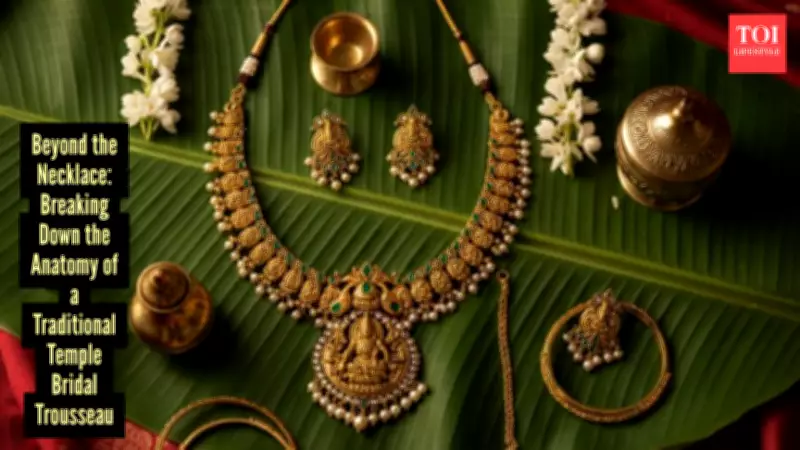
Forget the diamond-encrusted everything for a minute. If you really want to talk about generational wealth in bridal fashion, look south. There is a massive shift happening on wedding moodboards right now. Brides are swapping flashy, machine-polished sets for something with a lot more soul, and a lot more weight. We are talking about authentic antique temple jewellery. Originating way back in the 9th century, these heavy 22k gold pieces were quite literally made for deities and royalty. Fast forward to today, and they are the definitive anchor of the traditional South Indian bridal trousseau. Characterized by a raw, matte gold finish and deep red kemp stones, which are uncut rubies and emeralds, temple jewellery is not just an accessory; it is wearable architecture. If you are breaking down that ultimate bridal look, here is the anatomy of a traditional temple jewellery trousseau.
Framing the Face: The Nethi Chutti and Jimmiki
North Indian brides have the delicate maang tikka, but down south, the Nethi Chutti demands attention. It is a heavier, complex piece that frames the hairline and drops boldly down the center of the forehead. In highly traditional ceremonies, you will often see it paired with the Surya Pirai, representing the sun, and Chandra Pirai, representing the moon, pinned on either side of the hair parting. It is all about maintaining cosmic balance. Then come the ears. The traditional jimmiki is famously chunky. Because these beautifully engraved, bell-shaped earrings carry serious weight, they are supported by the maattal. This heavy gold chain, often studded with bright kemp stones, hooks directly into the hair. It perfectly frames the face while saving the bride's earlobes from doing all the heavy lifting.
The Cascade: Attigai to Kasu Mala
When it comes to neckwear, the secret is layering. You do not just put on a necklace; you build a cascade. It usually starts right at the collarbone with the Attigai, a stiff, close-fitting choker sitting tightly against the skin, packed with cabochon stones. From there, the gold drops lower with the iconic Kasu Mala, also known as Kasulaperu. This is that stunning, long chain made of overlapping gold coins. Traditionally, every single coin is embossed with the likeness of Goddess Lakshmi to bring prosperity. To finish the stack, brides often add a Manga Malai. Featuring interconnecting mango motifs, this long, heavy chain symbolizes fertility and love, ending in a massive, intricately carved pendant.

Structuring the Silhouette: Vanki and Oddiyanam
Here is where the brilliant engineering of antique jewellery really shows. Take the vanki, or armlet, worn high on the upper arm. Instead of a tight metal ring that would restrict blood flow, a traditional vanki features an inverted V-shape. It adjusts naturally to the arm. You will almost always spot a coiled serpent, a peacock, or a goddess crowning the center of it. Finally, we reach the absolute anchor of the entire bridal look: the Oddiyanam. This heavy gold waist belt is the main event. It cinches the waist and tightly secures the heavy folds of the Kanjeevaram silk saree. But more than that, the oddiyanam literally defines the bride's posture. Heavily embossed with flora, fauna, and divine figures, it represents a massive investment of pure gold.
More Than Just Metal
At the end of the day, authentic antique temple jewellery relies on crafting techniques that are slowly fading away. That makes genuine, older pieces incredibly rare. They are not just pretty things you buy for a single weekend. They are heirloom assets. When a bride wears a full temple set, she is not just getting dressed; she is carrying history.