Reclaiming Symbols: The Emergence of the Divorce Ring
For generations, the engagement ring has stood as a powerful emblem of commitment and future union. But what becomes of this symbolic piece of jewellery when the relationship it represents dissolves? Historically, many women chose to quietly store these rings away, hidden in drawers or lockers as painful reminders. Today, a significant cultural shift is underway: instead of concealing these rings, women are actively redesigning them or purchasing entirely new pieces to mark a profound transition from attachment to autonomy.
A Trend Named and Normalized
While the practice of repurposing jewellery from past relationships is not new, the concept of the 'divorce ring' has only recently entered mainstream conversation, gaining a distinct identity and social acceptance. This movement represents more than just a fashion statement; it is a declaration of self-ownership and a reclamation of personal narrative.
Pop Culture Precursors and Celebrity Influence
Popular culture foreshadowed this evolution years ago. A notable example comes from the iconic series Sex and the City, where the character Carrie Bradshaw, portrayed by Sarah Jessica Parker, creatively recontextualized relationship jewellery. In a memorable scene from season four, she wears her engagement ring from Aidan not on her finger, but as a pendant close to her heart—honoring the memory while consciously distancing herself from the marital promise it once held.

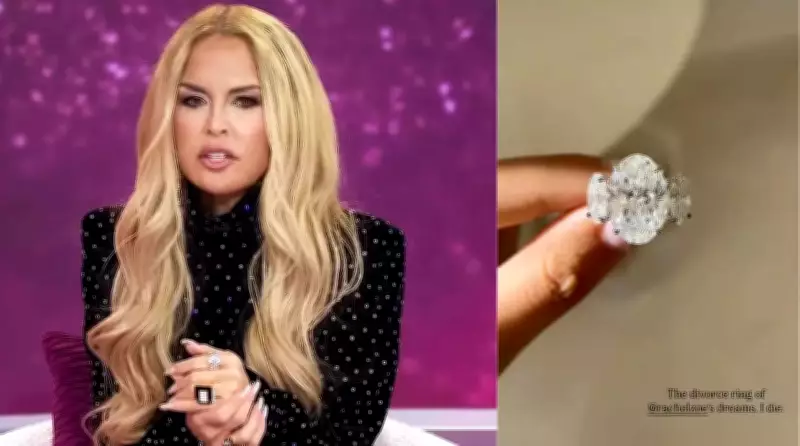
Off-screen, high-profile figures have publicly embraced this trend. American model and actress Emily Ratajkowski was among the first celebrities to remodel her engagement ring, transforming it into two separate pieces featuring pear-shaped and princess-cut diamonds, thereby granting the original jewel a completely new identity. Similarly, fashion designer Rachel Zoe made headlines earlier this month by sharing that she purchased a divorce ring for herself after filing for divorce in July 2025. Her ring, designed by Ring Concierge, features a large oval diamond at the center, flanked by two smaller stones symbolizing her two sons, Skyler and Kaius.
"It’s like a freedom ring," Zoe expressed on a show. "Why do women have to wait their whole lives to get a ring because they’re engaged? Why can’t they just have a ring that’s either, ‘OK, I’m divorced. I’m free. I’m widowed. I’m single.’"
Personal Stories of Reclamation
The trend is deeply personal, as illustrated by individual stories. Bhaavya Roy (37) from New Delhi, who separated in 2018, designed a new gold ring with a five-carat solitaire for herself in 2025. "My engagement ring was a painful memory, representing shackles rather than union," she explains. "This new ring reminds me what life should be about: freedom, dignity and strength."
Another woman, Charvi* (30) from Tamil Nadu, who divorced in 2025, exchanged her simple engagement band for a platinum and rose gold ring with a diamond she had always desired. "When I got engaged, I agreed to a simple band because my ex-partner insisted. After parting ways, I exchanged it and gifted myself this ring. It felt like I was shedding a part of him. A new, old version of me returned – like a lost identity found," she shares.
Industry Insights: Reclaiming Memories on New Terms
Jewellery industry experts confirm a noticeable increase in clients seeking to remodel pieces from past relationships, particularly engagement rings. Ashwanth Ramesh, co-founder of a lab-grown diamond brand, observes, "Clients are reclaiming memories on their own terms. They are not looking to erase a memory, but to reclaim the piece on their own terms." He notes that the decision to buy or create a divorce ring is rarely immediate, typically occurring after a significant period of reflection post-separation.
Ramesh emphasizes the personal nature of the choice: "Whether one keeps a solitaire or redesigns it is purely personal. What is heartening is the spirit behind the decision." Some women deliberately avoid solitaires to avoid signaling they are tied down, viewing this as a powerful statement of independence.

Design Trends: Symbolism and Modern Aesthetics
Contemporary demand is shaping new design philosophies in the jewellery market. Dishi Somani, founder of a jewellery brand, reports, "Clients are actively looking for modern, versatile options like open rings, geometric shapes, and even signet rings. They want us to transform rings into something simple, elegant yet powerful that they can wear every day."
Arthi Ramalingam, founder and CEO of another jewellery brand, adds, "We’re seeing strong interest in symbolism-driven design elements that represent renewal and independence. People want pieces that carry personal meaning." While traditional metals like yellow gold, rose gold, and platinum remain popular, there is a growing preference for gemstones such as sapphires, emeralds, and birthstones alongside or instead of diamonds.
Ramalingam concludes, "Rings in particular carry strong emotional associations, and many consumers prefer transforming existing pieces into designs that reflect their current identity. It’s less about discarding the past and more about reclaiming material and emotional value in a way that feels relevant today."
This movement from engagement ring to divorce ring signifies more than a change in jewellery; it marks a cultural evolution where women are rewriting the stories of their lives, one redesigned gem at a time.