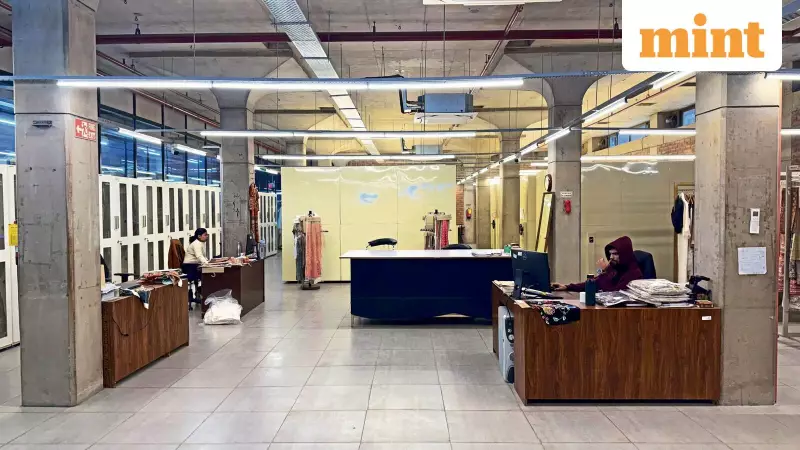
Step into a space that feels more like a high-security vault from a spy thriller than a fashion studio. Behind glass walls and under the watchful gaze of CCTV cameras lies a 900-square-foot, fireproof sanctuary in the basement of Tarun Tahiliani's Gurugram atelier. This is not just a storage room; it is the meticulously organized memory bank of one of India's pioneering couturiers, preserving over three decades of design evolution.
A Time Capsule of Indian Fashion
Rows of cream-coloured compactors, specialized sliding shelves, house the soul of the Tarun Tahiliani brand. This climate-controlled archive, built to protect delicate fabrics from humidity and moisture, is home to over 8,000 items. The collection includes fabric swatches, embroidered panels, sketches, vintage books, photographs, and sample garments, each tagged with a barcode detailing its year, material, and parent collection.
Opening a compactor is like embarking on a journey through time. One reveals the beige monochrome chikankari that became Tahiliani's signature in the late 1990s. Another holds a 23-year-old sample of gota-patti work. A more recent velvet swatch from four years ago features dangling beads that create movement even when still. Some pieces are quietly labelled "Nita Ambani," marking fabrics destined for the prominent businesswoman's wardrobe.

Systematising Memory and Building a Legacy
For Tahiliani, 63, creating this archive was a race against time. "We got late building it," he admits, noting the project gained momentum during the Covid-19 pandemic. "I have lost many swatches. We had artisans who were the only ones who could do certain kinds of embroidery, and they are no longer with us. If I don't have those swatches, I will never be able to replicate them."
The archive is now an active tool. It has already enabled the recreation of lost costumes and serves as a foundational resource for new collections. Tahiliani is currently finalizing a line to be presented on 16 January in Hyderabad to celebrate the brand's 30th anniversary. The upcoming collection, previewed in fittings, draws inspiration from regional Indian draping styles and Mughal-era motifs fused with British tailoring—themes echoed in the archive's contents.
The Rare Gem in Indian Fashion
Despite its obvious value, such a professionally maintained archive is a rarity in the Indian fashion industry. While veterans like Ritu Kumar possess vast collections, they are often not systematically organized. Few houses have invested in the climate, temperature, and light-controlled environments necessary for true preservation. Although some designers are considering similar projects, and Abraham & Thakore's archive is viewable, few are as meticulously catalogued and functional as Tahiliani's.
Pramod Kumar K.G., of Eka Archiving Services, which designed this archive, emphasizes that a good archive must be "ruthlessly organized and used daily." It is a costly, demanding endeavour requiring constant monitoring for factors like mould. For Tahiliani, the driving force is legacy. "Tomorrow, whoever takes over my position to write the next chapter, they will have a reference point. I'm building my legacy. I'm systematising my memory," he states.
This Gurugram archive, accessible to the public on request, stands as a solemn shrine to Indian couture's recent history. It ensures that the craftsmanship, artistry, and narratives of the past remain not as forgotten relics, but as living inspiration for the future of design.