

Kerala Restaurant's Festive Post Triggers Widespread Online Fury and Legal Action
In the fast-paced world of social media, where trends can shift in an instant and public sentiment can turn on a dime, a single post has the power to catapult a brand into the spotlight for all the wrong reasons. This scenario has unfolded dramatically for Meher Mandi & Grills, a restaurant based in Cherthala, Kerala, after its Vishu festival greeting sparked intense controversy and became a major talking point across digital platforms.
The Viral Post That Ignited the Firestorm
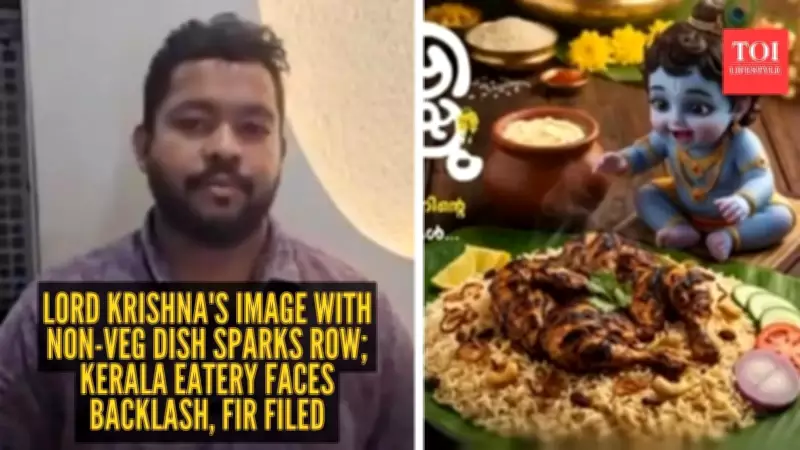
The controversy erupted when the restaurant shared a Vishu greeting on its social media channels. The post featured an image that combined Lord Krishna with a non-vegetarian chicken dish, a juxtaposition that many users found deeply inappropriate and offensive. For a significant portion of the population, Lord Krishna is traditionally associated with vegetarian offerings, especially during religious festivals like Vishu, which marks the Malayali New Year. Consequently, the visual was perceived by numerous viewers as insensitive and disrespectful to Hindu sentiments.
Social Media Erupts with Sharp Criticism and Calls for Boycott
As the image circulated rapidly online, reactions escalated swiftly, with users expressing strong disapproval and questioning the rationale behind the content. One user commented, "Bro, What’s Apology? Where is the first step of the Basic Cultural sense? Where is yours or your designers sensitivity to Hindus and their festivals gone? What is a mere apology? Why take the first step in the first place?" Another called for decisive action, stating, "Use the power of social media. Start a campaign. Boycott their products, their business. Cancel them in public life… Unless you bring them down to their knees they will not learn." The backlash highlighted how quickly online outrage can translate into real-world consequences for businesses.

Legal Repercussions: FIR Filed and Owners Released on Bail
The situation intensified to the point where legal action was taken. An FIR was registered against the restaurant owners, Arshad Asharaf and Shamnas Kunhimuhammed, under Section 192 of the Bharatiya Nyaya Sanhita for allegedly provoking with intent to cause a riot. According to reports, the complaint was filed by a local resident, leading to the booking of the accused. Following the filing of the FIR, the owners were released on bail after their statements were recorded. They maintained that there was no intention to hurt religious sentiments, emphasizing the incident as an oversight rather than a deliberate act.
Restaurant's Apology Fails to Quell the Storm
In response to the mounting criticism, Meher Mandi & Grills issued an apology video on Instagram. In the video, the owners expressed regret over the post, explaining that the design work had been outsourced and that there was a failure in reviewing the final content before publication. They clarified that the post was not intentional and assured that such an incident would not recur. However, this explanation did not fully satisfy many users, who continued to question the restaurant's accountability.
Continued Skepticism and Debates Over Responsibility
Even after the apology, skepticism persisted among social media users. Many argued that ultimate responsibility lies with the business itself, regardless of outsourcing. One user wrote, "Outsourcing the design, but the idea has to come from the company. This was done deliberately, not by mistake." Another comment added, "This is not a ‘mistake.’ These people deliberately mock Hindu beliefs and deities, then issue a weak, insensitive apology after backlash… Are Hindu sentiments so cheap and freely available?" These reactions underscore the ongoing debate about cultural sensitivity and brand accountability in the digital age.
Disclaimer: This article is based on publicly available information, social media posts, and media reports. The publication has not independently verified all claims. The statements and reactions mentioned reflect the views of individuals online and do not necessarily represent the publication’s opinion.

