

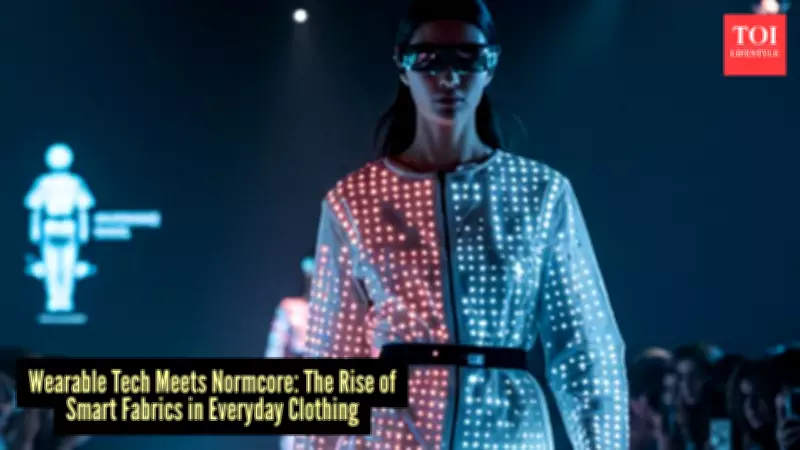
The Dawn of Wearables 2.0: When Your Clothes Become Your Smartest Accessory
Gone are the days when wearable technology meant bulky plastic bands that clashed with your outfit. We have officially entered the era of Wearables 2.0, where technology seamlessly integrates into the very fabric of our daily lives. This new paradigm focuses on "normcore" tech—gadgetry that isn't an accessory you strap on, but rather the fundamental thread of your favorite garments.
The vision for 2026 is clear: your clothing should work harder than you do while maintaining the familiar look of the basics you already cherish. This revolution is transforming everything from denim to sleepwear, creating garments that enhance health, convenience, and sustainability.
Denim That Corrects Your Posture: A New Frontier in Fabric Innovation
Denim has long been the cornerstone of the Indian wardrobe, but it is now emerging as a frontier for groundbreaking fabric innovation. We have moved far beyond gimmicky touch-sensitive sleeves to focus on practical utility that genuinely improves quality of life.

Imagine a pair of slim-fit jeans that detects when you are slouching over your laptop. Advanced posture-correcting denim incorporates sensors discreetly hidden within the waistband to deliver a gentle, subtle vibration to your lower back. This silent nudge encourages you to sit up straight without any disruptive phone notifications.
The technology also revolutionizes urban navigation. Conductive yarns—essentially silver-plated threads—are being woven into pockets and thighs, transforming your pants into a remote control. With a simple tap on your leg, you can dismiss an unwanted call or skip to the next track during your commute. This creates the ultimate hands-free experience for crowded environments like the Delhi Metro.
The Science of Enhanced Sleep: How Smart Loungewear Promotes Recovery
The concept of "beauty sleep" is receiving a significant scientific upgrade. While smartwatches can track sleep patterns, the next generation of loungewear actively aids in physical recovery. Innovative brands are now printing bioceramic minerals directly onto the interior of pajamas.
These specialized minerals absorb your body's natural heat and reflect it back to your skin as far-infrared energy. This process enhances blood circulation and supports muscle repair after workouts or long days on your feet.
This "intelligent basic" trend extends to activewear as well. Forget cumbersome chest straps or heavy fitness trackers for your morning run. We are now seeing socks infused with textile pressure sensors that analyze your foot's impact with the ground in real-time. By monitoring your gait, these smart socks can predict potential injuries before they occur, functioning more like a high-performance second skin than a medical device.
The Indian Market Landscape: What Smart Clothing Is Available Today?
While the most futuristic prototypes are still transitioning from laboratories to retail stores, India is already experiencing the first wave of this technological revolution. Homegrown brands like Turms have gained popularity with "intelligent" shirts that repel stains and odors, significantly reducing the need for frequent washing.
For those seeking enhanced connectivity, the Levi's x Google Jacquard jacket has gained traction on platforms like Myntra, allowing users to control their music with a simple swipe of a denim cuff. Global leaders such as Under Armour are also introducing their mineral-infused recovery gear in major Indian metropolitan areas.
As India's digital infrastructure continues to expand, expect to see more domestic startups launching "climate-smart" clothing solutions. These innovations include self-cooling kurtas specifically designed to combat the intense humidity of cities like Mumbai and Chennai.
A Sustainable Future: Self-Healing Fabrics and Reduced Fashion Waste
This technological shift extends beyond aesthetics to address critical environmental concerns. One of the most promising research areas involves self-healing fabrics—materials that can actually "knit" themselves back together after minor tears when exposed to heat.

In a world grappling with the environmental impact of fast fashion, a shirt capable of repairing itself represents the ultimate sustainable luxury. This innovation could dramatically extend garment lifespans and reduce textile waste.
The Zero-UI Vision: Moving Beyond Screens
The ultimate ambition for smart fabric technology is a "Zero-UI" world—an environment where we no longer need to look at screens to manage our digital lives. By the end of this decade, technology experts anticipate that simple gestures like a shrug or a tap on your collar will become the primary methods for sending messages or checking weather updates.
We are rapidly approaching a future where our clothing does more than just cover our bodies. These intelligent garments will protect us, connect us to our digital ecosystems, and understand our physiological needs—all while remaining completely washable at the end of each week.





