Vijay Deverakonda's Wedding Look: A Masterclass in Traditional Textiles
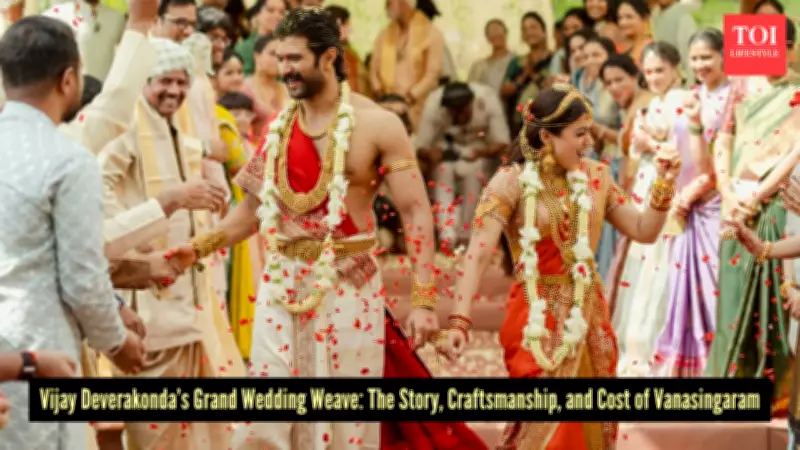
When the first images from Vijay Deverakonda and Rashmika Mandanna's intimate Udaipur wedding surfaced online, the fashion world took immediate notice. The actor's choice of attire broke away from the conventional heavily sequined sherwanis, offering a refreshing take on groom fashion. For the much-discussed 'Virosh' mandap ceremony, Vijay opted for a garment steeped in history, showcasing the elegance of pure Indian handlooms.
The Heritage of Vanasingaram Weave
At the heart of Vijay's ensemble lies the Vanasingaram weave, a complex textile technique originating from Hyderabad. Translating to "glory of the forest," this method involves master artisans weaving intricate nature scenes directly into the fabric, rather than embroidering patterns on top. This hyper-regional handloom not only highlights South Indian craftsmanship but also makes a bold statement: traditional textiles can rival modern menswear in grandeur and sophistication.
Silhouette and Styling: Solving the Dhoti Dilemma
Many contemporary grooms shy away from traditional dhotis or panchas, fearing a messy appearance next to brides in ornate silk. Vijay's look provided a perfect solution with a sharply tailored ivory dhoti. Designed for both style and mobility, it allowed fluid movement during wedding rituals. The crisp, muted ivory served as an ideal backdrop, letting his antique temple gold jewelry—including layered harams and carved kadas—stand out without clashing with the fabric.

The Vermilion Angavastram: More Than a Drape
Adding a pop of color, a bold vermilion angavastram was draped across Vijay's shoulder. This wasn't merely a red cloth with generic borders; it featured detailed forest and temple-inspired motifs. In Indian textile history, such patterns symbolize power, lineage, and sacred architecture. The combination of vibrant vermilion with clean white created a commanding, masculine aesthetic deeply rooted in South Indian authenticity.
Sourcing and Cost Breakdown
Acquiring a garment with such historical significance isn't a simple off-the-rack purchase. For grooms inspired by this textile-forward approach, here's a market overview:
- The Authentic Handloom Route: Custom Vanasingaram weaves by master artisans, using real silver or gold zari, represent a generational investment. Prices range from ₹85,000 to ₹2,50,000, depending on motif intricacy and weaving time.
- The Accessible Alternative: Semi-handloomed silk drapes from South Indian weaving clusters offer similar visual impact at a lower cost. These sets, available in ivory and vermilion with traditional borders, typically cost between ₹15,000 and ₹40,000.
The Vanasingaram weave is gaining mainstream recognition, thanks to Vijay's choice. By embracing pure Indian handlooms over expected pastels, he may have redefined groom style for future wedding seasons, emphasizing heritage and craftsmanship in modern fashion.