

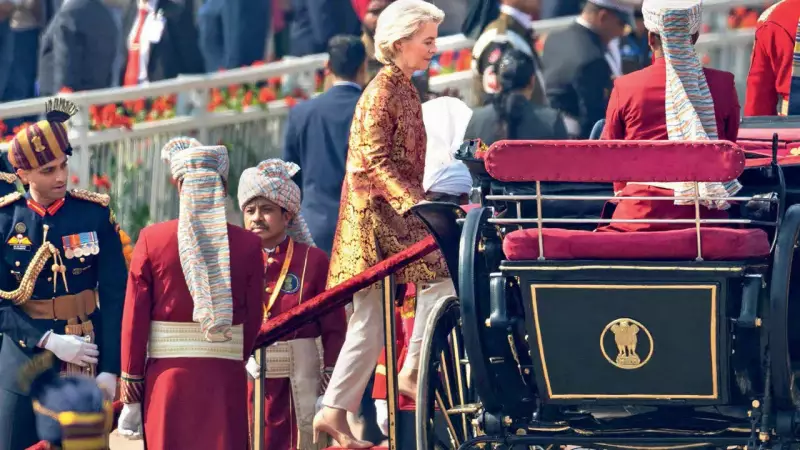
European Commission President's Republic Day Attire Celebrates Indian Craftsmanship
The presence of European Commission President Ursula von der Leyen as chief guest at India's 75th Republic Day parade created significant diplomatic and cultural moments. Beyond the historic nature of her participation, her carefully chosen attire became a focal point of discussion and appreciation.
A Designer Confirmation and Cultural Statement
Initial speculation about the designer behind von der Leyen's elegant outfit was put to rest when Sunil Sethi, Chairman of the Fashion Design Council of India (FDCI), confirmed it was a creation by renowned Indian designer Rajesh Pratap Singh. The designer himself expressed his honor at this recognition, stating, "It is an honour to have Ursula Von Der Leyen wear something from India on her state visit to our country as a chief guest."
The Significance of Benarasi Textiles
Sources close to the matter revealed that von der Leyen specifically chose a Benarasi handloom ensemble for this prestigious occasion. Benarasi textiles have deep cultural roots in India, traditionally associated with weddings, festivals, and other significant celebrations. This made her choice particularly meaningful for an event of such national importance that also carries global diplomatic weight.

Her decision to showcase Benarasi craftsmanship on this international platform is being interpreted as more than just a fashion statement. It represents a conscious effort to bring renewed global attention to the legacy of Benaras weavers and artisans, whose skills have been passed down through generations.
A Deliberate Celebration of Indian Design
Insiders indicated that von der Leyen was particularly keen to wear Indian ensembles throughout her visit, making deliberate choices to highlight creations by Indian designers. This approach reflects a thoughtful engagement with India's cultural heritage and creative industries.
"Over the course of her stay, there is growing anticipation around how she will continue to support Indian handlooms and craftsmanship as she attends several key events in the national capital," sources revealed. This suggests her Republic Day outfit may be just the beginning of a broader showcase of Indian textiles during her diplomatic mission.
Broader Implications for Indian Craftsmanship
The European leader's fashion choices carry significant symbolic weight:
- They provide international visibility for India's handloom sector
- They acknowledge the skill and tradition behind Benarasi weaving
- They demonstrate respect for Indian cultural heritage on a diplomatic stage
- They potentially open doors for greater global appreciation of Indian textiles
This moment represents how fashion diplomacy can serve as a powerful tool for cultural exchange and economic promotion, particularly for traditional crafts seeking wider international recognition and markets.






