

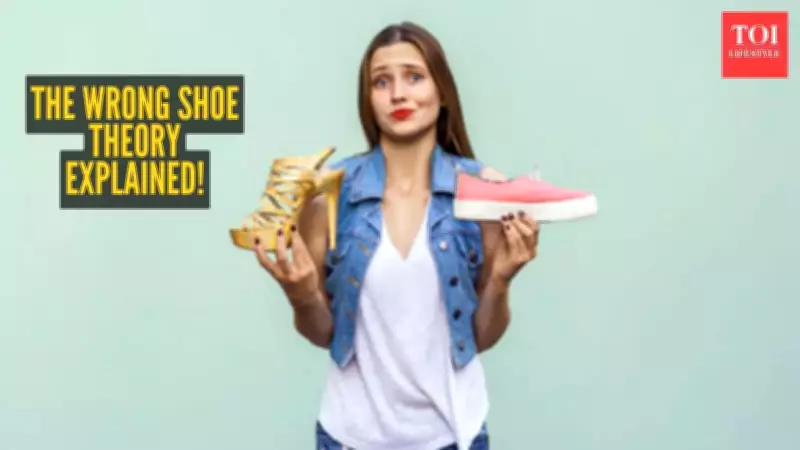
The Wrong Shoe Theory: A Fashion Revolution
Have you ever meticulously assembled an outfit that looked flawless in theory but felt utterly dull when you saw it in the mirror? Perhaps you combined a floral kurta with perfectly matched juttis, or paired tailored office trousers with sensible pumps. You followed all the conventional rules, yet the final result appeared more like a generic store mannequin than a genuine expression of personal style.
If this scenario resonates with you, the core issue might be that your shoes coordinate too perfectly with your clothing. Introducing the "Wrong Shoe Theory," a subtle yet powerful styling technique that has captivated the global fashion scene—from the elegant avenues of Milan to the vibrant streets of Mumbai. This concept proposes that the most stylish footwear choice is often the one that initially feels entirely inappropriate.
Understanding the Wrong Shoe Theory
The principle is straightforward. Rather than completing an ensemble with the obvious, complementary shoe, you deliberately select footwear that contrasts with the overall mood of your attire. For instance, if your outfit is feminine and flowery, you bypass delicate sandals in favor of chunky sneakers. When wearing structured corporate tailoring, you abandon formal heels for casual chappals or sandals.

This term gained widespread recognition through stylist Allison Bornstein, author of the book Wear It Well. The underlying idea is to generate visual tension. When every element of an outfit harmonizes seamlessly, the viewer's eye tends to skim over it without pause. However, introducing a contrasting component—such as pairing heavy boots with a delicate chiffon saree—compels attention and creates a memorable impression.
Adapting the Theory to Indian Wardrobes
Although the Wrong Shoe Theory originated in Western fashion circles, it aligns exceptionally well with Indian clothing traditions. Many individuals habitually assume that ethnic wear must exclusively be matched with traditional footwear. This theory encourages breaking that very convention.
The Saree Transformation: Typically, sarees are paired with heels or embellished wedges. Consider adopting the "Sonam Kapoor approach" by matching a crisp cotton saree with brogues or ankle boots. This simple swap can shift the aesthetic from conventional "wedding guest" to sophisticated "art curator."
The Kurta Reinvention: A simple cotton kurta and palazzo set is a summer essential, usually accompanied by Kolhapuri sandals or juttis. To apply the theory, replace them with chunky "dad sneakers" or classic loafers. This adjustment adds an edge to the look, making it feel contemporary rather than purely traditional.
The Office Attire Update: For professionals, take a favorite oversized blazer and trousers combination. Instead of standard oxfords, opt for simple leather flip-flops or thong sandals. A style popularized by the Olsen twins, this choice suits the Indian climate perfectly, conveying professionalism with a relaxed attitude.
Practical Fashion for Urban Commuters
This trend proves particularly advantageous for navigating bustling environments like the Delhi Metro or Mumbai local trains. While the adage "beauty is pain" has long prevailed, the Wrong Shoe Theory champions the idea that comfort can be inherently stylish.
Wearing running shoes with a lehenga or sturdy work attire is no longer merely a commuting necessity; it has evolved into a legitimate fashion statement. It signals that you are dynamic, purpose-driven, and unwilling to let uncomfortable footwear hinder your mobility. This approach transforms a practical requirement into a deliberate stylistic decision.
Celebrity Endorsement and Cultural Shift
The Wrong Shoe Theory is not confined to Western fashion icons. While figures like Hailey Bieber exemplify pairing ballgowns with dad sneakers globally, Bollywood has wholeheartedly adopted this contrasting aesthetic. A significant transformation in Indian wear is evident, with stars such as Alia Bhatt normalizing the use of comfortable sneakers beneath elaborate lehengas.

These celebrities recognize that perfection is often overrated. The fashion landscape is gradually shifting away from meticulously curated appearances toward styles that feel authentic, lived-in, and personally expressive.
Getting Started with the Trend
The most appealing aspect of the Wrong Shoe Theory is its accessibility. You do not need to purchase new clothing to experiment. Simply reconsider the footwear you already own. The next time you dress, evaluate your shoe selection. If it feels like the "safe" option, set it aside. Instead, choose the pair that seems slightly unconventional or unexpected. In fashion, as this theory illustrates, being a little bit wrong can sometimes be precisely what makes an outfit right.





