

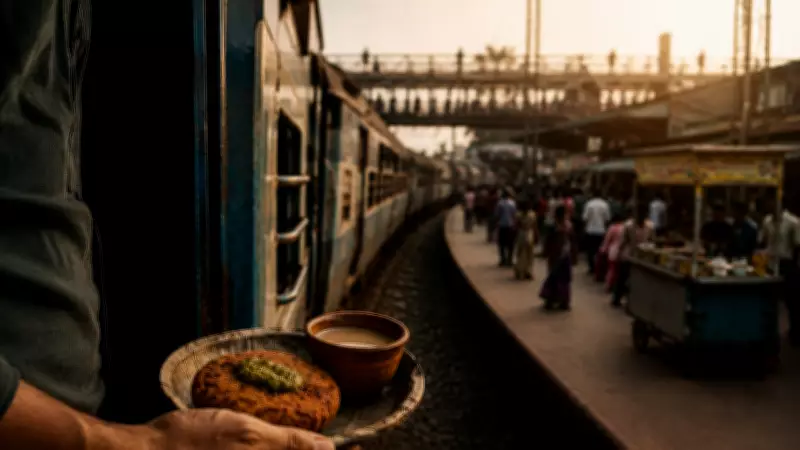
There is a special kind of hunger that only train journeys can explain. It is not just about being hungry; it is about anticipation. The clatter of wheels, the announcement over the loudspeaker, the window sliding open to a platform breeze, and then that first bite of something warm, simple, and familiar. Indian railway food has always been more than convenience. It has been comfort-packed in foil, paper, or a steel tiffin, carrying the taste of travel itself. Long before food delivery apps and polished station cafés, the railway platform had its own menu of memory. These were the foods that filled gaps between cities, but they also filled something softer: nostalgia. Here are six Indian railway foods people still remember with affection long after the journey ends.
Masala Chai
For many travellers, the real journey begins with chai. Served in small cups or, in older days, the iconic clay kulhad, railway chai had a character of its own, strong, milky, lightly spiced, and often just sweet enough to wake the senses without overwhelming them. It was the drink handed across windows, shared between compartments, and remembered long after the destination was reached. What makes it so nostalgic is not only the taste but the timing. Railway chai always seemed to arrive at the exact moment fatigue set in. It did not need to be fancy. It needed to be hot, steady, and familiar.
Veg Cutlet
The railway cutlet was often underestimated, but it had a loyal following. Crisp on the outside, soft on the inside, it usually came with green chutney or tomato sauce and tasted far better than its modest price suggested. Served on platforms, in pantry cars, or from vendors who knew the exact moment a train would slow down, it was the snack that turned waiting into pleasure. Its nostalgia lies in its texture and timing. A cutlet on a journey meant something to hold, something warm to bite into, something that made the trip feel less empty. It was not elaborate, but it was reassuring. For many, it remains the taste of station pauses and family trips.

Samosa
Few foods are as closely tied to Indian travel memories as the humble samosa. On trains, it often arrived wrapped in paper, still warm, with a crisp shell and a potato filling that carried the smell of cumin, green chilli, and turmeric. It was affordable, portable, and perfectly suited to long hours on the move. For children, it was a treat. For adults, it was a dependable companion. The nostalgia around railway samosas comes from their democratic charm. They were the same snack whether one was travelling for work, home, holiday, or family duty. A samosa on a train was never just a snack. It was a signal that the journey had settled into its rhythm.
Aloo Poori
If there is one railway meal that feels like a celebration in a steel plate, it is aloo poori. Puffy puris, hot and slightly oily, paired with spiced potato sabzi, have fed generations of travellers across Indian routes. The meal is simple, but on a train it feels abundant. There is something deeply satisfying about eating it while watching the landscape move. Aloo poori carries a very specific kind of nostalgia because it belongs to both everyday travel and special occasions. Families often bought it for children. Workers relied on it for energy. It had enough familiarity to feel safe and enough flavour to feel festive.
Paneer or Veg Pulao
Railway pulao has a special place in Indian food memory because it was one of the first meals that felt complete on a train. Rice, vegetables, and sometimes paneer, cooked with mild spices, made it a filling option for lunch or dinner. It arrived in foil containers or thalis, often with raita or pickle, and carried the promise of a proper meal in the middle of movement. What people remember is not just the taste but the relief. Pulao meant you did not have to snack your way through the journey. It meant sitting down, opening a container, and eating something closer to home cooking than station food stereotypes would suggest.

Bread Omelette
The bread omelette is one of railway food’s most quietly beloved creations. Available at countless stations, it is cheap, fast, filling, and easy to eat. The omelette, often cooked with onions, green chillies, and masala, tucked between slices of bread, has long been a favourite of students, officegoers, and solo travellers alike. Its nostalgia comes from its practicality. It was the food of early mornings and late departures, the thing you grabbed when the train was moving soon and you needed something quick but comforting. It may not have the glamour of a full meal, but it has endurance, and that is why people remember it.
