7 Foods Indians Think Are Indian But Actually Came From Abroad
Indian cuisine possesses an extraordinary talent for absorbing and transforming ingredients from around the world, making them feel inherently local. Through centuries of trade, colonization, migration, and culinary experimentation, foreign foods have seamlessly integrated into India's kitchens, often losing their original identities in the process. The Indian culinary tradition is not about rigid preservation but about creative adaptation, where ingredients from distant lands acquire local spices, techniques, and narratives, eventually becoming integral to the nation's food culture. Here are seven foods that many Indians believe are native, but whose journeys actually began far beyond India's borders.
Potato
No vegetable has been more thoroughly embraced by Indian cooking than the humble potato. It features prominently in samosas, parathas, curries, chaats, and countless everyday meals, as if it had always been a staple. However, the potato is native to the Peruvian-Bolivian Andes in South America, where it was cultivated by the Incas long before it spread to Europe and eventually the rest of the globe. In India, it became the ultimate culinary chameleon: affordable, satiating, and remarkably adaptable to any masala or cooking style thrown its way.
Tomato
It is nearly impossible to envision modern Indian cooking without the tomato, yet this kitchen essential also arrived from across the oceans. The tomato originated in the Andes Mountains of South America and was later domesticated in pre-Columbian Mexico before Spanish explorers introduced it to Europe in the 16th century. From there, it journeyed into Indian kitchens, evolving into one of the most crucial souring and balancing agents in contemporary cuisine. Today, it feels inseparable from gravies, chutneys, and sauces, but its roots are unmistakably American.

Chilli Pepper
For many, Indian food and fiery heat are practically synonymous. However, that signature spiciness did not originate in India. Chilli peppers are native to the Americas, with research tracing the domesticated Capsicum annuum lineage to Mexico, while other species were independently domesticated across Central and South America. They were brought to Europe in the late 15th century and subsequently spread throughout Asia and Africa. India did not invent the chilli, but it mastered its use so completely that the ingredient now feels like one of the country's oldest culinary instincts.
Cauliflower
Cauliflower wears an especially convincing Indian disguise. It appears in aloo gobi, korma-style dishes, stir-fries, and street food, becoming so routine that many would never guess its foreign origins. Yet cauliflower originated in Western Asia, where it was known to ancient Persians, Greeks, and Romans. Over time, it spread and adapted, eventually becoming one of the most common vegetables in Indian households. Its Indian identity is genuine, but it is a later identity, forged after a long and winding journey.
Samosa
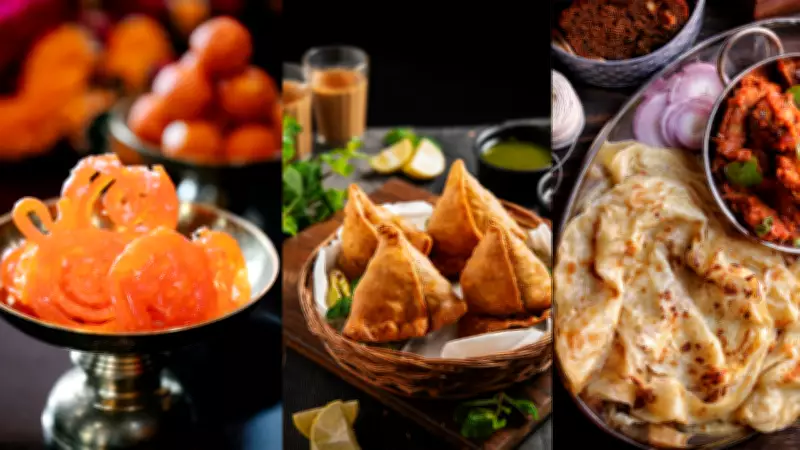
The samosa may be one of India's most cherished snacks, but its story begins elsewhere. Historical accounts trace it back to a medieval precursor from the Middle East and Central Asia, where similar filled pastries were known by names such as sanbusak. Versions of the snack entered the Indian subcontinent through royal kitchens and trade routes, where they were transformed into the crisp, spice-packed triangles that now dominate tea time. India did not merely adopt the samosa; it reinvented it, making it uniquely its own.
Naan
Soft, buttery naan is now a universal restaurant staple in India and across the diaspora, but the bread itself carries a Persian name. Britannica notes that "naan" derives from the Persian nân-e sangak, and the bread was documented in India by the 14th-century poet Amir Khosrow. It became especially associated with Mughal nobility before spreading more widely. In other words, naan is not a native Indian word or invention in the purest sense; it is a borrowed bread that found its grandest expression and popularity here.

Jalebi
Jalebi feels as Indian as festival mornings, syrupy mithai boxes, and roadside sweet shops, but its older trail leads westward. Historical references point to similar sweets in Arabic and Persian cookbooks under names like zalabiya and zolbiya, with later versions spreading through the Middle East before entering India. Over time, the Indian version became brighter, crunchier, and more dramatic, eventually acquiring the unmistakable orange coil that now belongs to every bazaar and celebration. The sweet may have traveled in, but India gave it its final, unforgettable form, cementing its place in the nation's culinary heart.