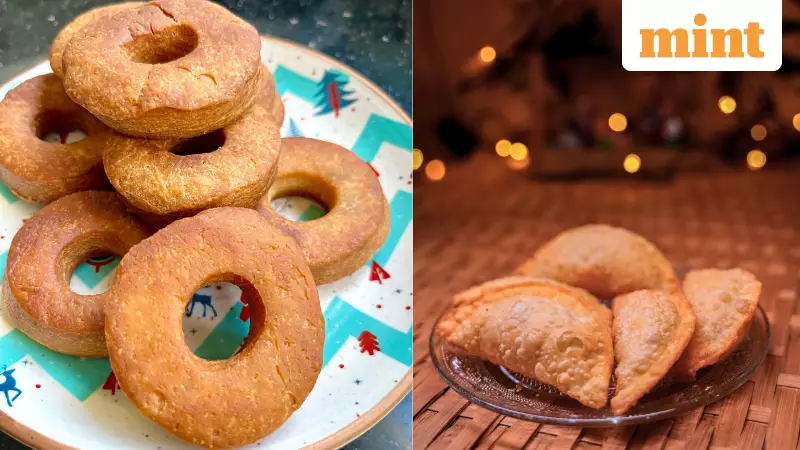
For many in India, the aroma of Christmas is inseparable from the scent of ghee, sugar, and spices wafting from home kitchens. While Goan Catholic families meticulously prepare their elaborate kuswar platter, featuring crisp kulkuls and rich fruit cakes, the festive sweet tradition spans the entire subcontinent, each region adding its unique flavour to the celebration.
A Sweet Journey From Allahabad to The Northeast
The festive table in many Anglo-Indian homes, like that of the Dias family in Mumbai, was once graced by the rich, spiced Allahabadi cake. Home chef Ann Dias explains that her mother, Gladys Myrtle Harbour-Lobo, was renowned for this cake, which used ghee and candied ash gourd (petha) instead of butter and citrus peels, adaptations born from local ingredient availability. Today, Dias continues her mother's legacy, though the Allahabadi cake remains a cherished family-only treat amidst her other offerings like coco rocks and nankhatais.
In the northeastern state of Nagaland, Christmas is synonymous with the appearance of sweet, ghee-fried doughnuts. Vizo Achet, who grew up in Dimapur, recalls making large batches with family around the fireplace. These treats, made from maida, butter, and eggs, are a staple of Naga hospitality during the season, served with hot tea to every visitor. Home bakers like Eli Bongen of Alila Homemade in Dimapur now take orders for these beloved doughnuts.

Meanwhile, in neighbouring Mizoram, the festive sweet of choice is chhangban. Mapuiii Khiangte describes it as a treat made from sticky rice soaked overnight, pounded into powder, wrapped in banana leaves, and steamed. Josie Paris Renthlei of Josie's Kitchen in Mumbai notes that communities gather after Christmas Mass to enjoy chhangban with jaggery (kurtai) and black tea. Some variations include sesame seeds or are fried after steaming.
Coastal Delicacies and Filipino Influences
Along the western coast, the sweet neuri takes many forms. In Mumbai, Averil Fernandes of Averil's Bakehouse remembers butterfly neuris from her childhood in Gundavali village—layered puff pastries filled with mawa, semolina, and nuts. In Mangaluru, conservation architect Caroline D’Souza describes a crescent-shaped version called karanji, stuffed with white sesame, copra, and cardamom, calling it a "love language" in her home.
The Filipino influence adds another layer to India's Christmas tapestry. Ellery Logronio Rosales, now settled in Goa, first tasted Brazo de Mercedes—a meringue roll with custard filling—in the Philippines and was instantly captivated by its melt-in-the-mouth texture. Through her home chef venture with other Filipino women in Goa, she now shares this delicacy, blending culinary traditions.
Southern Specialties and East Indian Heritage
Kerala's famous Christmas plum cake is a testament to cultural fusion, marrying British cake traditions with local ingredients like rum-soaked fruits and Indian spices. It remains a signature treat, especially within plantation communities.
In Meghalaya, winter treats like sakkin gata and jakkep are crafted from sticky rice, jaggery, and roasted sesame. Home baker Nime Sangma from Tura explains that sakkin gata is steamed in banana leaves in layered white and black stripes, similar to Goan bebinca. Jakkep is a pancake filled with the same sesame-jaggery mixture.
Completing the panorama is the East Indian thali sweet from Mumbai. Chef Freny Fernandes of Freny's All Day Dining & Bar highlights this steamed coconut cake made with semolina, eggs, and fresh coconut, traditionally prepared on a stovetop in a thali (plate) when ovens were not commonplace.
These diverse sweets, from the kulkuls of Goa to the chhangban of Mizoram, illustrate how India's Christmas celebration is a vibrant mosaic of local ingredients, historical adaptations, and shared warmth, proving that the language of festive joy is universally sweet.