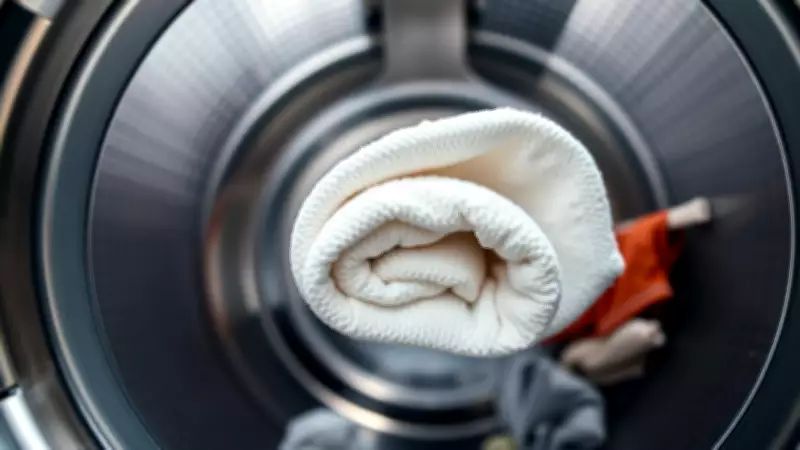
The Dryer Hack That Saves Energy and Protects Your Clothes: The Towel Trick
We have all experienced the frustration of pulling damp jeans or sweatshirts from the dryer, forcing us to run another cycle and watch our electricity bill creep higher. While dryers might seem like simple appliances that just heat and spin, effective drying involves mastering airflow and moisture management. A clever method, originally perfected in laundromats, has made its way into homes worldwide—and it requires just one ordinary towel.
How the Towel Trick Works: Creating a DIY Desiccant System
When you add a dry towel to your wet laundry in the dryer drum, you create an escape route for moisture. Instead of water vapor simply circulating in the confined air, it has somewhere to go. The dry material acts as a temporary moisture magnet, significantly speeding up the drying process and eliminating the need to wait endlessly for your clothes to dry completely.
This method works because of basic principles of relative humidity. When garments are soaked, humidity levels inside the drum quickly become extremely high. Once this saturation point is reached, evaporation slows dramatically as the air can no longer absorb more moisture. Introducing a dry towel changes this dynamic by absorbing surface moisture, creating a more favorable environment for continued evaporation.

The science behind this mirrors industrial drying techniques. Research published in the paper Effect of desiccant system on thin layer drying kinetics of corn demonstrates how removing moisture from surrounding air dramatically accelerates the drying of organic materials. Your dry towel essentially creates a miniature desiccant system that drinks up initial surface dampness, allowing the dryer's heat to focus on deeper moisture within your garments.
Maximizing Efficiency with Proper Technique
For optimal results, timing is crucial. Remove the towel after 15-20 minutes of drying. By this point, it will have absorbed substantial moisture and should be taken out so the machine can concentrate on drying your clothes without working extra to dry the towel as well.
A large, pure white cotton bath towel is recommended for several reasons. The substantial surface area helps separate wet clothes and prevents moisture from accumulating in creases. White cotton avoids color transfer or lint issues that might occur with colored or synthetic towels. As discussed in the research paper The evaporation of moisture from wet surfaces, the rate at which moisture leaves a surface depends largely on the surrounding air's capacity to absorb it. The bath towel immediately captures surface moisture, giving your drying cycle a powerful head start.
Energy Savings and Fabric Protection Benefits
The advantages of this technique extend far beyond simply drying clothes faster. Dryers rank among the highest energy-consuming appliances in typical households. Reducing cycle duration by even 15-20 minutes can make a substantial difference in your energy consumption and utility bills.
Research in thermodynamics, including studies published in the journal Foods, highlights that managing the "on-time" of heat sources leads to significantly better energy utilization. By using a dry towel to absorb moisture early in the cycle, your dryer reaches optimal drying conditions faster. This prevents the heating element from running longer than necessary, benefiting both your finances and the environment.
Fabric preservation represents another major advantage. High heat is clothing's primary enemy—it breaks down fibers, causes elastic to lose elasticity, and accelerates color fading. By shortening total exposure to intense heat through the towel trick, you effectively extend the lifespan of your wardrobe. This simple adjustment protects your investment in quality garments while reducing environmental impact through less frequent replacement needs.

This innovative approach to laundry demonstrates how understanding basic scientific principles can lead to practical household improvements. The towel trick requires no special equipment or complicated procedures—just a simple understanding of moisture dynamics and proper timing. As energy costs continue to rise and environmental concerns grow, such small adjustments in daily routines can collectively make significant differences in resource conservation and household efficiency.